

In the furniture manufacturing industry, wood boards often require clear and permanent marking for branding, identification, batch management, or customization. Compared with ink printing or manual branding, laser marking is increasingly attracting attention due to its non-contact process, clean operation, and stable quality.
However, when furniture factories first consider Laser marking machines, many concerns arise:
This article explains these questions from a practical and technical perspective, helping furniture manufacturers make informed decisions.
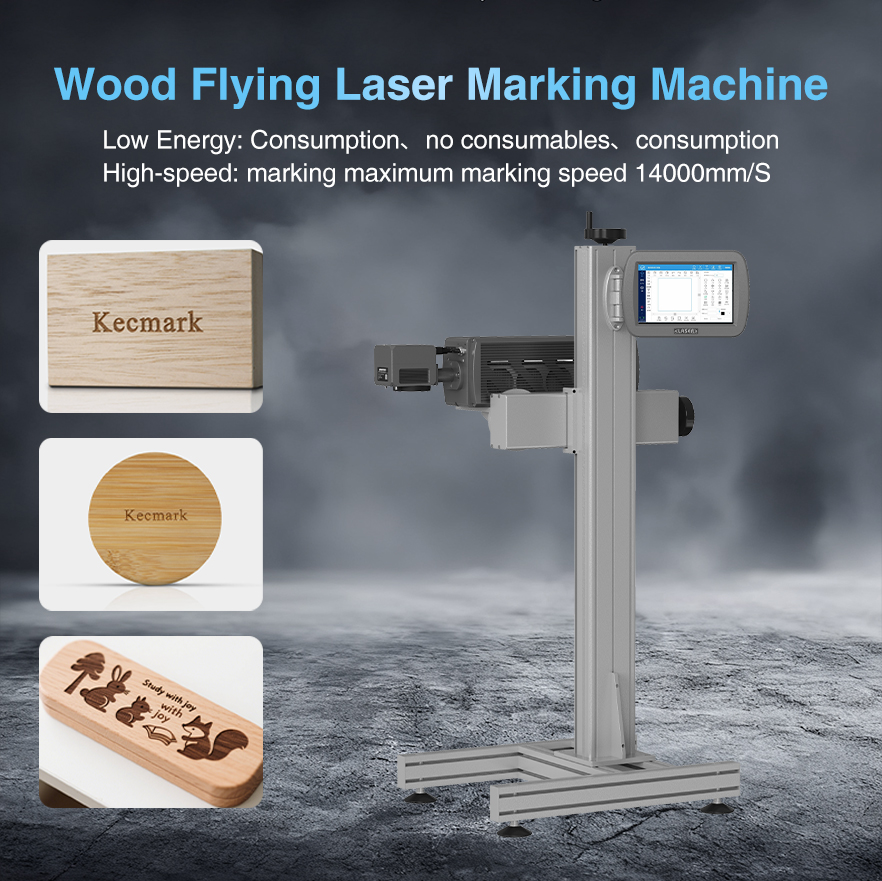
Before selecting a laser marking machine, it is important to understand that “wood board” is not a single material.
Common furniture boards include:
Each type reacts differently to laser energy. Even boards with similar appearance may show different marking results due to variations in wood density, glue content, and surface treatment.
This is why laser marking results on furniture boards often vary if parameters are not properly controlled.
Many furniture manufacturers assume that deeper marking is harder. In reality, light marking is more technically demanding.
For furniture wood boards, the goal is often a light brown or natural contrast, not a burnt black mark. Achieving this requires precise energy control, not excessive power.
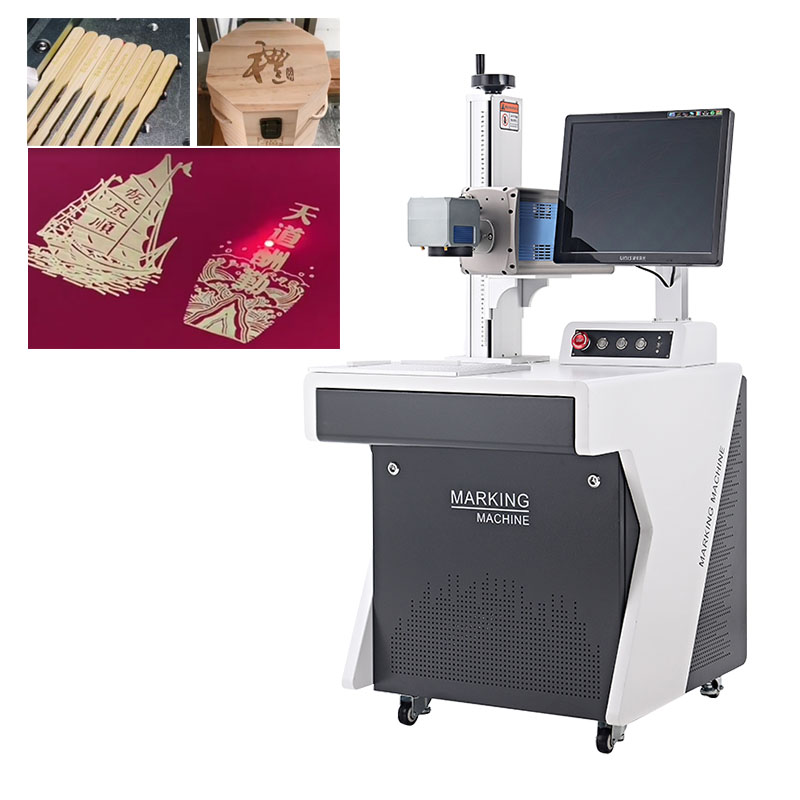
For most furniture wood board applications, the most suitable solution is a CO₂ laser marking machine.
Fiber lasers are generally not recommended for wood, as absorption is poor and marking quality is unstable. UV lasers, while precise, are typically unnecessary and cost-inefficient for furniture board marking.
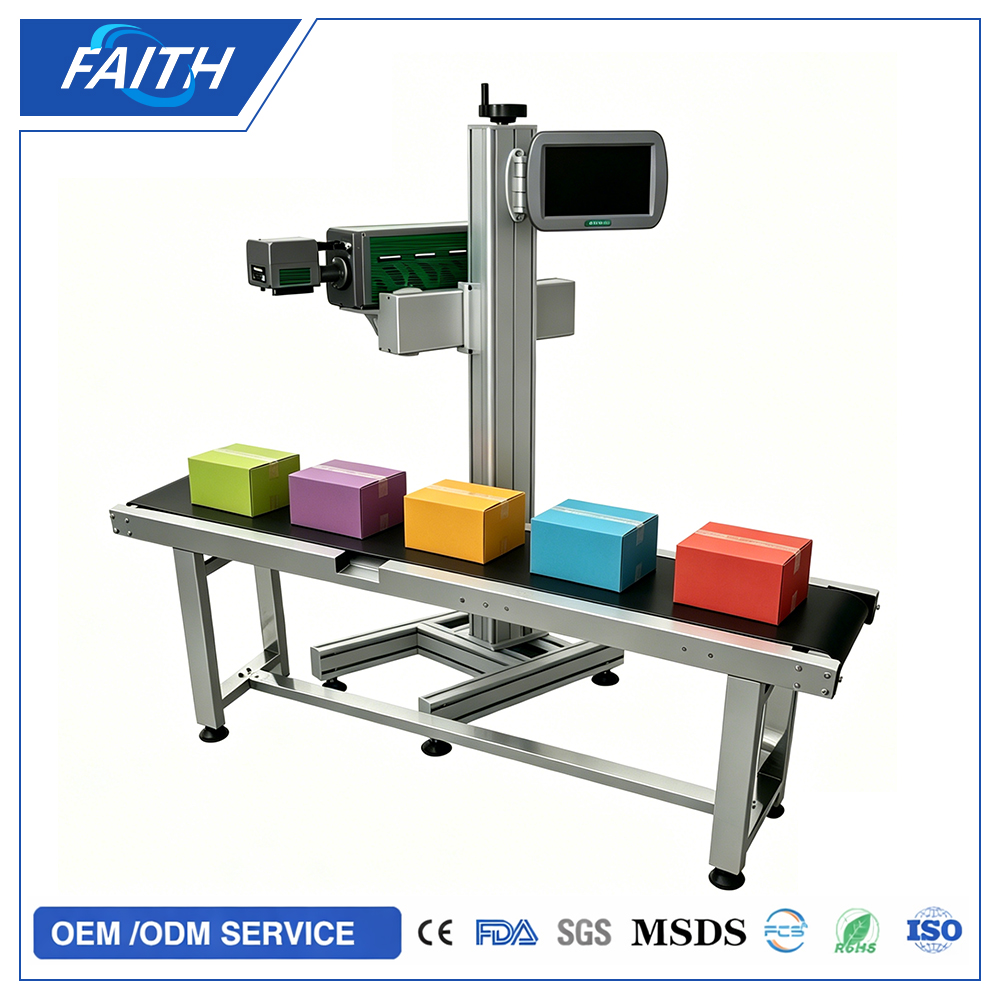
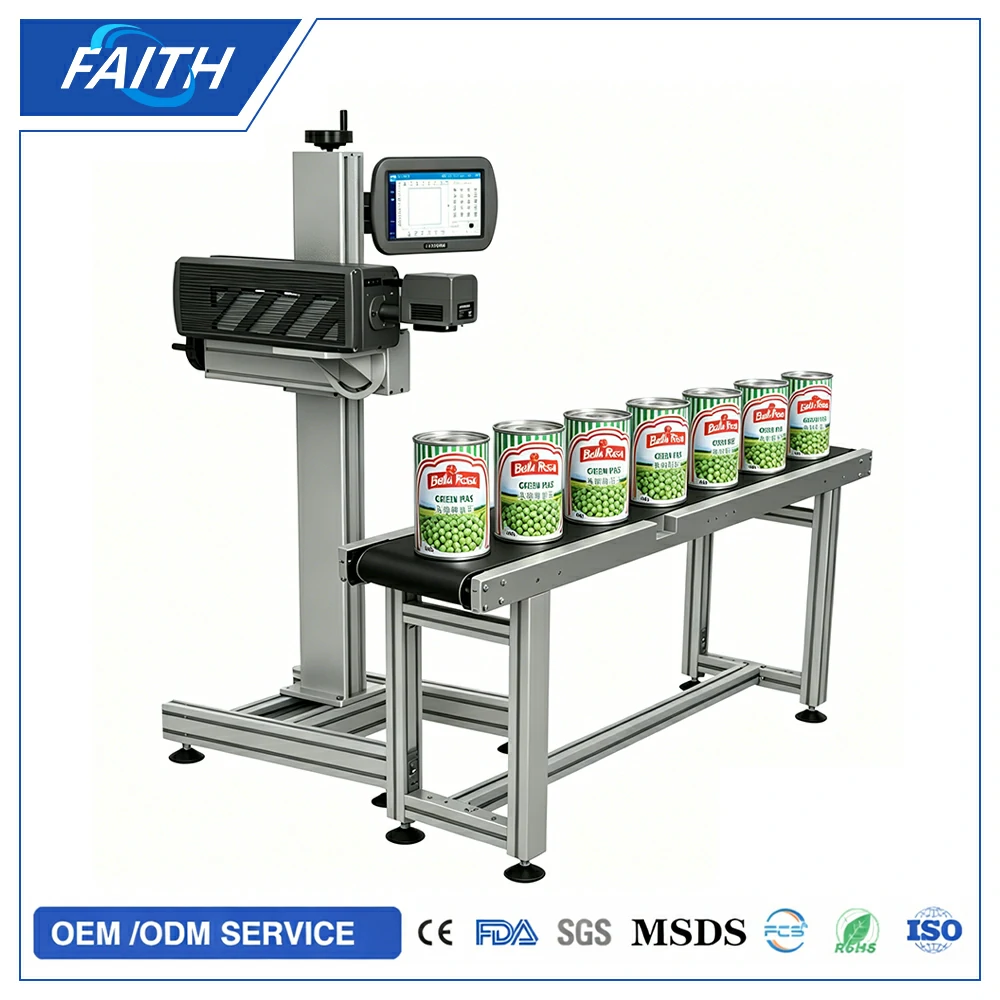
Furniture factories often operate in continuous production environments, which places higher demands on laser marking systems.
Key requirements include:
Without proper configuration, even a machine that performs well in short tests may show inconsistent results during long production runs.
Laser marking wood boards generates smoke, fine dust, and odors, especially when glue layers are present.
An effective laser marking solution should include:
Ignoring this factor often leads to surface discoloration issues that are mistakenly attributed to laser quality.
Instead of focusing on brand or maximum power, furniture factories should evaluate laser marking machines based on the following criteria:
This framework helps avoid over-investment and ensures long-term stability.
Laser marking for furniture wood boards is not simply about whether a machine can mark wood. It is about how well the marking process can be controlled—especially for light marking and continuous production.
When properly selected and configured, a CO₂ laser marking system can deliver:
For furniture manufacturers, the most important step is not buying the most powerful machine, but choosing a solution that matches material characteristics, production rhythm, and quality expectations.
Please leave the message you want to inquiry. We will reply you as soon as possible within 24 hours.
Please leave the message you want to inquiry. We will reply you as soon as possible within 24 hours.