

A CO2 laser marking machine is rarely purchased just because a factory wants new equipment. More often, the buyer is trying to solve problems that have already appeared in daily production: ink stains on cartons, wrong labels on mixed orders, unclear date codes after storage, high consumable cost, or operators spending too much time changing ribbons and cleaning print heads.
For many packaging and non-metal product factories, marking is not a small detail. A date code, batch number, QR code or product ID may be checked by distributors, customs, retailers or end users. If the mark is missing, blurred or easy to remove, the factory may face rework, complaints or traceability problems. This is one reason CO2 Laser Marking machines are widely used in real production lines.
CO2 laser marking is mainly suitable for non-metal materials. In actual factory use, this includes paper packaging, cardboard boxes, kraft cartons, wooden products, bamboo items, leather, rubber, acrylic, glass, ceramic, coated plastics, PET film and many daily-use product packages. The laser beam does not touch the product. It marks by changing the surface, removing a coating, engraving lightly or creating a color change. Because the process does not need ink, labels or ribbons, it can reduce many routine problems in long-term production.
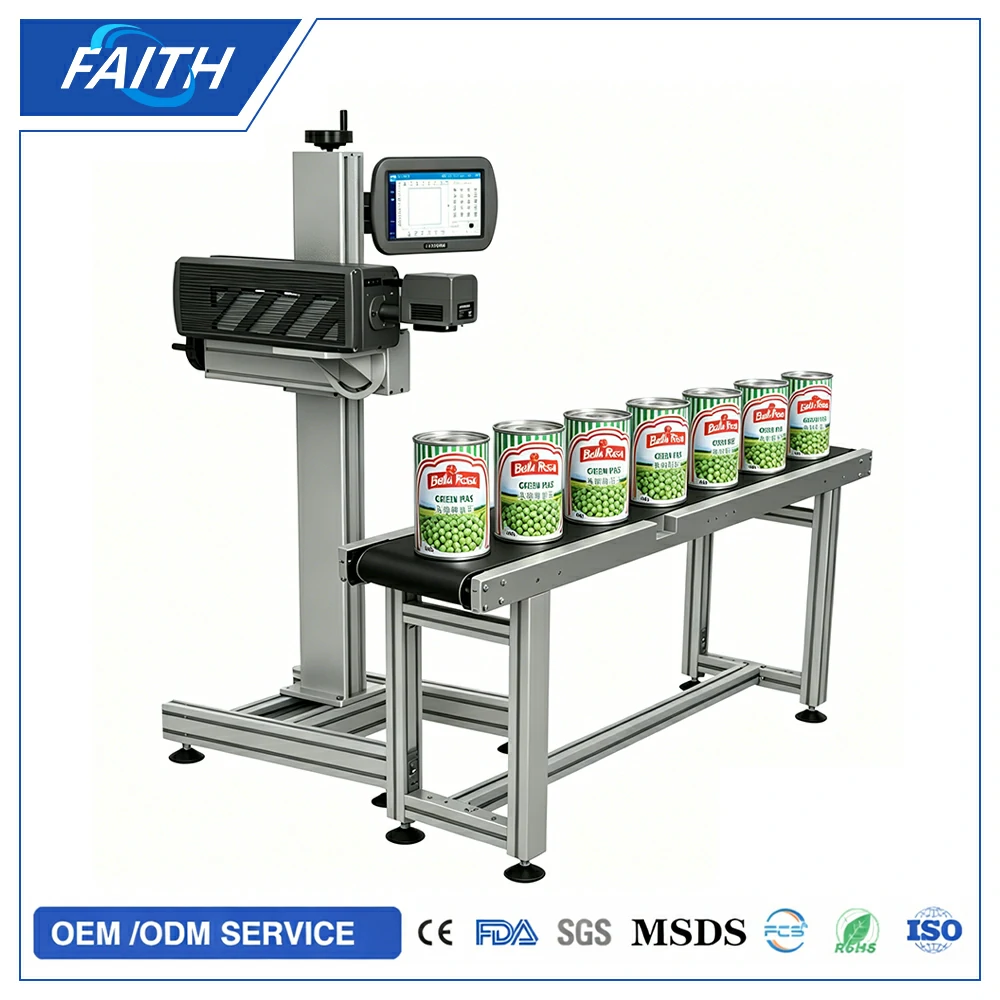
Food packaging is one of the most common application areas. A biscuit factory may need to mark production dates on paper boxes. A tea factory may need batch numbers on kraft paper bags. A frozen food factory may need readable codes on outer cartons after cold storage and transport. Inkjet printing can work, but if the carton surface absorbs ink unevenly, the printed code may become fuzzy. Labels can look clean, but they add material cost and create another step in the packing line.
A CO2 laser can mark directly on the packaging surface. On kraft paper, the mark often becomes dark and easy to read. On coated paper, the laser can remove the coating and show the color underneath. A typical marking content may include “MFG 2026.07.01”, “LOT A26”, a QR code, a barcode or a short product ID. The actual marking area may only be 30 mm × 10 mm, but the value is high because every package needs correct traceability.
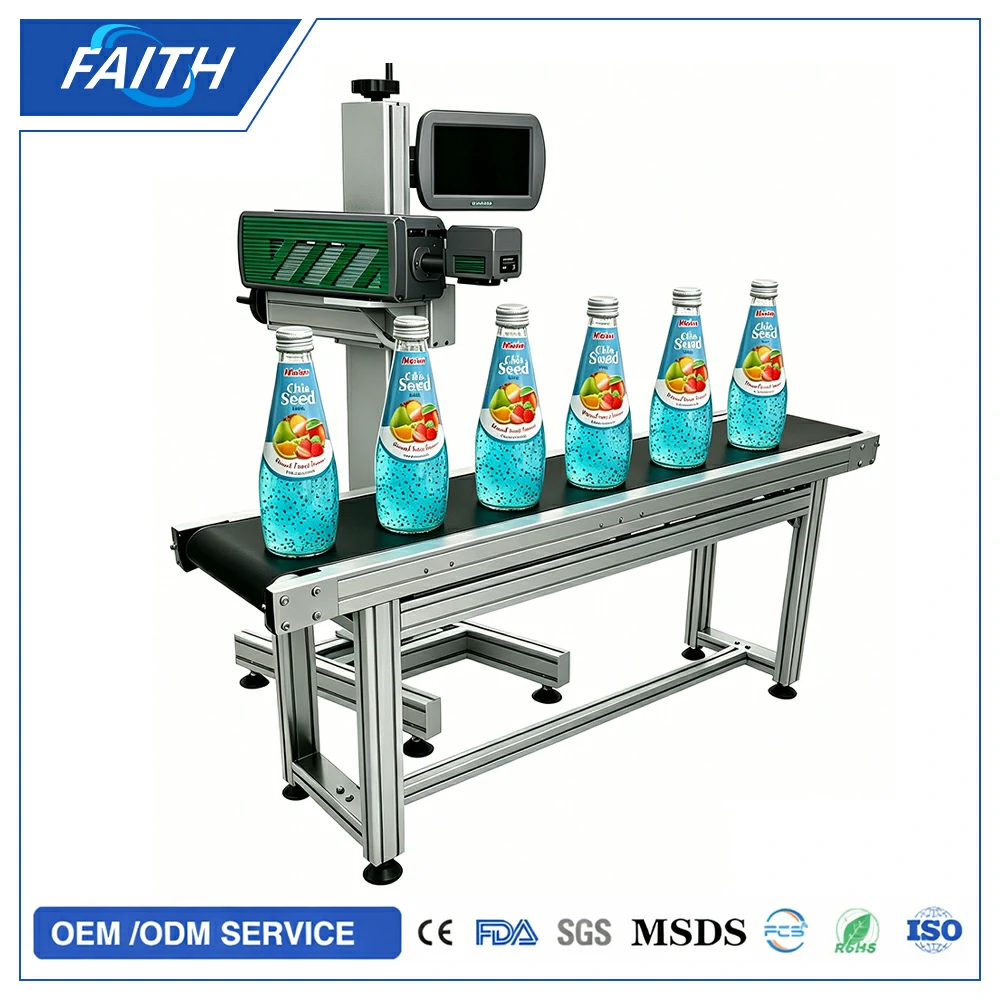
Beverage and cosmetics factories also use CO2 laser marking machines for coding on boxes, labels and some containers. A cosmetic carton may have a glossy or laminated surface, and the customer expects the package to stay clean. Ink smearing is not acceptable, especially for export goods or premium packaging. Laser marking avoids direct ink contact and gives a more stable result when the surface coating is suitable. On some plastic bottles, tubes or caps, testing is still necessary because the marking effect depends on the material formula, color and surface treatment.
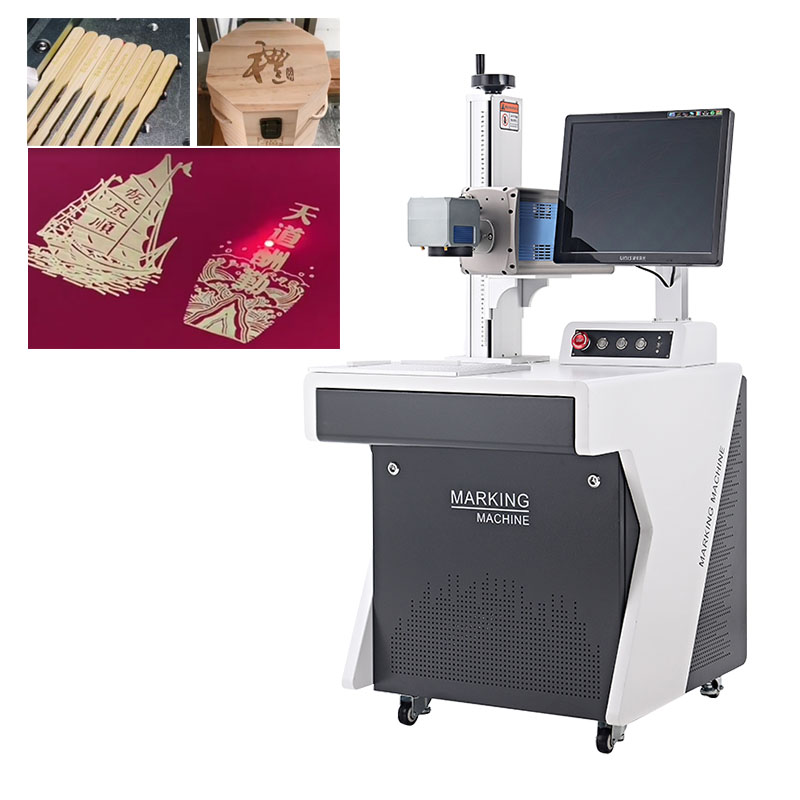
Wood and bamboo products are another strong application. Cutting boards, furniture parts, wooden toys, gift boxes, bamboo cups and kitchen tools often need brand logos, model numbers or decorative text. Many workshops used hot stamping before. It is simple, but it needs molds, heat-up time and operator skill. If the logo changes, a new mold is required. For small and medium orders, that cost is difficult to ignore.
With CO2 laser engraving, the factory can mark different designs from digital files. A wooden box of 200 mm × 150 mm can be marked with a logo and serial number. A small bamboo spoon can be marked with a brand name in a narrow space. The mark can be shallow and clean, or deeper and darker, depending on the wood type and customer preference. Since wood is a natural material, each batch may react slightly differently, so sample testing is important before mass production.
Leather goods factories use CO2 laser marking for branding, decoration and customization. Belts, wallets, bags, shoe parts and garment labels often need logos, size marks, style numbers or decorative patterns. If a buyer orders 500 pieces with one logo and 300 pieces with another, laser marking gives more flexibility than mold-based methods. It is also useful for personalized products, such as initials, limited edition numbers or customized gift marks.
Rubber and silicone products are used in automotive parts, seals, gaskets, mats, buttons and industrial components. Some rubber products need part numbers, production codes or simple identification marks. Ink may not hold well on flexible surfaces, especially when the part is touched often or exposed to oil. CO2 laser marking can create a more durable surface mark on many rubber materials. The final result depends on rubber composition, color and additives, so real material testing is still required.
Acrylic sheets, plastic panels and display products are common in advertising and retail display factories. CO2 laser engraving can create clear text, frosted marks or decorative lines. This is useful for nameplates, signs, display stands, switch panels and custom parts. Many of these factories produce small batches with frequent design changes. A digital marking process saves time because there is no need to make screens, plates or special molds for every new order.
Glass and ceramic marking needs more careful parameter control. A CO2 laser can mark bottles, cups, tiles and ceramic pieces, but the effect depends on power, speed, focus, coating and product shape. Too much power may create rough edges or micro cracks. Too little power may make the mark hard to see. For wine bottles, perfume bottles and ceramic gifts, the mark often needs to look clean and premium instead of heavy and industrial. Buyers should send real samples and ask for photos or videos under normal lighting conditions.
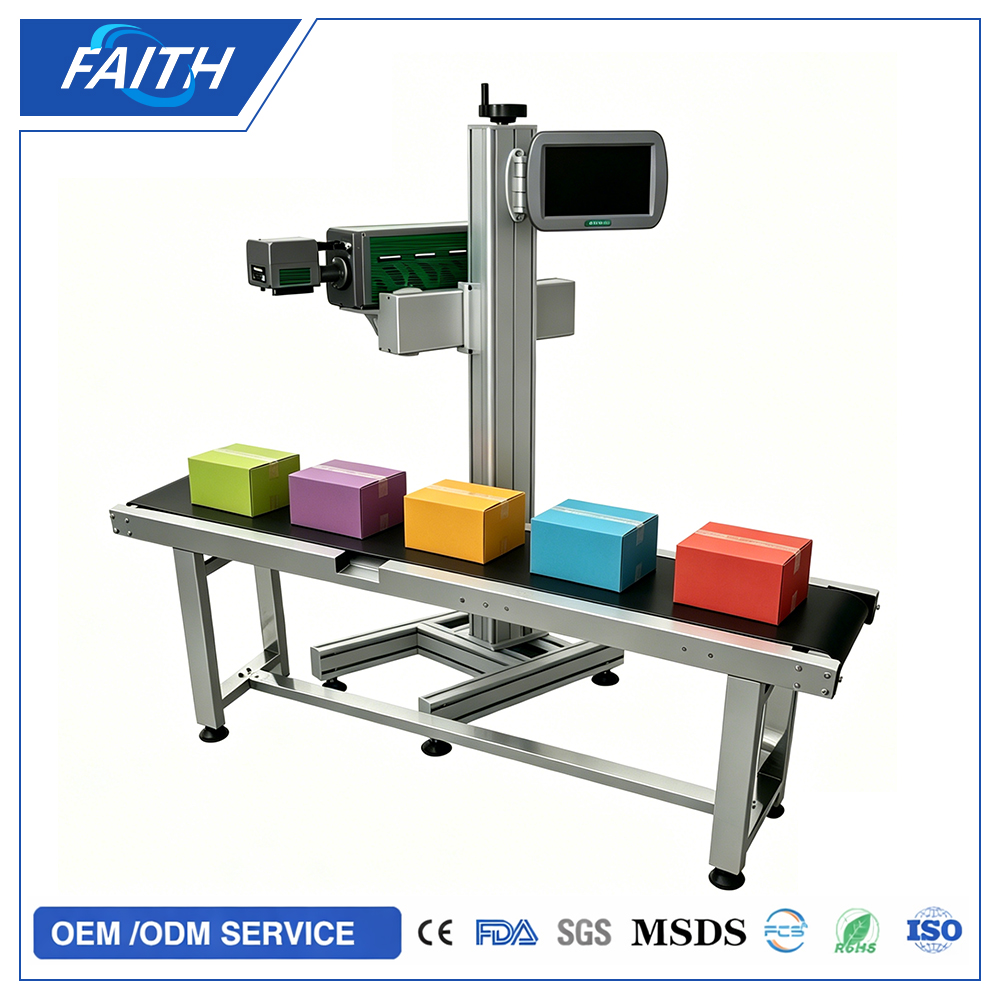
In industrial packaging lines, the biggest advantage of a CO2 laser marking machine is not only mark quality. It is production continuity. The machine can be installed beside a conveyor, with a sensor detecting each product. The marking content can change automatically by date, batch number or serial number. If the line runs for two shifts, the factory does not need to stop often for ink replacement, ribbon change or label roll adjustment. Ventilation and smoke extraction are still needed, especially when marking paper, wood, leather, rubber or plastic.
Machine selection should be based on product size, material, line speed and marking content. A 30W CO2 laser may be enough for many paper boxes, cartons and light surface marking jobs. Higher power may be used for deeper engraving, faster speed or larger products. The marking field can be 110 mm × 110 mm, 175 mm × 175 mm or larger. A small field usually gives finer detail. A larger field can cover bigger cartons, wood boards or leather pieces, but the marking detail and focus need more careful adjustment.
Some buyers focus only on laser power, but power is not the only factor. The lens, software, control system, cooling method, conveyor matching, smoke extractor and safety protection all affect daily operation. A machine that marks well in a showroom may not perform well on a dusty factory line if the integration is not handled properly. For online marking, the supplier should understand the conveyor speed, product spacing, sensor position and code size before recommending a machine.
CO2 laser marking is especially suitable for factories that process packaging and non-metal materials and want to reduce consumables. It is widely used in food packaging, beverage packaging, cosmetics, wood products, leather goods, rubber parts, advertising materials, daily chemical packaging and general industrial coding. It is not the best solution for bare metal marking, which usually requires a fiber laser marking machine. Some transparent plastics, thin films or special coatings may also need repeated testing.
For overseas B2B buyers, the safest way to choose a CO2 laser marking machine is to send real samples before ordering. The sample package should include different colors, surface finishes, thicknesses and product sizes. Buyers should also tell the supplier the line speed, marking content, working hours and required code position. A clear photo of one sample is helpful, but a test video at real production speed is more reliable. In real production, a stable and readable mark matters more than a perfect result on one piece.
Please leave the message you want to inquiry. We will reply you as soon as possible within 24 hours.
Please leave the message you want to inquiry. We will reply you as soon as possible within 24 hours.