

Many buyers compare laser marking machines by power, price, marking speed, and laser source. These factors are important, but they are not the whole answer. In real factory use, the accessories around the machine often decide whether the marking process is smooth or not.
A laser marking machine may look simple in a product photo. But when it arrives at the customer’s workshop, the real questions begin. How can bottles move through the marking area automatically? How can a round stainless steel cup be engraved around the surface? What should the buyer do if plastic marking creates smoke or odor? How can small electronic parts be positioned accurately? These problems are usually solved by choosing the right accessories.
For B2B buyers, a laser marker should not be treated as only one machine. It can be built into a complete marking solution according to product material, shape, production speed, workshop environment, and automation needs.
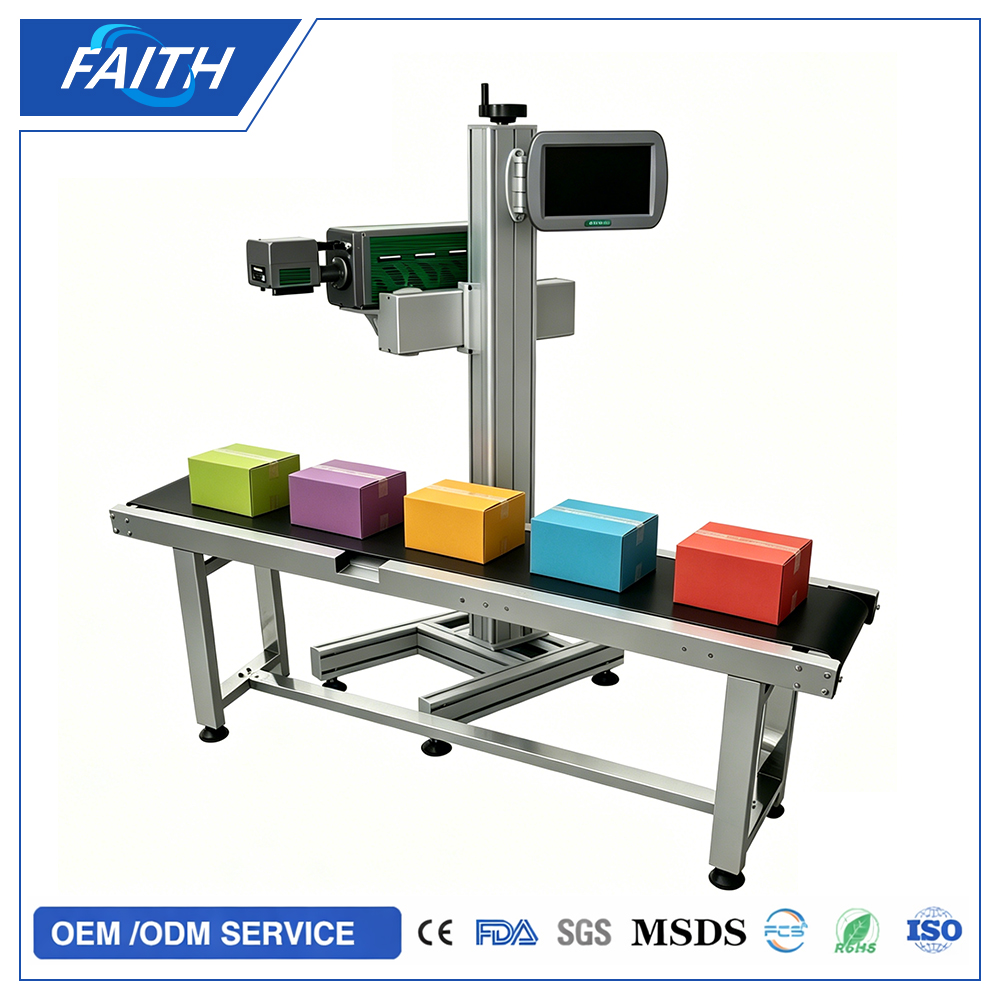
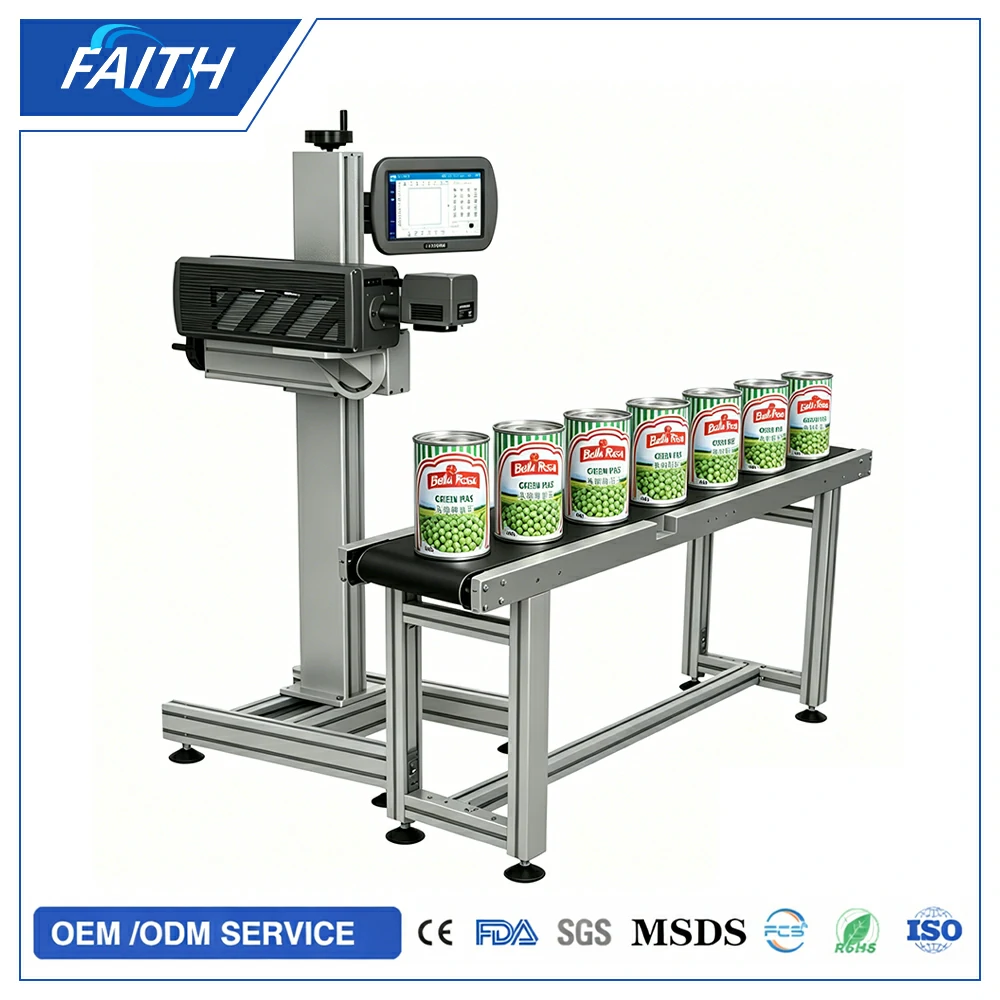
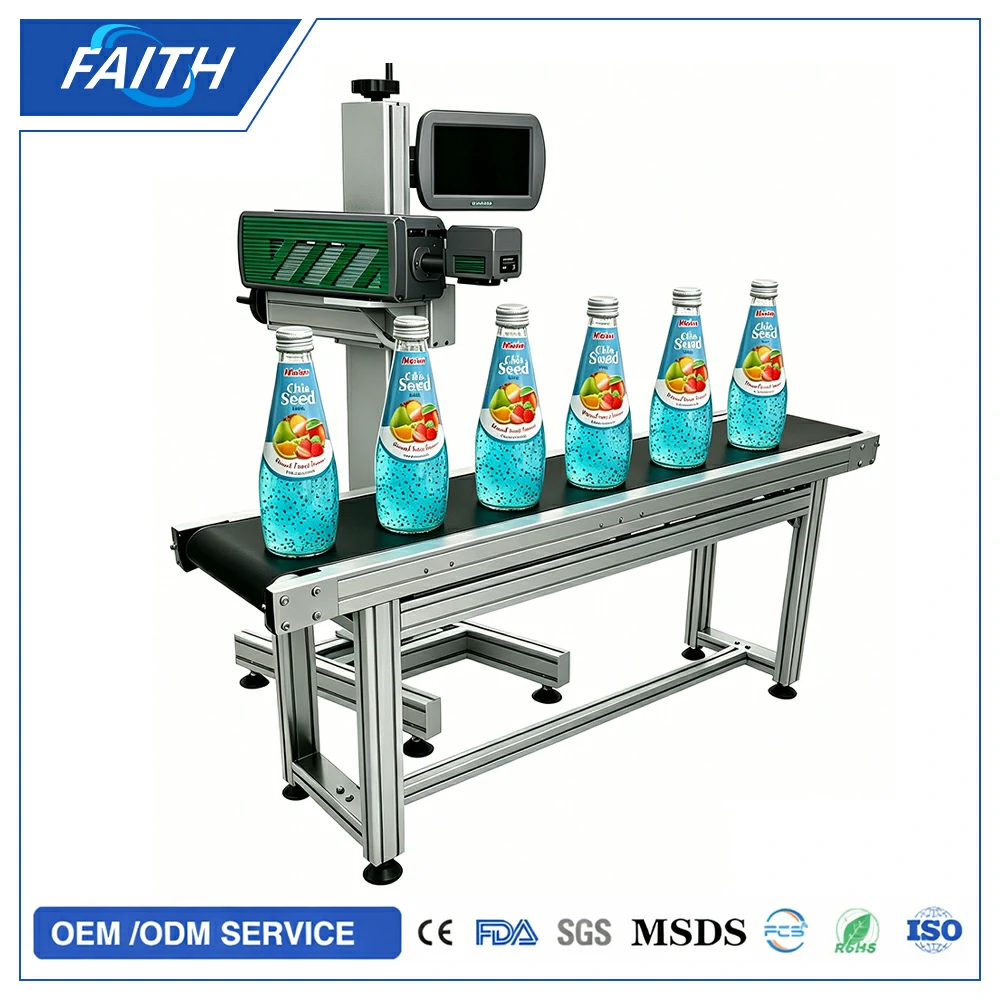
A conveyor belt is one of the most common accessories for laser marking machines. It is suitable for factories that need continuous production instead of manual loading one by one. Products can move through the marking area automatically, and the laser system can mark production dates, batch numbers, serial numbers, QR codes, barcodes, or logos during the movement.
This solution is often used for bottle caps, metal parts, plastic shells, cartons, packaging boxes, tubes, nameplates, and hardware components. For food, beverage, cosmetics, electronics, and auto parts factories, conveyor marking can save labor and improve efficiency.
For example, a bottle cap factory may need to mark thousands of caps every day. If workers place each cap manually, the speed is low and the marking position may not be consistent. With a conveyor belt and proper positioning guide, the product can pass through the marking area in a stable direction, making batch marking more efficient.
When choosing this package, buyers should confirm product size, weight, line speed, marking content, and whether the product can keep a stable position on the conveyor. If the product rolls, shakes, or changes direction easily, additional positioning fixtures may be needed.
Not all products are flat. Many customers need to mark round, curved, or cylindrical surfaces. In this case, a rotary fixture is usually required. The fixture holds the product and rotates it during marking, so the laser can engrave around the surface.
This package is suitable for stainless steel cups, water bottles, metal tubes, round pipes, bearings, rings, bracelets, wine bottles, glass bottles, cosmetic bottles, and cylindrical hardware parts.
For gift customization shops, the rotary fixture is useful for engraving names, logos, patterns, and decorative designs on cups or rings. For industrial factories, it can be used to mark pipe numbers, bearing models, batch codes, and traceability information.
Before buying a rotary fixture, the buyer should check the product diameter, length, weight, and marking area. A small ring and a heavy metal tube may both need rotary marking, but the fixture design will not be the same. This is why sending product photos and dimensions to the supplier is very important.
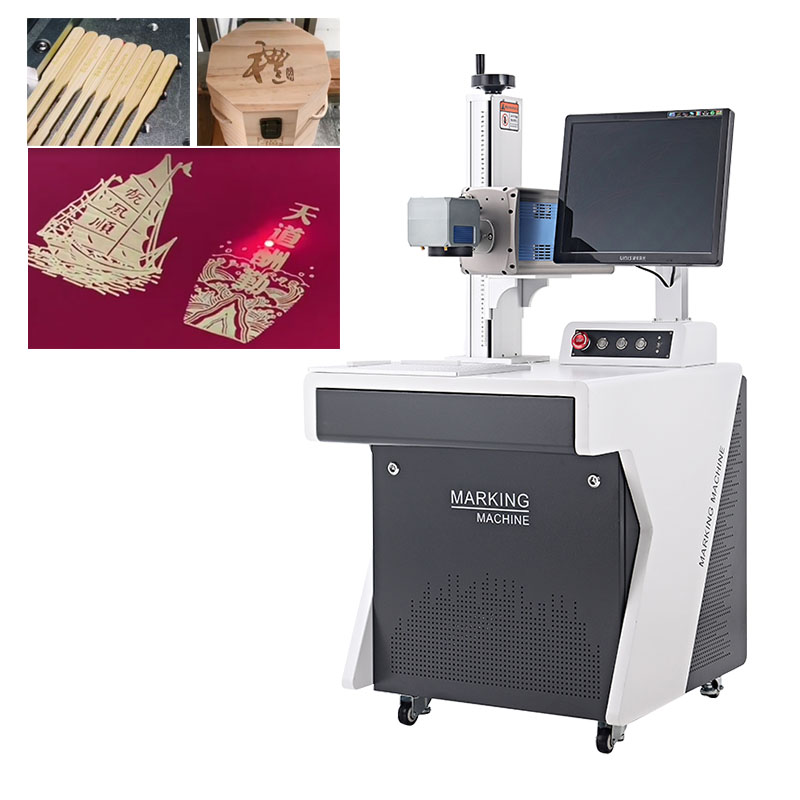
When marking metal, smoke may not always be obvious. But when engraving plastic, rubber, leather, coated metal, painted parts, wood, or some packaging materials, smoke and odor can appear during processing. This is a common issue in indoor workshops, advertising shops, electronics factories, and small custom engraving rooms.
A smoke purifier or fume extractor can help collect smoke, reduce odor, and keep the working environment cleaner. For buyers in Europe, North America, and other markets with higher workshop requirements, this accessory is often a practical choice.
It is especially useful when the laser marking machine is used near workers, computers, packaging materials, or precision components. A cleaner working area also makes the whole machine package look more professional when distributors show it to customers.
Buyers should tell the supplier what material they want to mark. Plastic, leather, rubber, painted metal, and paper packaging may create different levels of smoke. The supplier can then recommend a suitable smoke purifier, filter size, and exhaust pipe solution.
For small parts or irregular products, manual positioning can become the biggest problem. If the product is not placed in the same position every time, the marking result may shift. This is especially important for electronic components, PCB boards, connectors, sensors, buttons, medical plastic parts, and precision hardware.
A CCD vision positioning system can recognize the product position and guide the laser marking path. This helps reduce manual alignment work and improves marking accuracy. For automation factories, this package is more suitable than a basic manual machine.
For example, an electronics factory may need to mark QR codes on small parts with slightly different placement positions. If workers need to align each piece by hand, the speed will be slow. With vision positioning, the system can locate the product automatically and mark in the correct area.
However, buyers should understand that CCD vision systems require more technical setup than standard marking machines. Product shape, color contrast, marking area, fixture design, and software settings all need to be considered.
Some accessories are not expensive, but they are very useful in daily production. Positioning fixtures help hold the product in the same place every time. A foot switch allows one operator to control marking without using both hands. A lifting stand helps adjust the machine height for products with different thicknesses.
These accessories are common in hardware factories, nameplate workshops, electronic parts factories, and custom engraving shops. For batch marking, a simple fixture can reduce many mistakes. If every product is placed by hand without positioning, the marking result may move slightly from piece to piece.
When buyers show product samples to the supplier, the supplier can often design a simple fixture to match the product. This small detail can make the machine much easier to use after delivery.
The right accessory depends on the real product, not only the machine model. A flat metal nameplate may only need a fixture. A stainless steel cup needs a rotary fixture. A plastic shell may need a smoke purifier. A high-speed packaging line may need a conveyor and flying laser marking system. An irregular electronic part may need CCD vision positioning.
Before buying, B2B customers should prepare several details:
What product needs to be marked?
What is the material?
Is the product flat, round, curved, or irregular?
What content needs to be marked?
Is the marking done manually or on a production line?
What is the required speed?
Is smoke or odor a concern in the workshop?
Does the buyer need future automation upgrade?
A good supplier should not only quote the laser marking machine price. The supplier should understand the product, marking content, production process, and workshop layout before recommending a package.
Choosing a laser marking machine is not only about laser power or price. In real production, accessories can decide the efficiency, marking accuracy, operator experience, and future upgrade ability.
For factories, the right package can reduce manual work and improve production stability. For distributors, complete accessory solutions can increase order value and make local service easier. For custom engraving shops, accessories such as rotary fixtures and smoke purifiers can help them accept more product types.
A laser marking machine can be a single marking tool, but with the right accessories, it becomes a complete marking solution for metal parts, plastic products, bottles, tubes, nameplates, packaging boxes, electronics, auto parts, and customized products.
Please leave the message you want to inquiry. We will reply you as soon as possible within 24 hours.
Please leave the message you want to inquiry. We will reply you as soon as possible within 24 hours.