

For many automotive parts suppliers, marking is not just a small step at the end of production. It is part of the traceability system. A frame, engine part, chassis component or metal plate may need a VIN code, serial number, batch number, production date or QR code before it can be shipped to the customer. If the mark is missing, unclear or easy to remove, the part may be rejected during inspection.
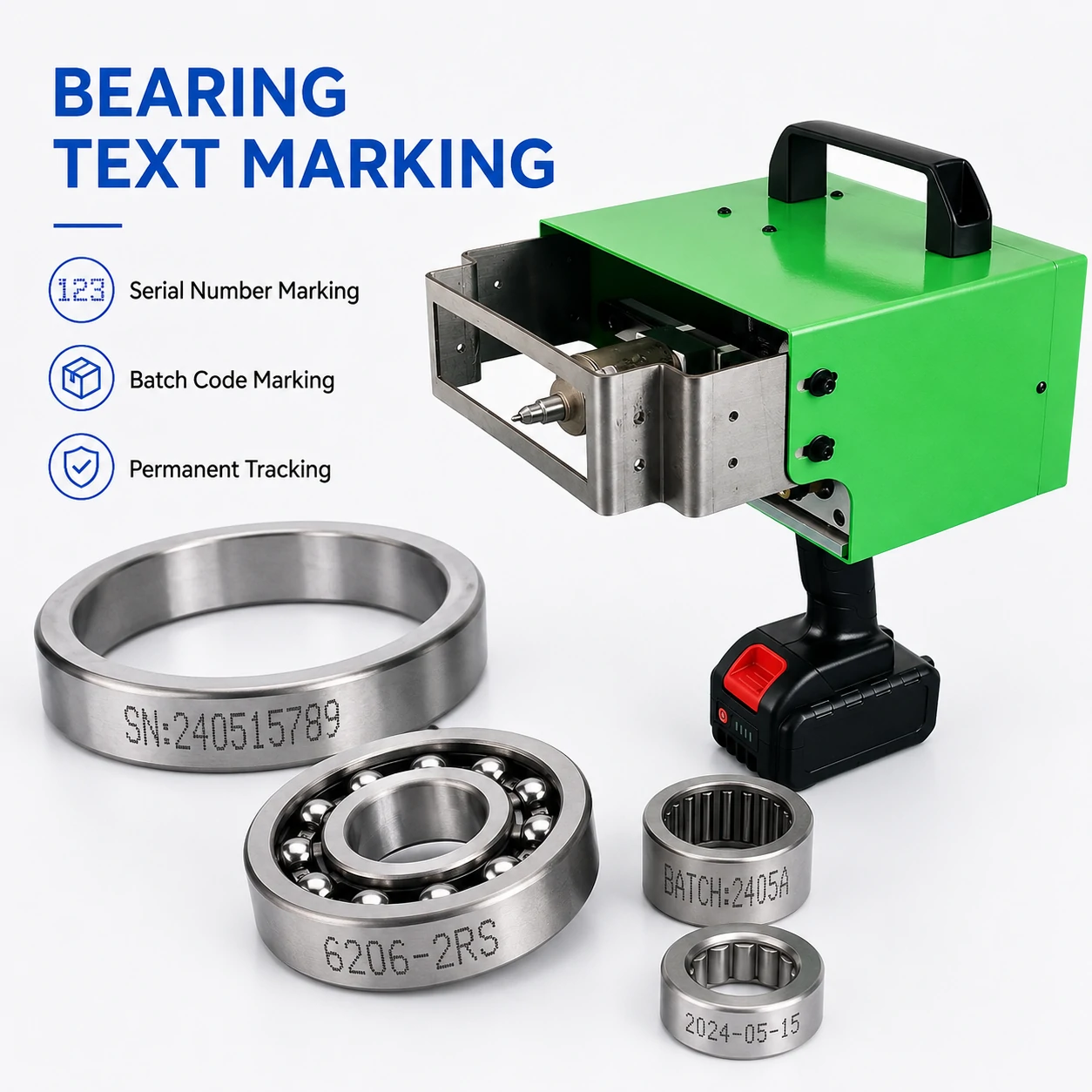
This is why many factories still use dot peen marking Machines for metal parts. Labels can fall off. Ink printing can fade on oily or rough surfaces. Hand stamping is slow and difficult to keep consistent. Laser marking is clean and fast, but not every factory wants to use laser for heavy steel parts, large frames or outdoor repair work. Dot peen marking gives a permanent mechanical mark by striking the metal surface with a carbide pin. The result is a dot matrix character that can stay readable after handling, cleaning, painting or long-term use, depending on the material and marking depth.
In automotive production, VIN code marking is one of the most common applications. Vehicle frames, motorcycle frames, engine parts, metal nameplates and chassis components often need clear identification. Some parts are small enough to place on a workbench. Others are too large or too heavy to move easily. A metal frame may be 1 meter long, 2 meters long or already welded into a bigger structure. In this situation, the operator needs a marking machine that can go to the part, not a part that must always be moved to the machine.
An industrial VIN code marking machine is made for this kind of work. It can mark letters, numbers, serial numbers, production information, logos and QR codes on stainless steel, carbon steel, aluminum, copper, iron and other metal materials. For automotive and machinery factories, this is more practical than using different marking methods for different parts. One machine can be used for VIN plates, steel frames, tools, pipe fittings, machinery components and metal tags.
The most important point is marking depth. In real production, a customer may not only ask whether the code is visible today. They may ask whether the mark will still be readable after spraying, cleaning, surface treatment or several years of use. A shallow mark may look fine after marking, but it can become weak after paint or abrasion. A deeper dot peen mark gives better long-term visibility on many metal parts. For VIN code plates, chassis parts and mechanical components, this is often more important than making the mark look beautiful.
A typical industrial dot peen marking machine can reach around 0–1 mm marking depth, depending on the material hardness, surface condition and marking settings. Soft aluminum is easier to mark deeply. Stainless steel and hardened steel need more force and slower speed. Castings, painted parts and rough welded surfaces may also need different parameters. Buyers should not only ask, “Can it mark metal?” The better question is, “Can it mark my actual part at the depth and readability I need?”
For a small nameplate, the marking content may be simple: model number, date code and company logo. For an auto part, the requirement may be stricter. A VIN code must be positioned correctly. A QR code or Data Matrix code must still scan after marking. A batch number must increase automatically without typing mistakes. If workers input every code by hand, errors can happen, especially during long shifts. A marking system that supports serial numbers, logos, QR codes and USB file import can reduce manual work and make repeat orders easier to manage.
The marking area is also important. A marking range such as 120 × 30 mm is enough for many VIN codes, serial numbers, product names, date codes and small logos. It is suitable for metal plates, motorcycle parts, tools, machine housings and narrow areas on frames. Before buying, the factory should check the longest code they need to mark. Some customers only need one line of numbers. Others need two lines, a logo and a QR code. If the mark area is too small, the operator may need to split the content or change the layout.
One reason factories choose portable marking equipment is flexibility. In a workshop, parts are not always in the same position. A worker may need to mark a frame after welding, then mark a steel plate in another area, then mark a repaired part in the maintenance department. Moving a heavy part to a fixed marking station takes time. For large products, it may even require a forklift or crane. A portable VIN code marking machine allows the operator to bring the marking head directly to the product surface.
This matters especially for metal frames and large auto parts. A welded frame may have limited marking space. The surface may be vertical, horizontal or slightly curved. The operator needs to hold the marking head steadily and keep the surface contact stable. If the machine moves during marking, characters may become distorted. If the surface is uneven, some dots may be deep while others are light. Good positioning, simple fixtures and operator training are just as important as the machine itself.
For factories that mark different parts every day, ease of operation can save a lot of time. A machine with a screen does not always require an external computer. The operator can edit text, select files and adjust marking content more directly. This is useful for repair shops, small workshops, inspection rooms and production areas where a computer is inconvenient. In export factories, an English interface and simple menu structure also help reduce training time for operators.
Automotive suppliers often care about production records. A code is not only for the customer to see. It is also used for quality tracking, warranty management and after-sales service. If a defective batch appears later, the factory can trace the production date, shift, machine or material batch through the marked code. This is why VIN code marking, serial number marking and QR code marking are becoming more common in metal processing factories.
Dot peen marking is not limited to automotive parts. It is also used on machinery tools, forged parts, castings, steel pipes, oil and gas components, medical metal parts, flanges, valves and industrial equipment. In the oil and gas industry, for example, steel pipes and fittings often need durable identification that can survive outdoor storage and rough handling. In machinery manufacturing, parts may need model numbers, inspection codes or assembly numbers. In metal processing shops, small parts may need batch marking before delivery.
Before choosing a machine, buyers should prepare real samples for testing. A photo is helpful, but it cannot fully show hardness, coating, oil, rust or surface flatness. The supplier should test the actual text size, code length and marking depth. If the buyer needs QR code marking, the code should be scanned after marking. If the part will be painted later, the sample should be tested after painting. A good sample test prevents many problems before the machine arrives at the factory.
The working environment should also be considered. Some workshops already have compressed air and are used to pneumatic tools. Others prefer electric or battery-powered marking because they do not want air pipes, compressor noise or extra air system maintenance. For on-site marking, repair work and flexible production, a portable machine with simple power requirements is easier to use. For heavy-duty deep marking, the buyer should confirm the required force and final depth with actual samples.
Price is only one part of the decision. The real cost includes operator time, rejected parts, unstable marks, maintenance and production delays. A low-cost marking method may become expensive if codes are often unclear or workers need to rework parts. For automotive parts and metal frames, the mark must be stable, readable and repeatable. This is why many factories choose industrial dot peen marking machines when they need permanent VIN code marking on metal.
A suitable VIN code marking machine should match the factory’s real products, not only the catalog specification. Check the material, surface, code size, marking position, depth requirement and daily production quantity. Test the actual parts before placing an order. When the machine can mark the buyer’s own metal parts clearly and consistently, it becomes more than a marking tool. It becomes part of the factory’s traceability and quality control process.
Please leave the message you want to inquiry. We will reply you as soon as possible within 24 hours.
Please leave the message you want to inquiry. We will reply you as soon as possible within 24 hours.