

Plastic syringes are widely used in hospitals, laboratories, pharmaceutical production and medical-device manufacturing. For German syringe manufacturers, clear and stable product identification is an important part of quality control and production traceability.
A syringe may require graduation marks, product specifications, batch information, production codes, a manufacturer logo or other identification. Because the syringe barrel is small, thin and often transparent, the marking process must be accurate and should not deform or damage the plastic.
A UV laser marking machine is a suitable solution for many plastic syringe applications.
Plastic syringe barrels provide only a limited marking area. The characters and graduation lines must be small, clear and consistently positioned.
Traditional ink printing can mark plastic quickly, but it also requires ink, cleaning and regular maintenance. The marking result may be affected by the plastic surface, printing pressure and drying conditions. For medical products, manufacturers may also need to evaluate whether the ink is suitable for the product’s production and sterilization process.
Laser marking does not require ink or printing plates. The marking is created directly on the syringe surface, reducing consumables and simplifying product changes.
However, not every laser is suitable for thin plastic components. Excessive heat can cause melting, deformation, discoloration or an uneven marking effect. This is why UV laser technology is often considered for precision plastic marking.
A UV laser has a short wavelength and a relatively small heat-affected area. It can produce fine characters, lines and symbols while reducing heat influence on the surrounding plastic.
For syringe manufacturers, a UV laser can be used to test applications such as:
The final effect depends on the syringe material. Polypropylene, polyethylene, polycarbonate and other medical plastics respond differently to laser energy. Transparent, translucent and colored plastics also require different parameters.
For this reason, an actual sample test is necessary before selecting the final machine.
Transparent plastic is more difficult to mark than dark plastic because the laser must create enough contrast without burning the material.
The best result is not always the deepest mark. For a syringe barrel, a shallow and clear surface effect is often more suitable than heavy engraving.
During sample testing, the technical team should evaluate:
When the plastic does not produce enough contrast, the manufacturer may need to change the marking position, adjust the plastic formula or use laser-sensitive additives.
A reliable supplier should not promise the same result on every plastic syringe without testing the actual material.
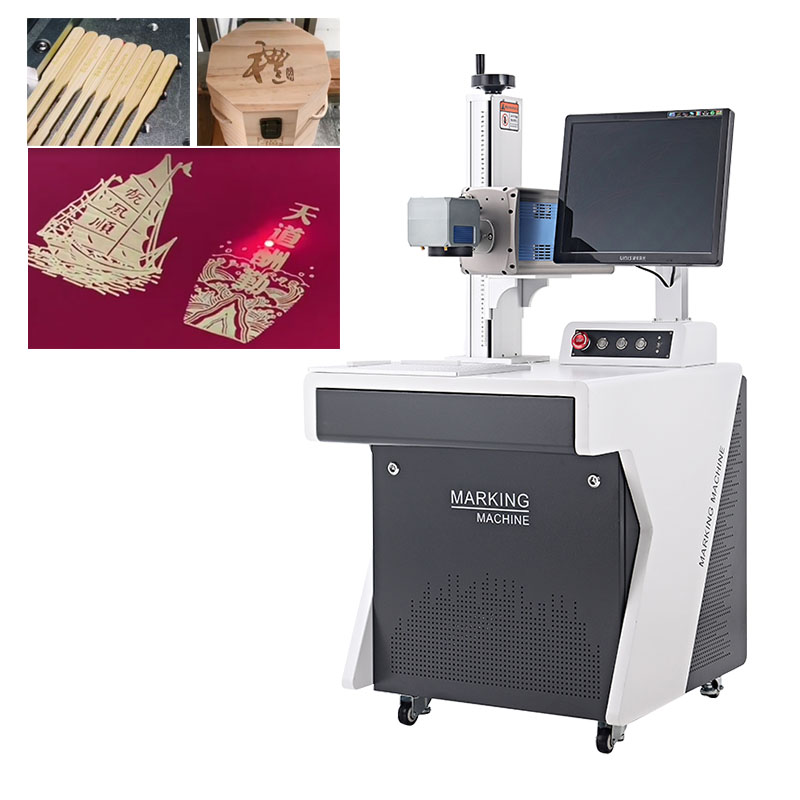
A desktop UV Laser Marking machine can be used for product development, sample testing and small-batch syringe production. A customized fixture keeps the syringe in a stable position and helps maintain consistent marking placement.
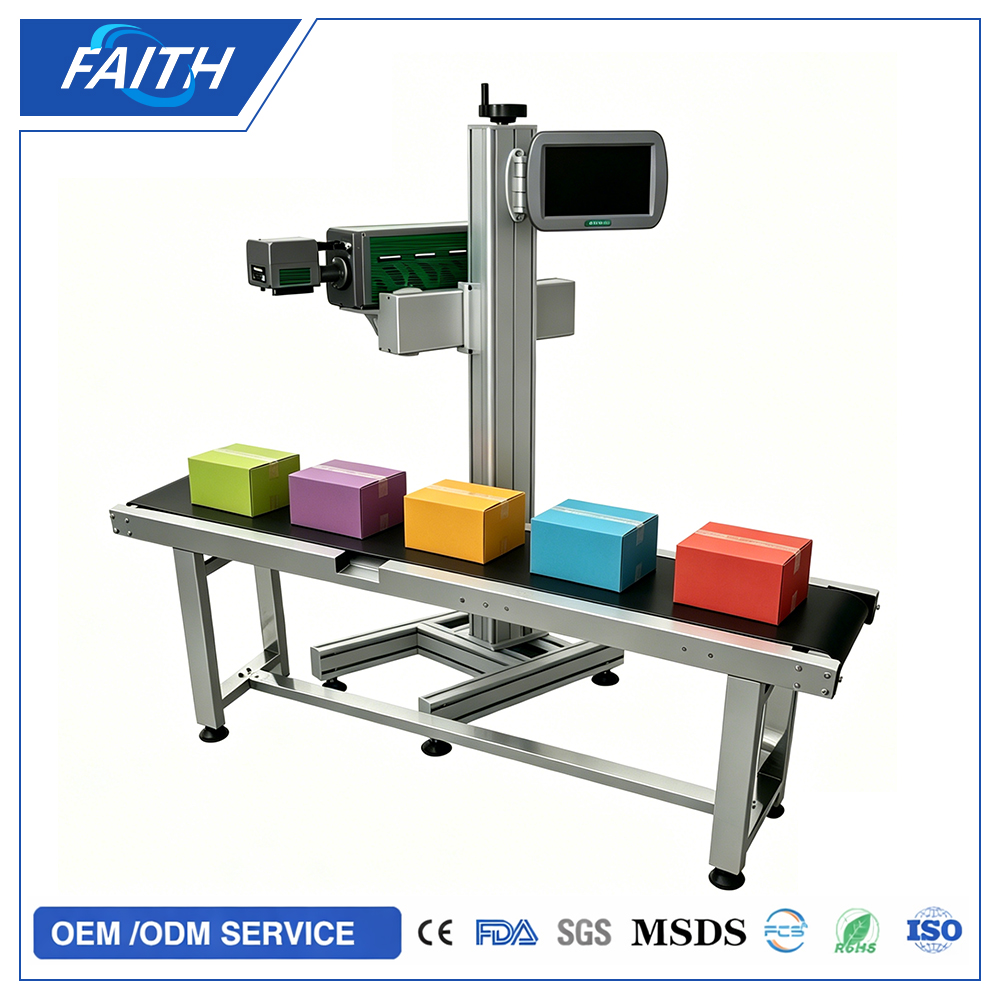
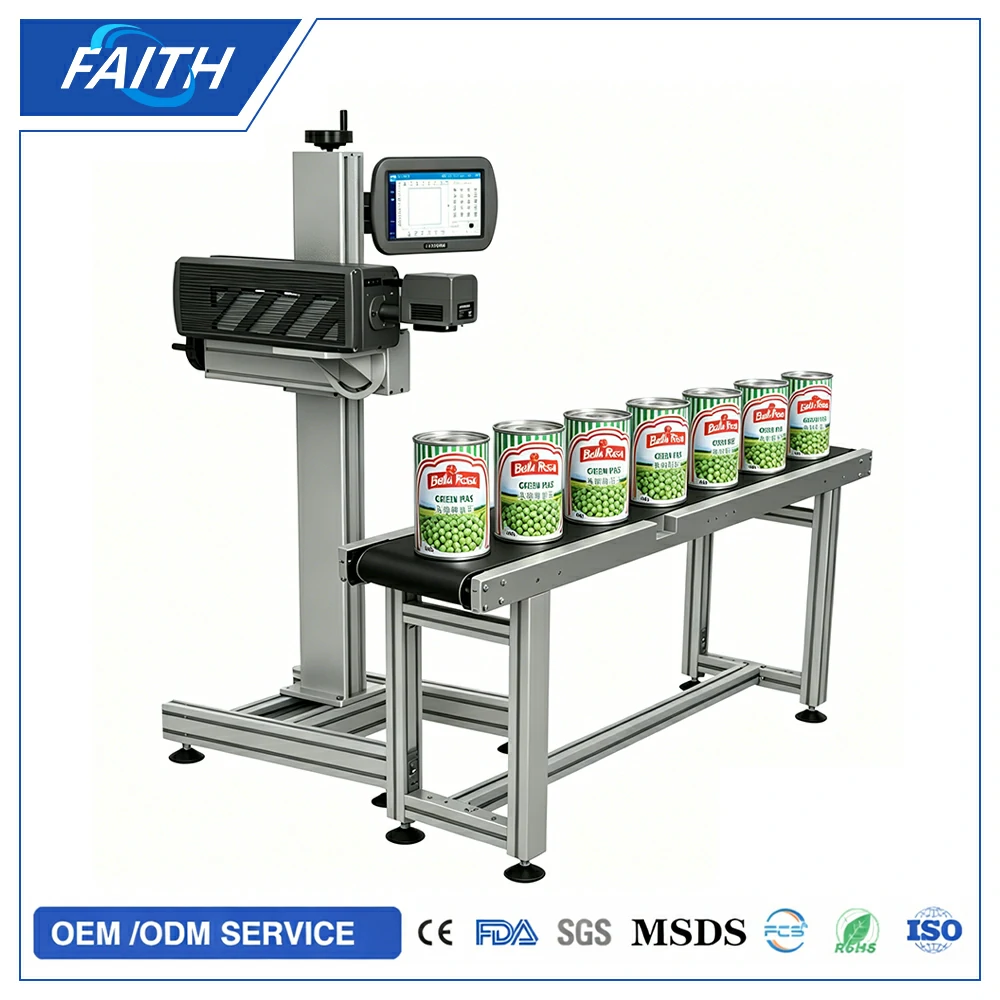
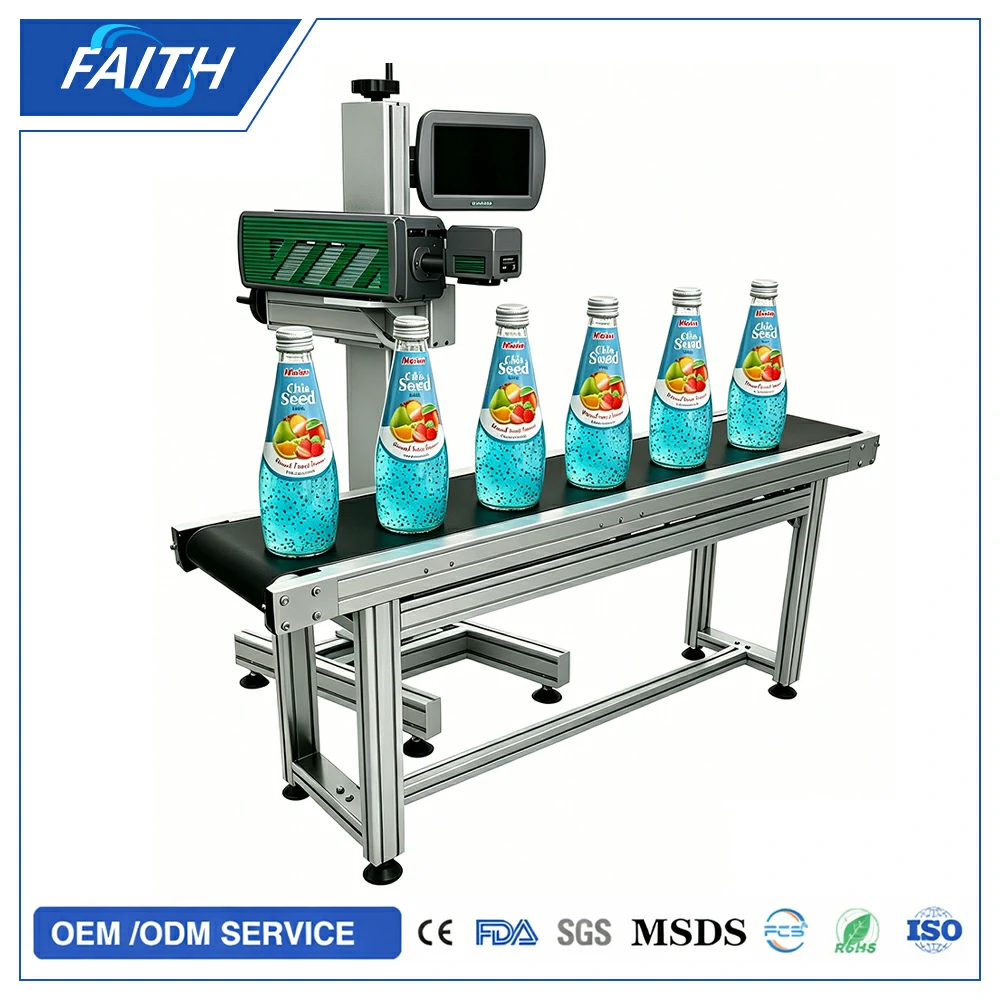
For high-volume production, the machine can be integrated with an automatic feeding system or conveyor. A sensor detects the product and triggers the laser when the syringe reaches the correct position.
An automatic system may include:
When syringes are not positioned consistently, a vision camera can identify the product orientation and adjust the marking coordinates. This helps reduce misalignment and manual adjustment.
Not all traceability information must be marked directly on the syringe. Some information may be placed on the individual sterile pouch, blister package, label or outer carton.
The correct laser type depends on the marking location.
UV laser is suitable for testing many plastic components and films. CO₂ laser can be considered for paper, coated packaging and certain non-metal packaging materials. A complete solution should evaluate both the syringe and its packaging.
Medical manufacturers normally pay close attention to process stability and documentation. They need more than a clear sample. They also want to know whether the machine can maintain the same marking effect during continuous production.
Important evaluation points include:
The discussion should begin with the syringe material, dimensions and production process rather than only the laser power.
Faith provides desktop, split, enclosed and flying UV laser marking machines for plastic and medical-device applications.
The system can be customized with a syringe fixture, conveyor, automatic feeder, product sensor, encoder, vision camera and protective enclosure. For production-line projects, the machine can also be connected to a PLC or production database to support batch numbers, dates and variable information.
Before recommending a machine, Faith needs the customer to provide:
An actual marking test can confirm whether the required contrast, clarity and production speed can be achieved without damaging the syringe.
Recommended title:
UV Laser Marking Machine for Plastic Syringes in Germany
Recommended inquiry sentence:
Send us your syringe material, dimensions, marking content and production speed. Faith will test your samples and recommend a suitable UV laser marking solution.
Please leave the message you want to inquiry. We will reply you as soon as possible within 24 hours.
Please leave the message you want to inquiry. We will reply you as soon as possible within 24 hours.