

A cable code may look clear when it leaves the printer and still fail later.
The cable passes through cooling, guide rollers and a winding unit. It rubs against other layers on the reel. During installation, workers pull it through conduits or cable trays. If the printed information becomes faint, the manufacturer may lose the link between the finished cable and its production batch.
This is a common reason cable manufacturers begin looking beyond ink-based coding.
The issue is not always poor print quality. Maintenance can become the larger problem. Nozzles need cleaning, solvent levels must be checked, and a printer that has been stopped over the weekend may require attention before Monday’s production begins.
German manufacturers usually expect more than a visible company name. A cable may need to carry its type, voltage rating, meter count, date and batch number in a narrow line that repeats continuously along the jacket.
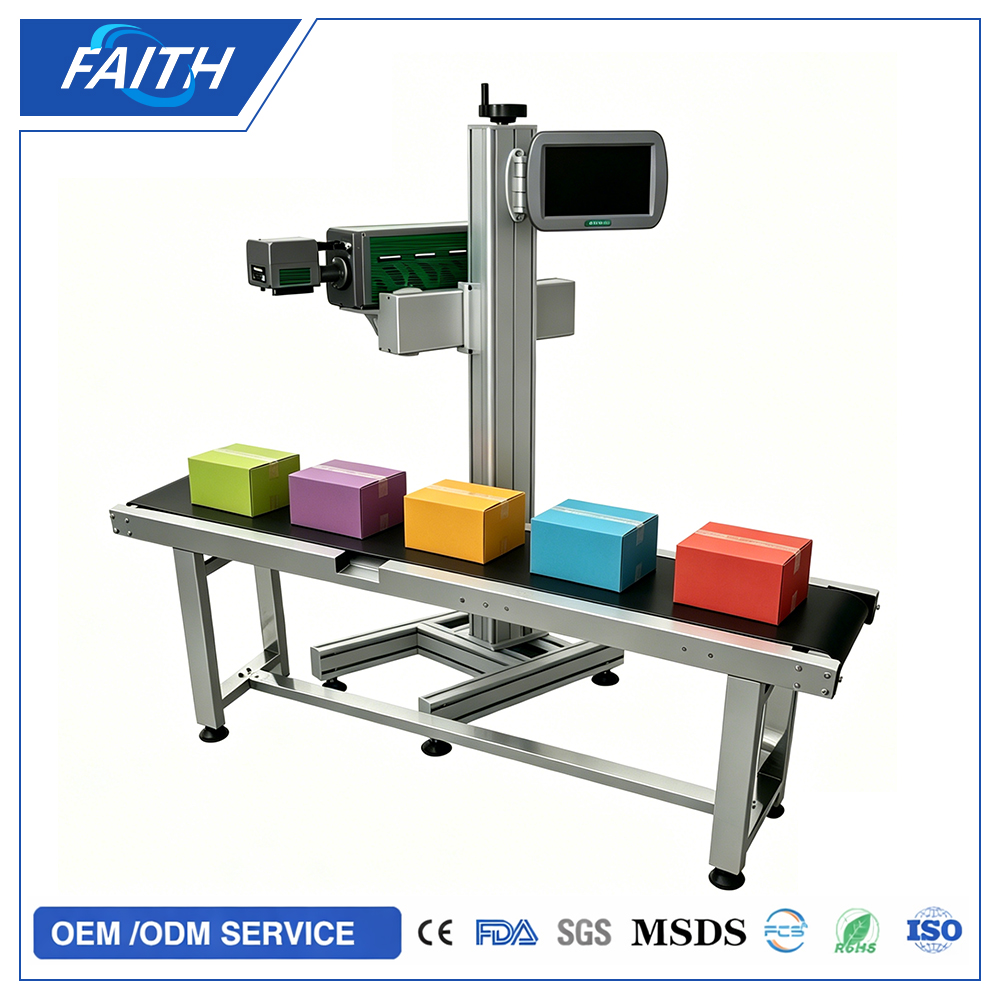
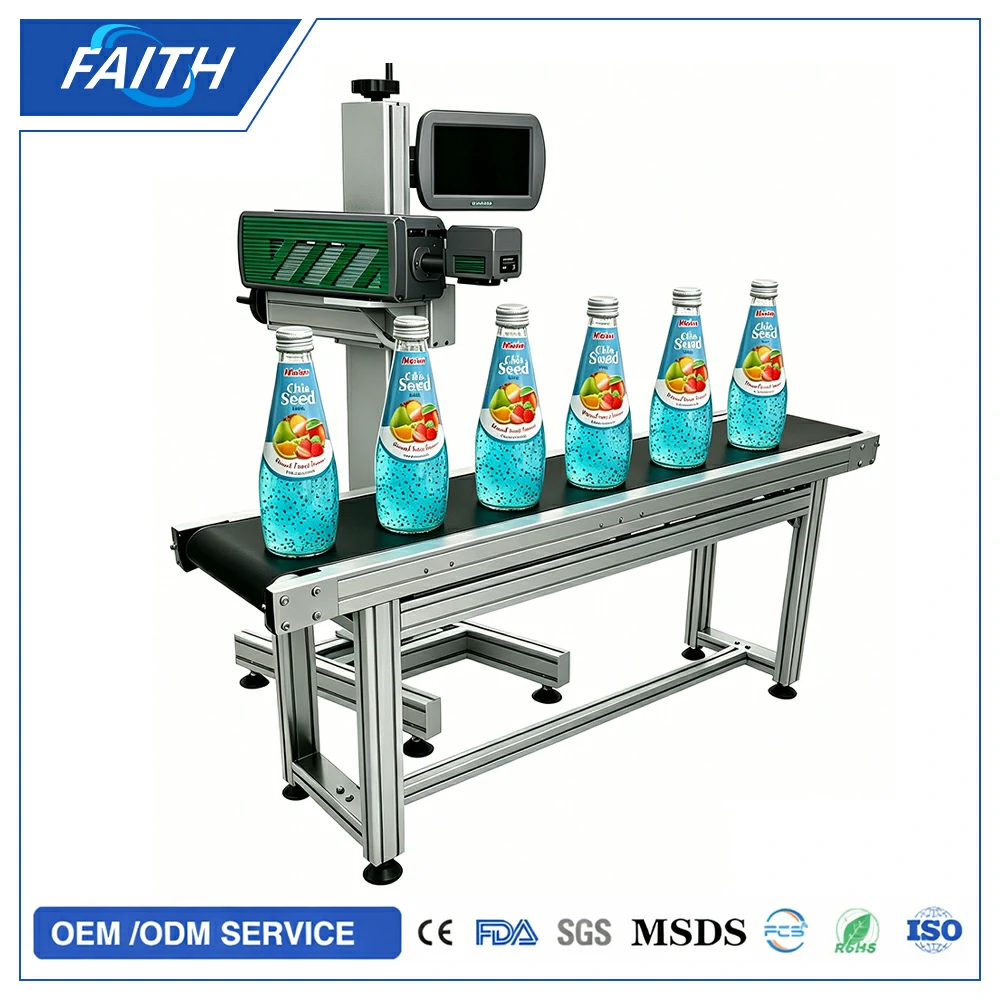
A UV flying laser marking system can create this information directly on suitable cable materials while the product moves through the line.
A buyer may describe the product as a black plastic cable, but that is not enough for a technical recommendation.
PVC, PE, PA, TPU and flame-retardant compounds can react differently under a UV laser. Two black cable jackets from different material suppliers may produce different levels of contrast.
The first test should therefore use the actual cable.
A useful sample evaluation includes:
A clean mark on a flat material sheet does not confirm that the result will remain stable on a moving cable.
Cable diameter also affects installation. A 4 mm wire can move sideways more easily than a rigid 20 mm cable. If the cable position changes before reaching the laser, characters may appear uneven or partly out of focus. A mechanical guide installed before the marking point is often as important as the laser source.
Electronic component manufacturers face a different problem: there is very little space.
A connector housing may measure 35 × 20 mm, yet the available flat area for identification could be only 12 × 8 mm. The customer may still request a Data Matrix code, model number and batch information.
Labels are often impractical at this size. Fine ink codes may spread, especially on textured or molded plastic. Mechanical engraving can put too much pressure on thin walls.
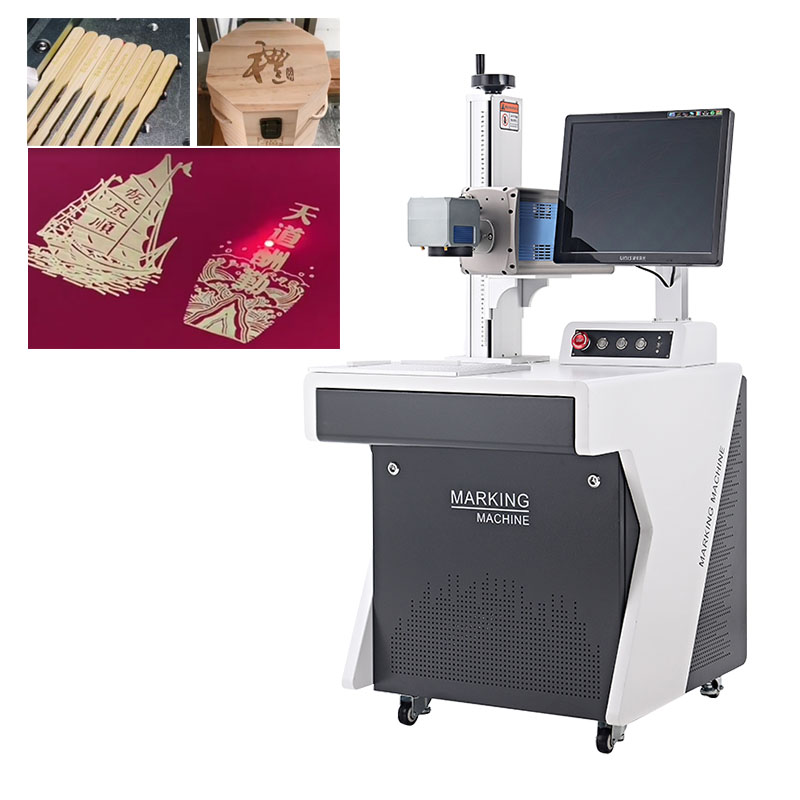
UV laser marking is often evaluated for these parts because it can produce fine details with limited heat influence on suitable materials.
Positioning is critical. A part that shifts by 2 or 3 mm may place the code on a curved edge or molding line. For repeat production, the factory may need:
The correct setup depends on whether the code is the same on every product or changes from one piece to the next.
A technical buyer may be satisfied with the sample, while the quality department still asks several questions.
Can the code be read after cleaning? Does the font remain consistent when production speed changes? Can the controller receive a serial number from the factory system? What happens if the product sensor misses a component?
These points should be discussed before shipment rather than during installation.
For cable lines, encoder communication can help the marking system follow actual line movement. This becomes useful when the speed changes during start-up, reel replacement or line adjustment.
For electronics production, data handling may matter more than speed. A unique code must be created, marked and recorded without duplication. The machine should also return a clear completion or fault signal if it is connected to other equipment.
Some cable materials respond well to CO₂ laser marking. Others may still be better suited to inkjet printing. Certain dark plastics require laser-sensitive additives before a high-contrast mark can be produced.
A UV system should be selected because the sample, speed and production arrangement support the decision—not simply because UV is described as a low-heat marking method.
It is also worth checking the required marking field. A very large field lens can reduce energy density and may not be suitable for extremely small, dense codes. Fine Data Matrix marking often works better within a smaller, well-controlled area.
A detailed inquiry saves time for both sides.
For cable applications, include the material, diameter, colour, line speed and the exact message. A photo showing the space between the cooling section and winding unit is especially useful.
For electronic parts, provide product dimensions, a drawing of the marking position and the smallest acceptable code size. State whether the part arrives in a fixed orientation.
A short video of the running line often reveals problems that cannot be seen in a specification sheet: vibration, product movement, limited mounting space or an operator manually correcting the cable position.
A UV laser marking project works well when the optical system, mechanical positioning and data flow are planned together. Selecting only the laser wattage rarely solves the full traceability requirement.

Please leave the message you want to inquiry. We will reply you as soon as possible within 24 hours.
Please leave the message you want to inquiry. We will reply you as soon as possible within 24 hours.