

Many factories do not have time to take products off the line, mark them one by one, and put them back again. The packaging line is already running. Bottles, boxes, bags, pipes, caps, labels, or parts move continuously. If coding depends on manual handling, the whole line slows down.
This is why online flying laser marking machines are used in more production lines.
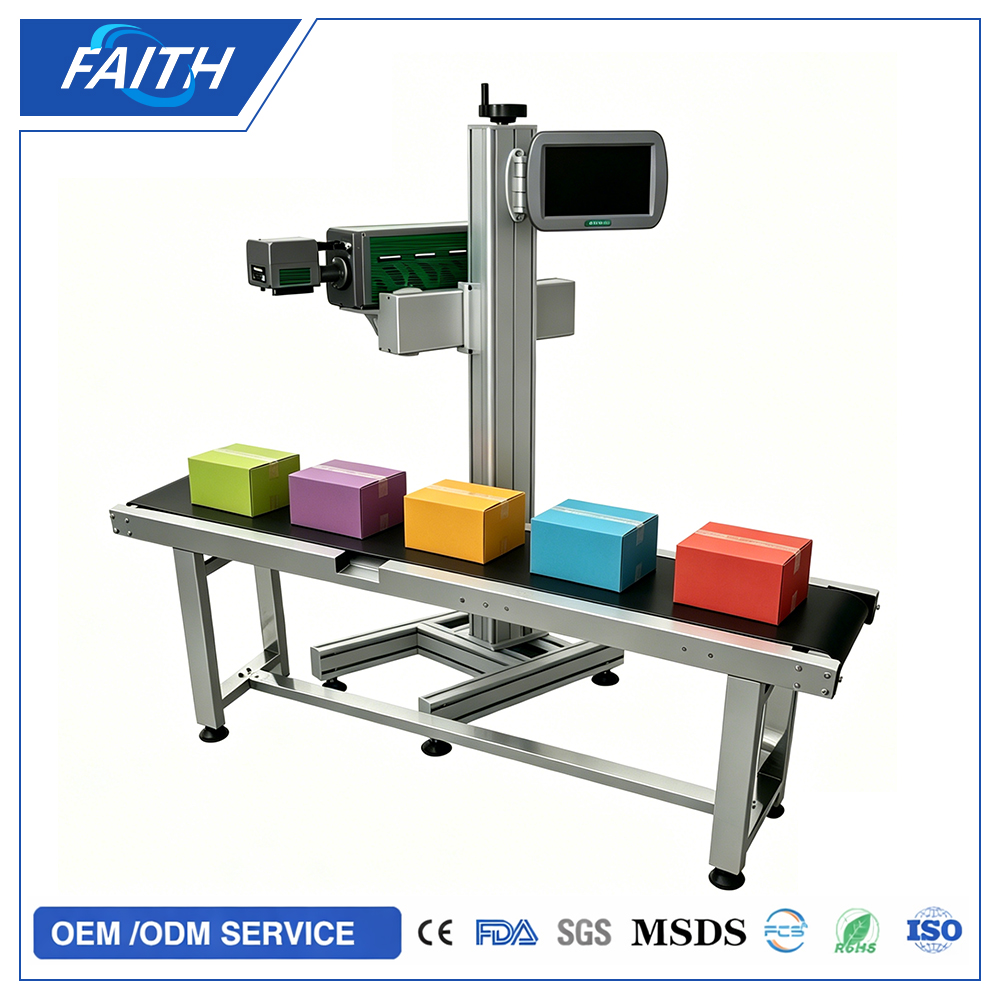
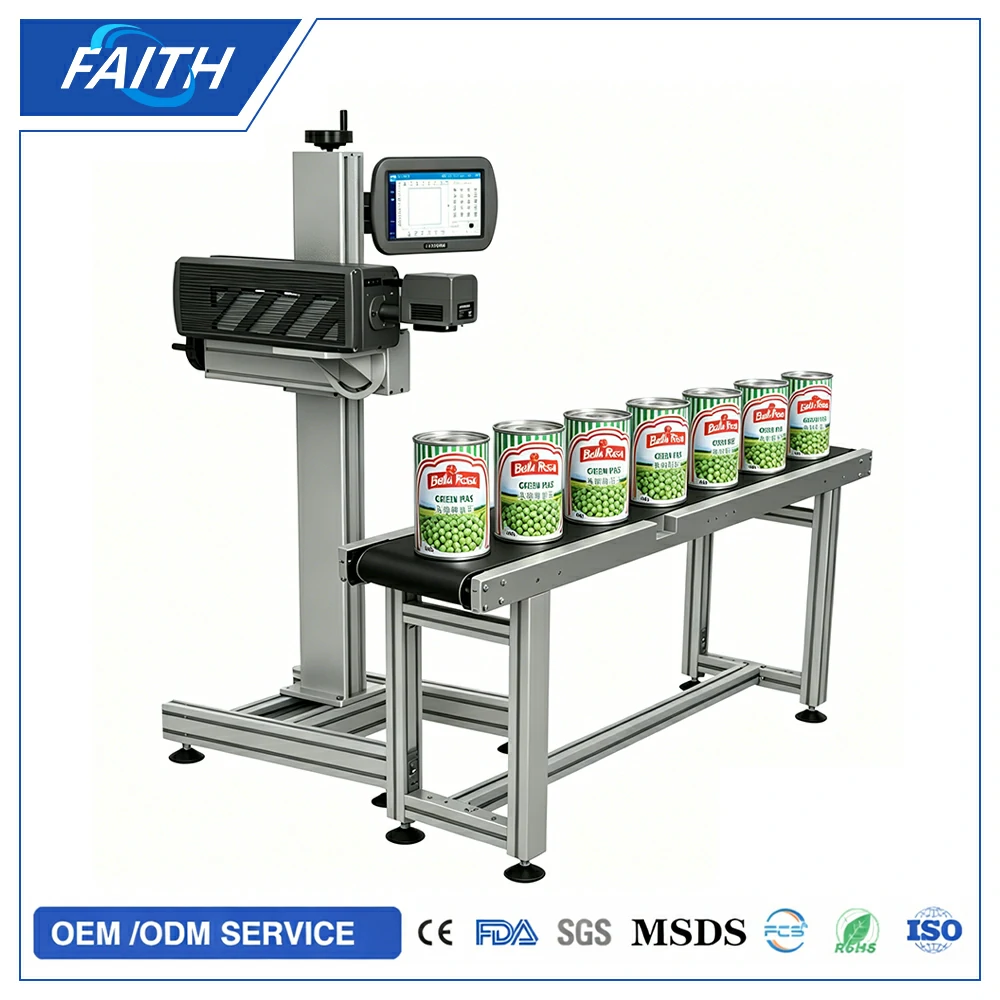
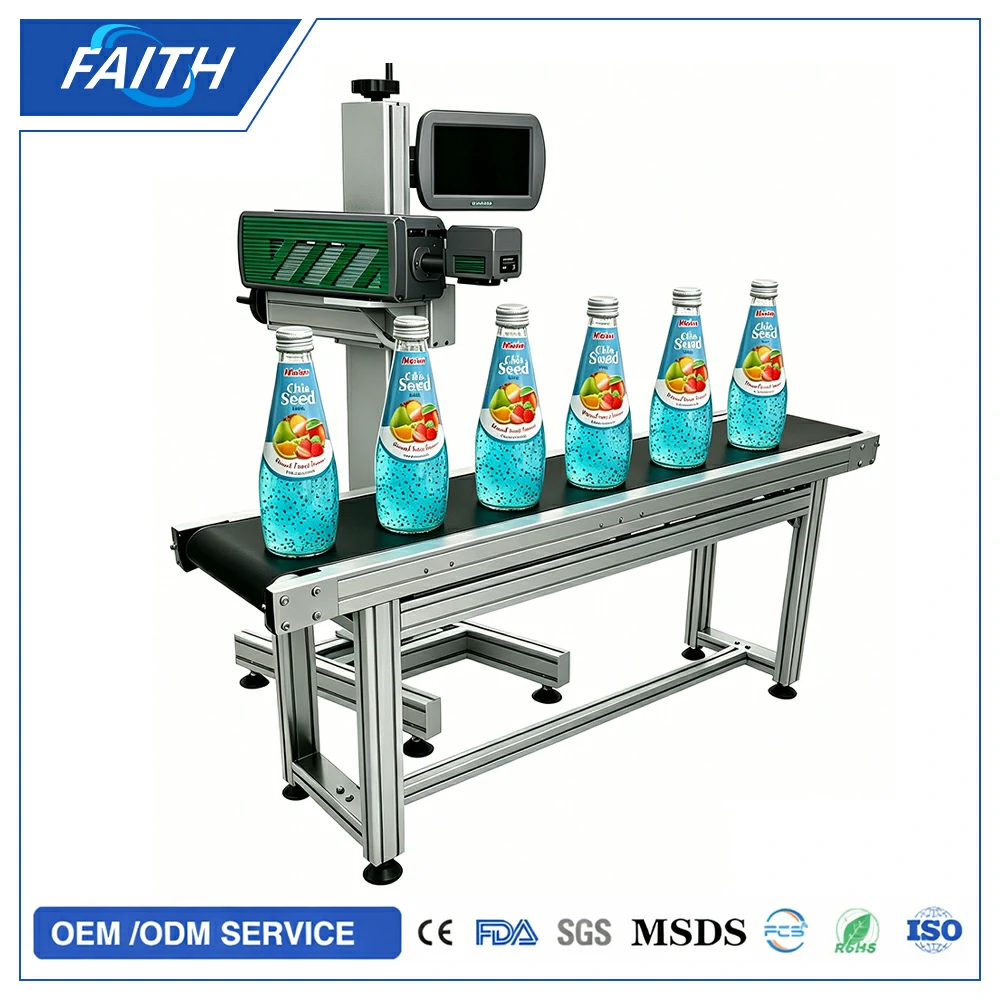
A flying laser marking machine is different from a desktop unit. It is installed beside or above a conveyor, packaging machine, filling line, pipe line, or automatic production system. When the product passes the marking position, the laser marks variable information such as production date, batch number, QR code, serial number, logo, or anti-counterfeit code without stopping the line.
In food, beverage, daily chemical, pharmaceutical, cable, pipe, building material, electronics, and packaging factories, speed is often the biggest pressure. A line may produce thousands of pieces per hour. If one operator needs to pick up every product and mark it on a desktop machine, the labor cost and error rate both increase. Online marking solves this by connecting coding with the existing production flow.
Some factories used inkjet printers before. Inkjet is still useful in many applications, but it has common problems. Ink can dry in the nozzle. The print may smear on some surfaces. The factory needs to manage ink, solvent, cartridges, and cleaning. In dusty or hot workshops, maintenance becomes more frequent. If the customer needs a permanent mark, ink may not be enough.
A flying laser marking machine uses no ink. The mark is made directly on the product surface or packaging material. For suitable materials, the result is clean and stable. There is no drying time, so the product can go directly to the next step after marking.
The right laser source depends on the material. Fiber flying laser is commonly used for metal parts, some hard plastics, tools, metal pipes, aluminum caps, and industrial components. CO2 flying laser is more suitable for paper boxes, cartons, labels, wood, leather, some plastic films, and packaging materials. UV flying laser is better for sensitive plastics, glass, cosmetic packaging, electronics, and high-end products where fine marking is required.
In a real factory, installation space matters. The marking head, laser cabinet, control system, bracket, sensor, and conveyor position all need to match the line. Some customers only send a product photo and ask for a quote. That is not enough for a reliable recommendation. The supplier should know the product size, line speed, marking area, material, code content, trigger method, and available installation space.
For example, a carton line may need date coding on the side of a moving box. The box height may change with different orders. The marking head should be adjustable. A cable factory may need continuous marking on wire insulation. The line speed is high, so the marking system must keep up. A beverage factory may need a batch code on bottle caps. The cap position must be stable, or the mark will shift.
Online laser marking is not only a machine purchase. It is a small integration project. The factory may need a sensor, encoder, bracket, protective cover, smoke exhaust, and communication with the production line. If the supplier has experience with packaging lines, the installation becomes much easier.
One reason customers replace manual coding is labor shortage. In many factories, skilled workers are not easy to keep. Manual coding also creates mistakes. A worker may choose the wrong date, place the product in the wrong position, or miss some pieces when the line is busy. With online marking, the code can be set in the software, and the product is marked automatically when it passes the sensor.
Traceability is another reason. More buyers now ask for QR codes, batch tracking, and product information management. Some factories need to change code content every shift or every batch. A flying laser marking machine can support variable marking when connected with the right software and data system. This is useful for factories that supply supermarkets, industrial customers, automotive companies, or regulated industries.
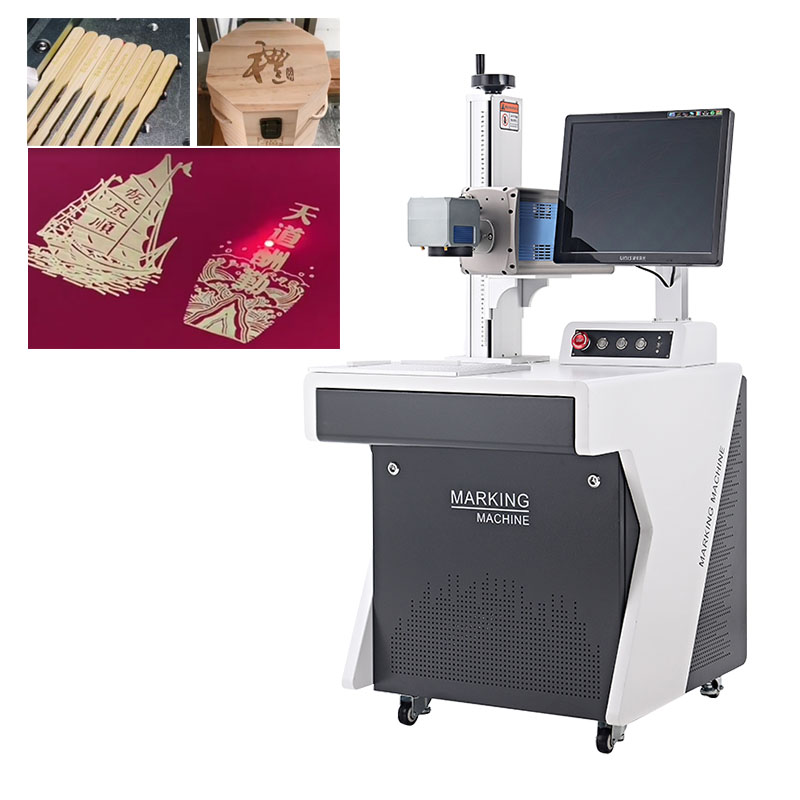
Of course, online laser marking is not suitable for every factory. If production volume is small and products are heavy or irregular, a desktop or handheld laser marking machine may be easier. If the material does not react well to laser, another coding method may be better. The supplier should check samples before confirming the model.
The buyer should also think about safety. Laser marking on a production line needs proper protection. Operators should not look directly at the laser path. Protective housing, warning labels, and safe working procedures are necessary. Smoke and dust from marking should also be handled, especially when marking plastic, paper, leather, or coated materials.
For factories that already use automatic packaging machines, filling machines, conveyor belts, or pipe extrusion lines, flying laser marking can make the coding step cleaner and faster. It reduces manual handling, avoids consumable problems, and improves code consistency.
The best customer for this machine is not someone who only wants a low-cost coder. It is a factory that has stable production volume, repeated marking needs, and pressure to improve efficiency. When the line cannot stop for manual marking, online flying laser becomes a practical upgrade.
Please leave the message you want to inquiry. We will reply you as soon as possible within 24 hours.
Please leave the message you want to inquiry. We will reply you as soon as possible within 24 hours.