

In modern manufacturing, product identification is no longer just about printing text or numbers. It plays a critical role in brand recognition, traceability, quality control, and compliance.
Thanks to its high precision, non-contact processing, and low operating cost, the laser marking machine has become one of the most widely used marking solutions across various industries.
This article explains how Laser marking machines work, their main advantages, suitable materials, application fields, and how to choose the right machine for your production needs.
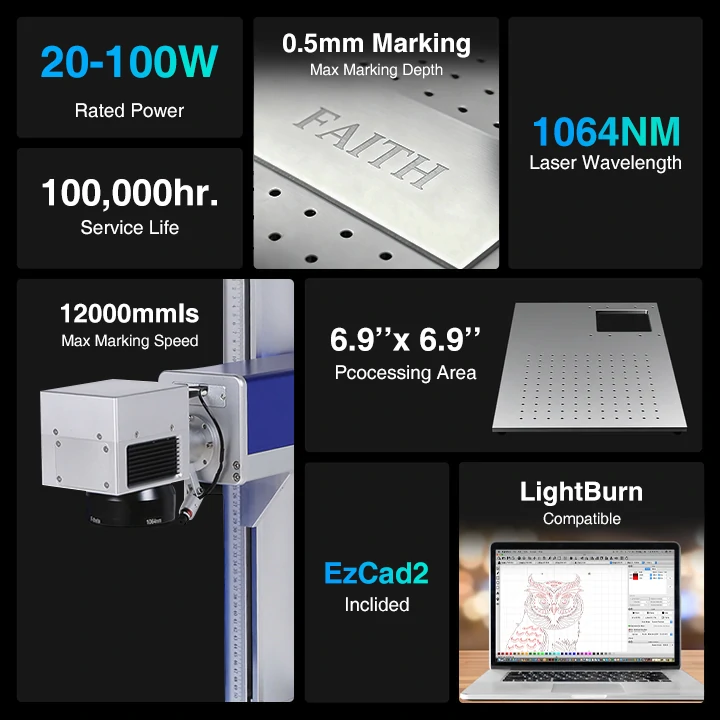
A laser marking machine uses a high-energy laser beam to create permanent marks on the surface of a material by changing its physical or chemical structure. Common marking content includes:
Product names and models
Barcodes and QR codes
Logos and brand marks
Serial numbers and batch codes
Technical data and anti-counterfeiting marks
Because the marking process is completely non-contact, it does not generate mechanical stress or tool wear, making it ideal for precision parts and high-value products.
With a high-quality laser source and stable system design, a laser marking machine can typically operate for 8–10 years or more.
Key Advantages of Laser Marking Machines
1️⃣ High Speed for Industrial Production
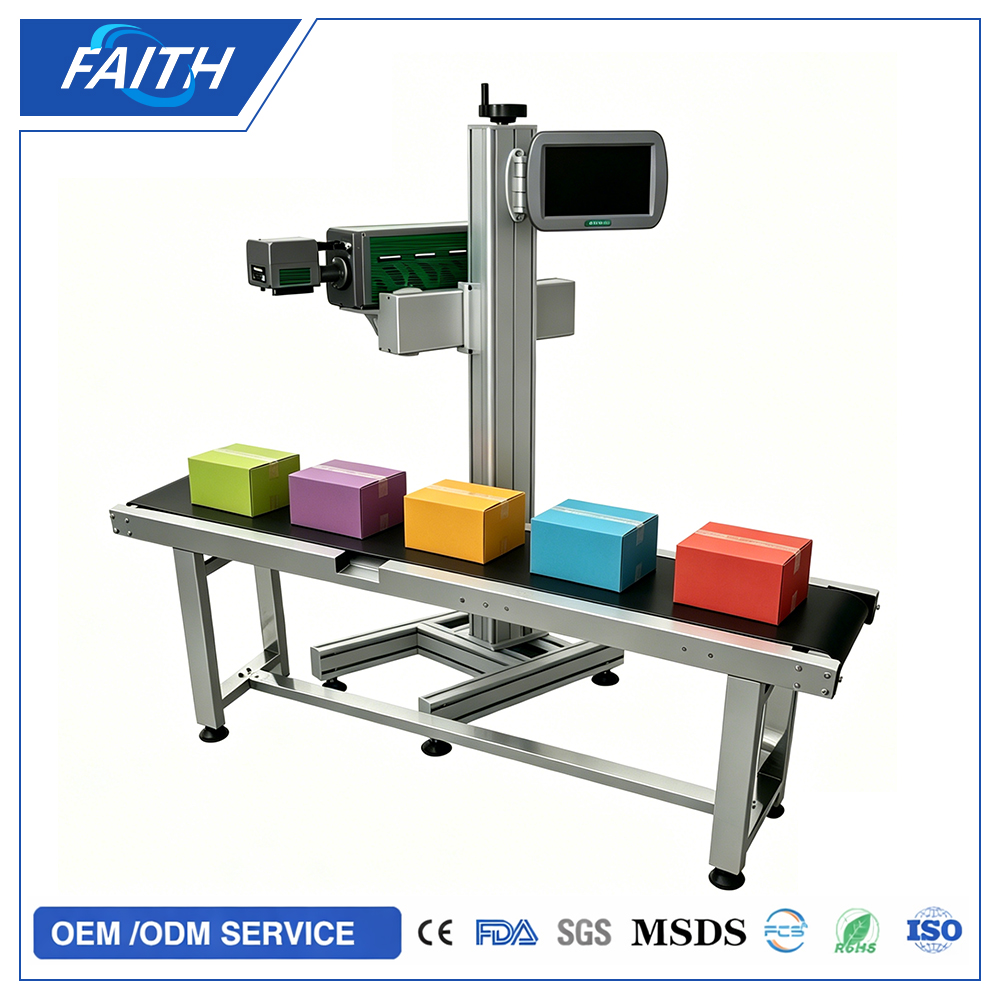
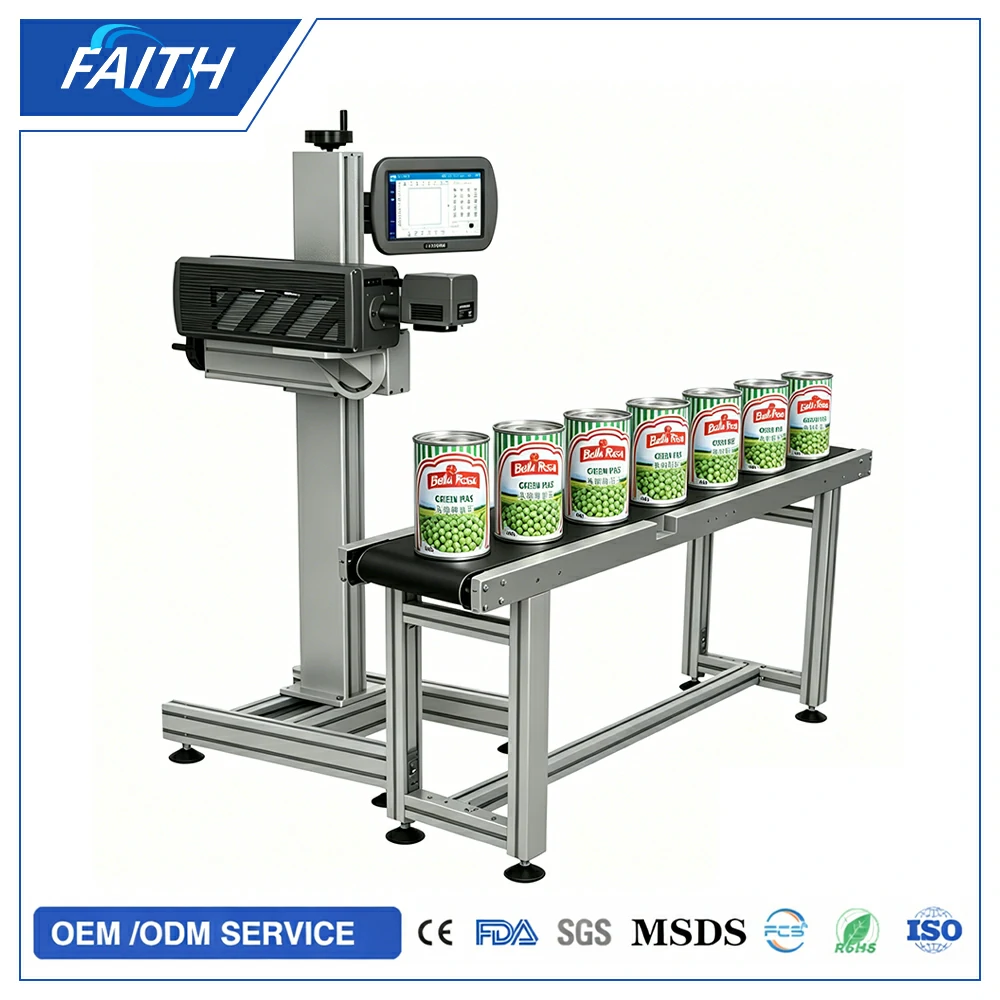
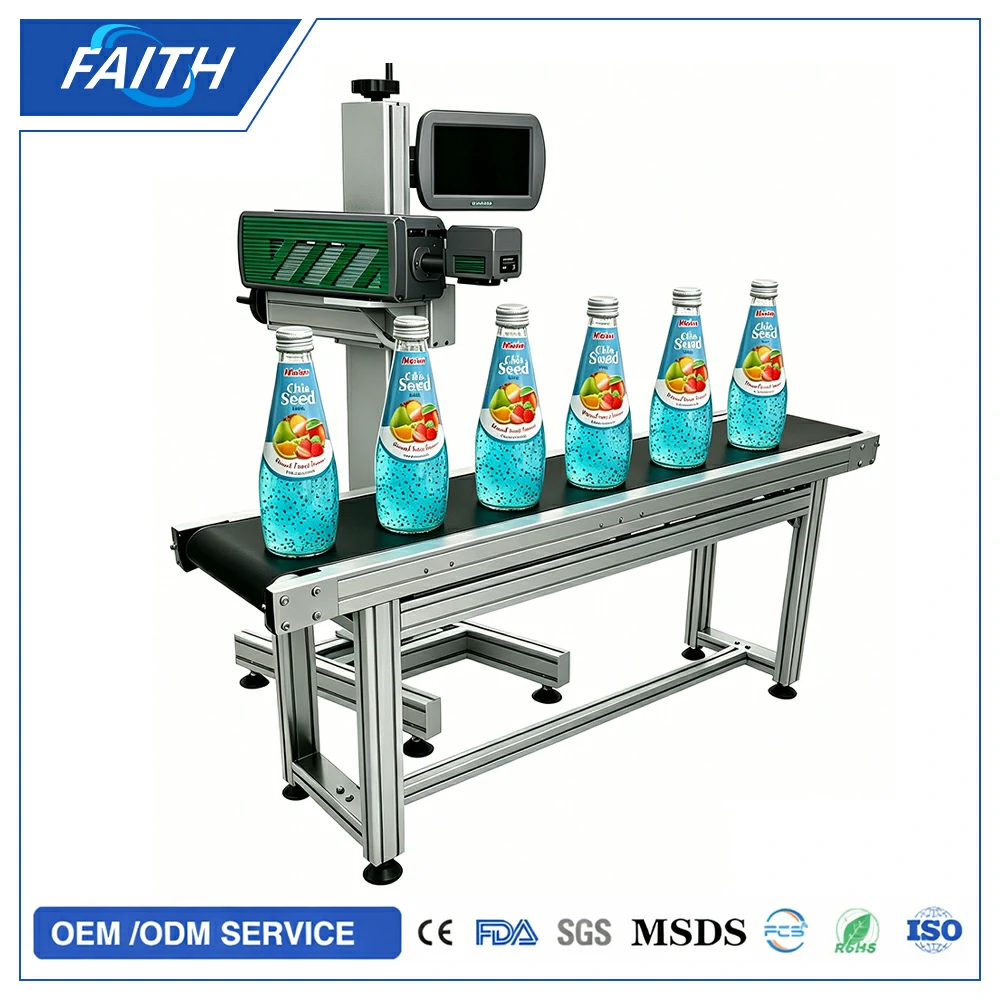
Laser marking uses a high-speed galvo scanning system, allowing text and graphics to be marked in a very short time. This makes it suitable for automated and online production lines.
2️⃣ Fine Marking and Excellent Repeatability
Thanks to the small laser spot size and high positioning accuracy, laser marking machines can produce sharp lines and tiny characters with consistent quality in mass production.
3️⃣ Permanent and Durable Marks
Laser marks are resistant to abrasion, corrosion, heat, and chemicals, ensuring long-term readability even in harsh environments.
4️⃣ Low Power Consumption and Stable Operation
Laser marking machines consume relatively low power and support continuous operation, meeting the needs of 24/7 industrial production.
5️⃣ Low Maintenance Cost
No ink, solvents, or consumables are required. Routine maintenance is minimal, significantly reducing operating costs compared to traditional marking methods.
6️⃣ Compact Design and Easy Integration
The compact structure allows easy integration into existing production lines, automation systems, or standalone workstations.
Working Principle of a Laser Marking Machine
The laser marking process generally follows these steps:
Design and File Import
Text or vector graphics are created using marking software and imported into the laser control system.
Parameter Settings
Laser power, scanning speed, pulse frequency, and other parameters are adjusted based on the material and desired marking effect.
Workpiece Positioning
The product is placed on the worktable, and the marking area is confirmed using a red-light preview or positioning frame.
Laser Scanning
The laser source emits a beam that is rapidly deflected by the galvo scanner along the X and Y axes.
Optical Focusing
An F-Theta lens focuses the laser beam precisely onto the material surface, ensuring stable marking quality.
Mark Formation
Higher energy removes surface material, creating an engraved effect
Lower energy modifies the surface structure or color, creating a clean mark
For example, stainless steel and titanium can achieve color marking through controlled heat oxidation.
Laser Marking vs. Laser Engraving
Laser Marking
Changes the surface properties of the material with minimal depth and no structural damage. The surface remains smooth, making it ideal for codes and logos.
Laser Engraving
Uses higher energy to remove material and create visible depth, suitable for decorative or deep permanent markings.
Materials Suitable for Laser Marking
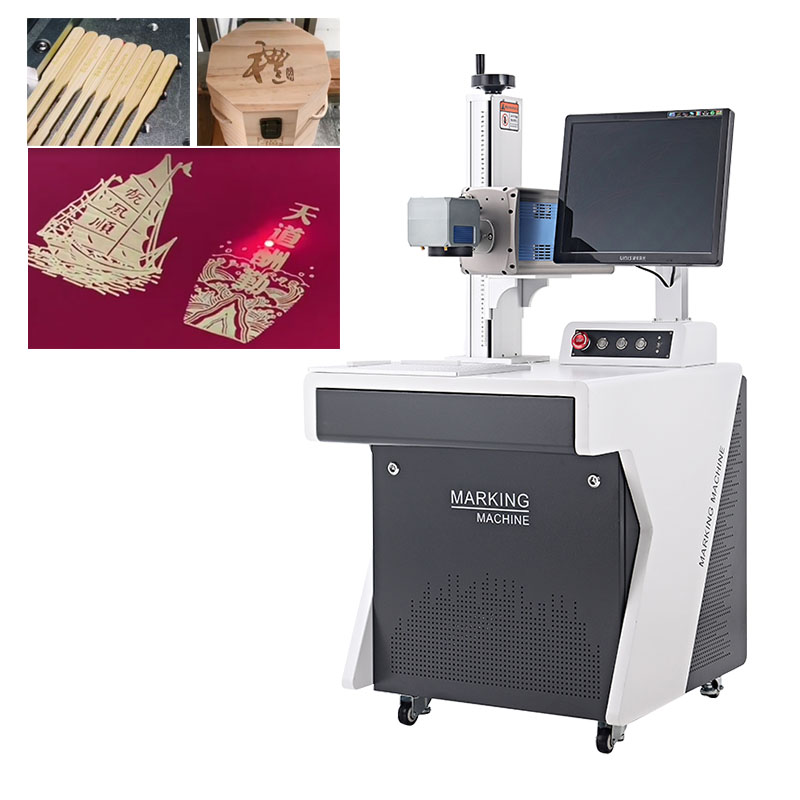
Laser marking machines can process a wide range of materials, including:
Non-metal Materials
Wood, plywood, MDF
Paper and cardboard
Acrylic, ABS, PET, rubber
Leather, synthetic leather, textiles
Plastics and composite materials
Metal Materials
Carbon steel
Stainless steel
Aluminum and aluminum alloys
Titanium and titanium alloys
Other Materials
Glass and ceramics
Painted or coated surfaces
⚠️ When processing plastics or rubber, an exhaust system is recommended to remove harmful fumes.
CO₂ Laser Marking Machine vs. Fiber Laser Marking Machine
CO₂ Laser Marking Machine
Best suited for non-metal materials such as wood, leather, paper, acrylic, and glass.
Fiber Laser Marking Machine
Designed mainly for metal materials and industrial applications, and is the most widely used type in manufacturing.
The correct choice depends on the material type and production requirements.
Common Applications of Laser Marking Machines
Laser marking machines are widely used in many industries, including:
Packaging and labeling
Barcode and QR code marking
Industrial parts identification
Jewelry and accessory engraving
Promotional and customized products
Restaurant and home branding items
Medical device marking
Electronic components
Nameplates, panels, and signs
Keyboard and keypad marking
Cable and pipe identification
How to Choose the Right Laser Marking Machine
When selecting a laser marking machine, consider the following factors:
Material type to be processed
Required marking speed and precision
Automation or production line integration
Daily operating time and workload
Technical support and after-sales service
For non-metal materials, a CO₂ laser marking or engraving machine is recommended.
For metal parts and industrial marking, a fiber laser marking machine is the best choice.
Conclusion
Laser marking machines offer high efficiency, stable performance, low maintenance cost, and broad material compatibility. By selecting the right laser type and configuration, manufacturers can significantly improve production efficiency while enhancing product identification and brand value.
Please leave the message you want to inquiry. We will reply you as soon as possible within 24 hours.
Please leave the message you want to inquiry. We will reply you as soon as possible within 24 hours.