News detail
Laser Marking Machine Types Explained: Material Compatibility and Industrial Applications
In industrial marking and product traceability systems, laser marking has become a mainstream solution due to its permanent marking quality, no consumables, and high automation capability. However, different laser sources vary significantly in wavelength, working principle, and material compatibility. Selecting the wrong type may result in poor marking quality or unnecessary cost.
Currently, the most widely used laser marking technologies in industry include CO₂ Laser marking machines, Fiber Laser Marking machines, and UV Laser Marking machines. The following sections provide a structured explanation of their principles, applicable materials, performance characteristics, and typical applications.
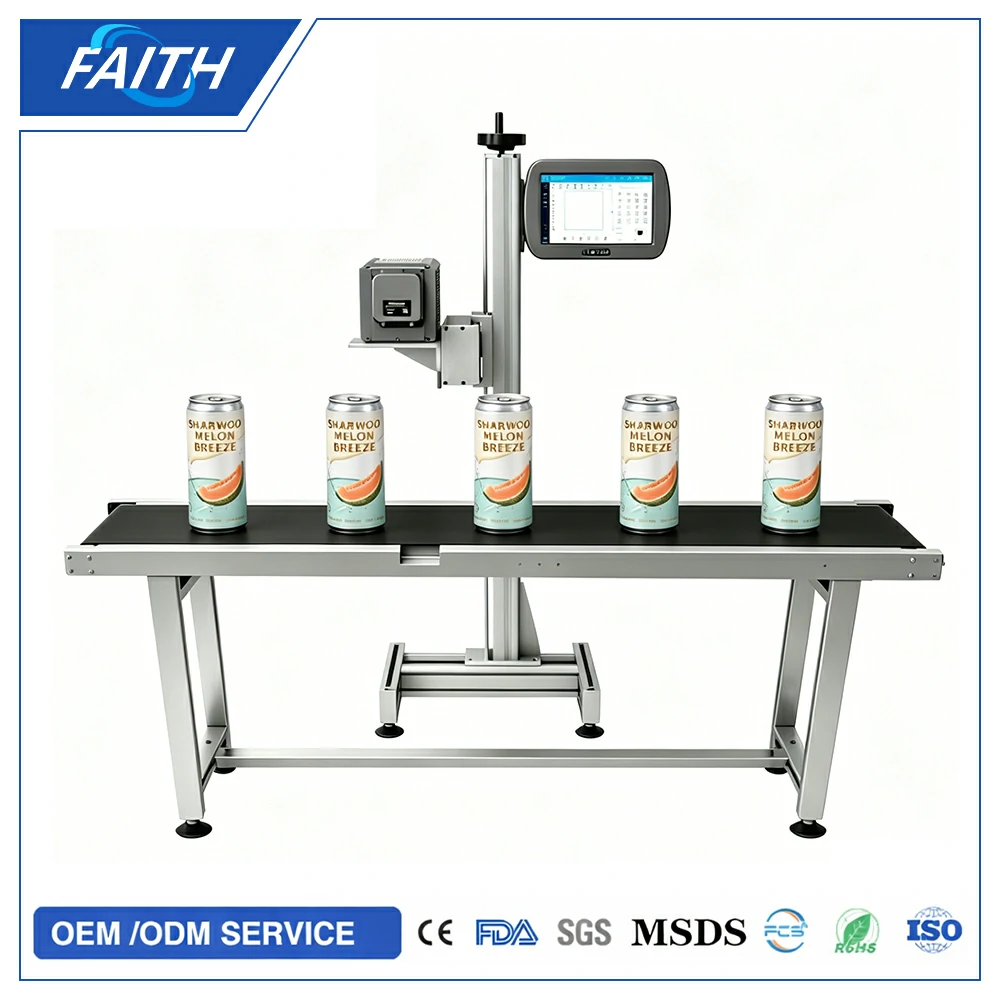
The CO₂ laser marking machine uses carbon dioxide gas as the laser medium. Under electrical excitation, it generates a far-infrared laser with a wavelength of approximately 10.6 μm. This wavelength is highly absorbed by most non-metal materials.
When the laser interacts with the material surface, marking is achieved mainly through thermal vaporization or carbonization.
Applicable Materials
- Wood and bamboo products
- Paper, cardboard, and labels
- Leather and textiles
- Acrylic and rubber
- Common plastics (ABS, PP, PE, etc.)
- Ceramic and stone materials
- Glass (surface engraving or coating removal)
Key Advantages
- Excellent performance on non-metal materials
- Fast marking speed, suitable for production lines
- Relatively low equipment cost
- Simple maintenance and stable operation
Limitations
- Not suitable for most metals
- Larger heat-affected zone compared to fiber or UV lasers
- Limited performance on some engineered plastics
Typical Applications
- Food packaging date and batch coding
- Carton and paper packaging marking
- Wooden crafts and gift engraving
- Acrylic signage and advertising boards
- Leather product branding
- Glass cup and bottle engraving
The fiber laser marking machine uses rare-earth-doped optical fiber as the gain medium and emits a near-infrared laser with a wavelength of approximately 1064 nm. The laser beam is precisely controlled by a high-speed galvanometer system.
Marking is achieved through oxidation, melting, or surface vaporization.
Applicable Materials
- Stainless steel, carbon steel
- Aluminum, copper, iron, titanium alloys
- Electroplated or coated metals
- Some engineering plastics (ABS, epoxy resin)
- Painted or ink-coated surfaces
Key Advantages
- Excellent beam quality with very small focus spot
- High precision and strong contrast marking on metals
- Fast processing speed, ideal for automation lines
- High electro-optical efficiency
- Long service life with virtually no maintenance
Limitations
- Poor performance on most non-metal materials such as wood, paper, and untreated glass
- Limited compatibility with transparent plastics
Typical Applications
- Metal nameplates and serial numbers
- Electronic device housings
- Automotive component traceability codes
- Medical instrument marking
- Tools, molds, bearings, and valves identification
The UV laser marking machine typically uses third-order or fourth-order frequency conversion technology to generate a 355 nm ultraviolet laser.
Due to its short wavelength, UV laser enables a photochemical reaction (photo-ablation effect) that directly breaks molecular bonds in the material. This is known as a cold processing method with minimal thermal impact.
Applicable Materials
- PCB and FPC circuit boards
- Silicon wafers and semiconductor materials
- Glass, sapphire, and ceramics
- Precision electronic components (IC chips, sensors)
- Medical devices and high-end plastics
- Food and pharmaceutical packaging films
Key Advantages
- Extremely small heat-affected zone
- Ultra-fine marking capability (micron-level precision)
- High contrast and minimal material damage
- Suitable for high-value and sensitive materials
Limitations
- Higher equipment and maintenance cost
- Slower marking speed compared to fiber laser
- More demanding on operating environment
Typical Applications
- Micro QR codes on PCB/FPC boards
- Pharmaceutical and medical packaging traceability
- Food packaging film marking
- Mobile phone components and precision housings
- Glass artwork and optical components
4. How to Choose the Right Laser Marking Machine?
When selecting a laser marking system, the decision should be based on application requirements rather than price alone.
Key Selection Factors:
- Material Type
- Metals → Fiber laser
- Non-metals → CO₂ laser
- High precision or sensitive materials → UV laser
- Marking Precision Requirements
- Standard coding vs micro-level marking
- Production Line Speed
- High-speed production → CO₂ or fiber laser preferred
- Industry Compliance
- Food and pharmaceutical industries require clean and non-contact marking
- Budget and Long-Term Cost
- Consider not only purchase price but also maintenance and lifespan
Conclusion
There is no single “best” laser marking machine—only the most suitable one for a specific application. Each laser type is designed for different material characteristics and industrial needs.
- CO₂ lasers are ideal for non-metal materials
- Fiber lasers are the standard solution for metal processing
- UV lasers are used for high-precision and heat-sensitive applications
Choosing the correct system ensures better marking quality, higher production efficiency, and lower long-term operational cost.
Releted Tags: 5W/10W UV Laser Marking Plastic,
C02 Flying Laser Marking Machine,
CO2 Laser Marking,
CO2 laser marking machine,
Fiber Laser Marking,
Fiber Laser Marking Machine,
Fiber Laser Marking Machine Marks,
Flying laser marking machine,
laser marking,
Laser marking machine,
marking,
UV Laser Marking,
UV laser marking machine,
UV laser marking machines


Please leave the message you want to inquiry. We will reply you as soon as possible within 24 hours.