

In modern manufacturing, product marking is closely connected with traceability. A small QR code, serial number, batch code, or production date can carry important information about production time, material source, quality inspection, and logistics. For many factories, this information is no longer optional. It is part of production management and customer requirements.
A laser marking machine is widely used for this purpose because it can create permanent, clear, and stable marks on different products. Compared with labels or ink printing, laser marking is more suitable for products that need long-term identification, anti-counterfeiting, and industrial traceability.
QR code marking is one of the most common applications. A QR code can link to product information, inspection records, user manuals, warranty pages, or internal production systems. In automotive parts, machinery components, electronic products, tools, medical packaging, and consumer goods, QR codes help factories manage each product or batch more efficiently.
The challenge is that a QR code must be clear enough to scan. If the lines are broken, the contrast is low, or the surface is damaged, scanning may fail. A good laser marking machine can produce high-precision codes with clear edges. For metal parts, fiber laser marking is usually used. For plastic, glass, or electronic components, UV laser marking may give a cleaner result. For cartons and paper packaging, CO2 laser marking can be a practical choice.
Serial number marking is another important application. Unlike batch codes, serial numbers can give each product a unique identity. This is useful for warranty management, quality tracking, after-sales service, and anti-counterfeiting. For example, a machinery part can be marked with a unique serial number before assembly. If a problem happens later, the factory can trace the production batch, machine operator, inspection record, and delivery information.
For metal parts, laser-marked serial numbers are difficult to remove. This is important in industries where product identity must remain readable for a long time. Automotive parts, engine components, bearings, valves, flanges, molds, tools, and metal plates often require this type of permanent marking. A fiber laser marking machine can mark numbers, letters, logos, barcodes, QR codes, and Data Matrix codes on metal surfaces with high stability.
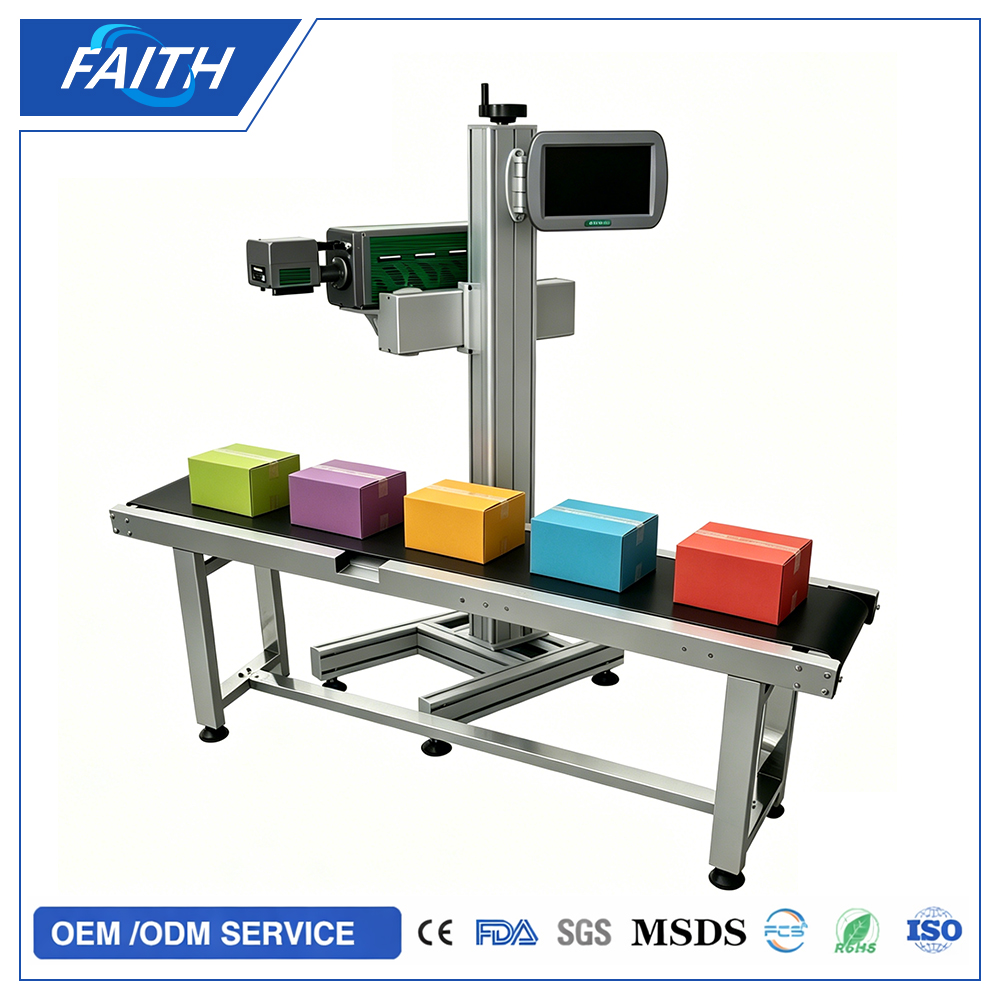
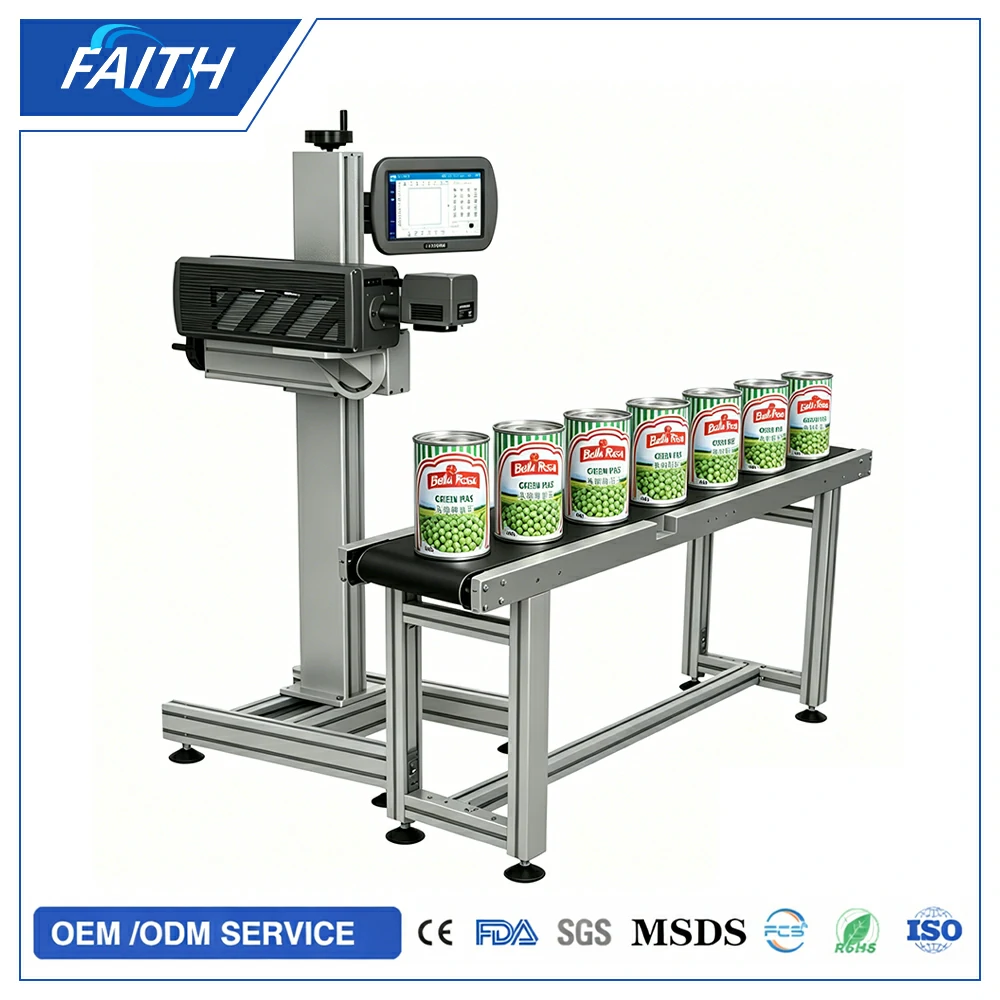
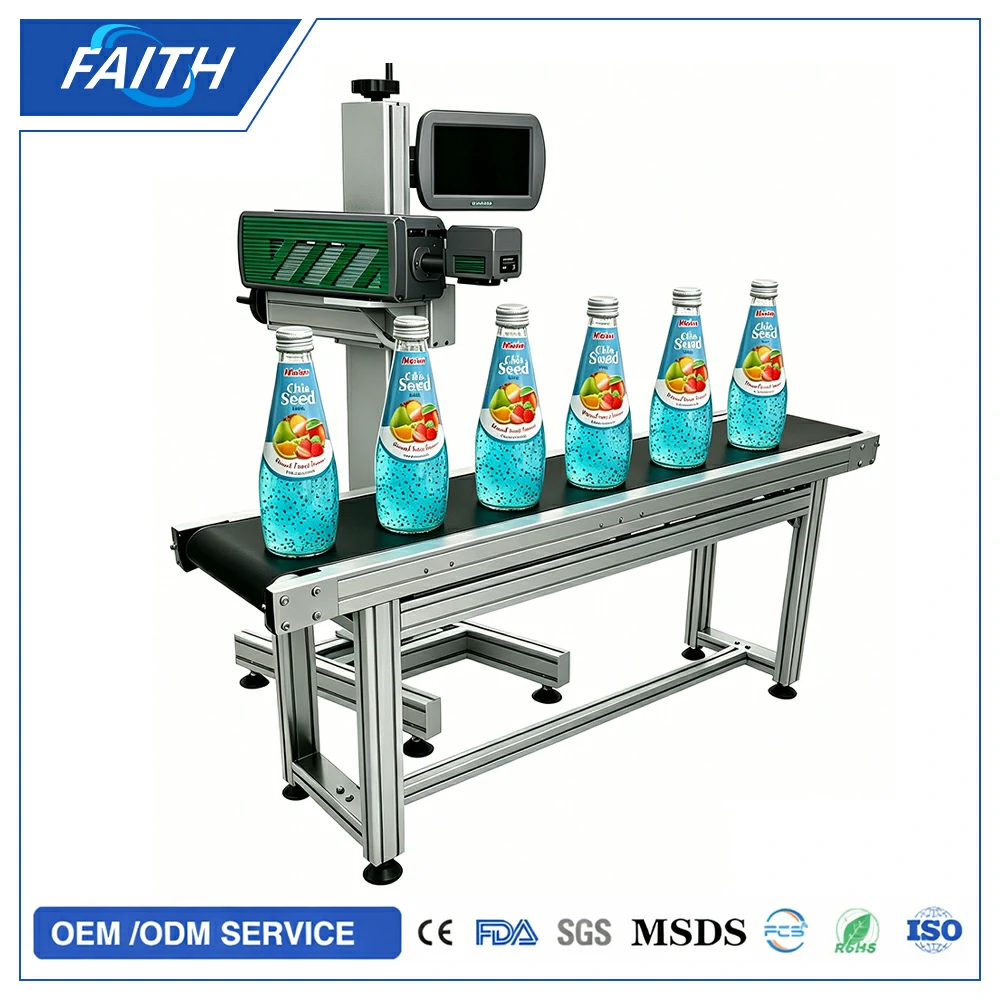
Batch code and date code marking are more common in packaging production. Food, beverage, pharmaceutical, cosmetic, daily chemical, and hardware packaging products usually need production date, expiry date, lot number, or batch number. In these industries, marking speed and production line integration are very important. A Flying laser marking machine can be installed beside the conveyor and mark products while they are moving.
For example, a food packaging factory may need to mark expiry dates on paper boxes or plastic film. A beverage factory may need to mark batch codes on bottle caps or labels. A pharmaceutical packaging line may need to mark lot numbers and traceability codes on cartons. In these cases, laser marking can reduce the use of ink and solvent, avoid nozzle clogging, and keep the production line cleaner.
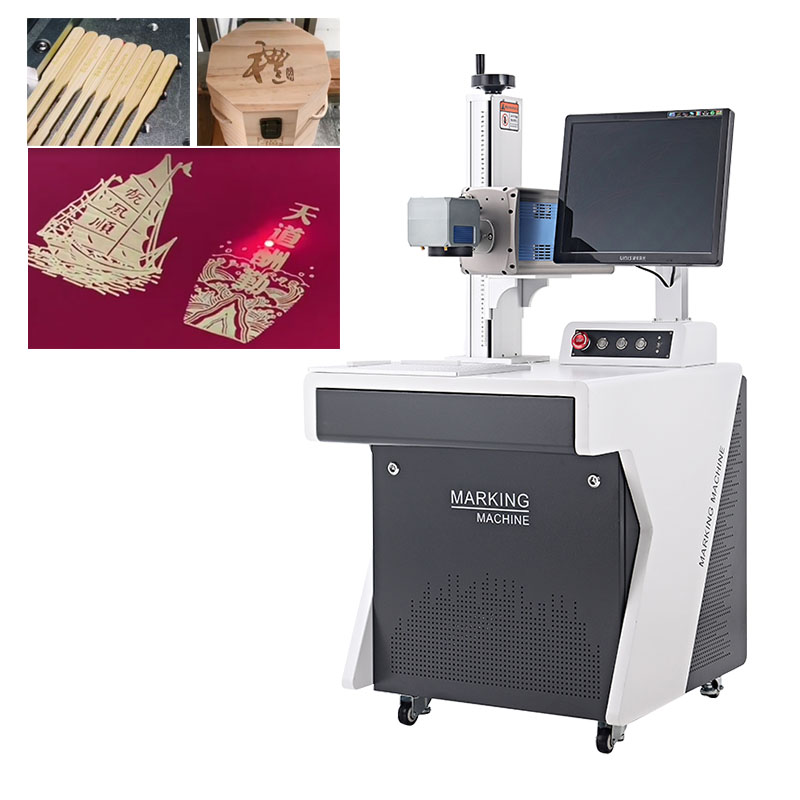
Different products require different laser types. For metal parts and hard plastics, fiber laser marking is commonly used. For fine plastic parts, glass bottles, transparent materials, and electronic components, UV laser marking is often more suitable. For paper boxes, wooden products, leather, acrylic, and many packaging materials, CO2 laser marking is widely used.
The marking content can also be connected with factory software. Many laser marking systems support variable data marking, such as automatic serial numbers, time, date, batch number, QR code, barcode, and imported database information. This is useful for factories that need flexible production. The operator can set the marking rule once, and the machine can automatically generate different codes for each product.
For production managers, stability is more important than a single good sample. A machine must be able to mark clearly during continuous operation. The code must stay in the correct position. The scanning rate should remain stable. The software should be easy for operators to use. The machine should also work with fixtures, conveyors, sensors, rotary devices, or automatic feeding systems when needed.
Before ordering a laser marking machine, buyers should test real samples with real marking content. A simple logo sample may look good, but QR code and barcode marking require more attention. Buyers should check scanning performance, marking contrast, line clarity, marking speed, and whether the surface is burned or damaged. If the product will be used outdoors or in harsh environments, the durability of the mark should also be considered.
Laser marking is not only a way to print information. It helps factories build a more reliable traceability system. When every product can be identified, scanned, and tracked, production management becomes easier. Quality problems can be traced faster. Customers can trust the product more. For B2B buyers, this is one of the biggest values of a laser marking machine.
Whether the factory produces metal parts, electronic products, packaging materials, tools, or daily goods, QR codes, serial numbers, and batch codes are becoming more important. A suitable laser marking machine can make these marks clear, permanent, and stable, helping manufacturers improve both production efficiency and product control.
Please leave the message you want to inquiry. We will reply you as soon as possible within 24 hours.
Please leave the message you want to inquiry. We will reply you as soon as possible within 24 hours.