

In today’s food manufacturing industry, packaging is no longer just about sealing and protecting products. It has become a critical part of traceability, compliance, and brand protection.
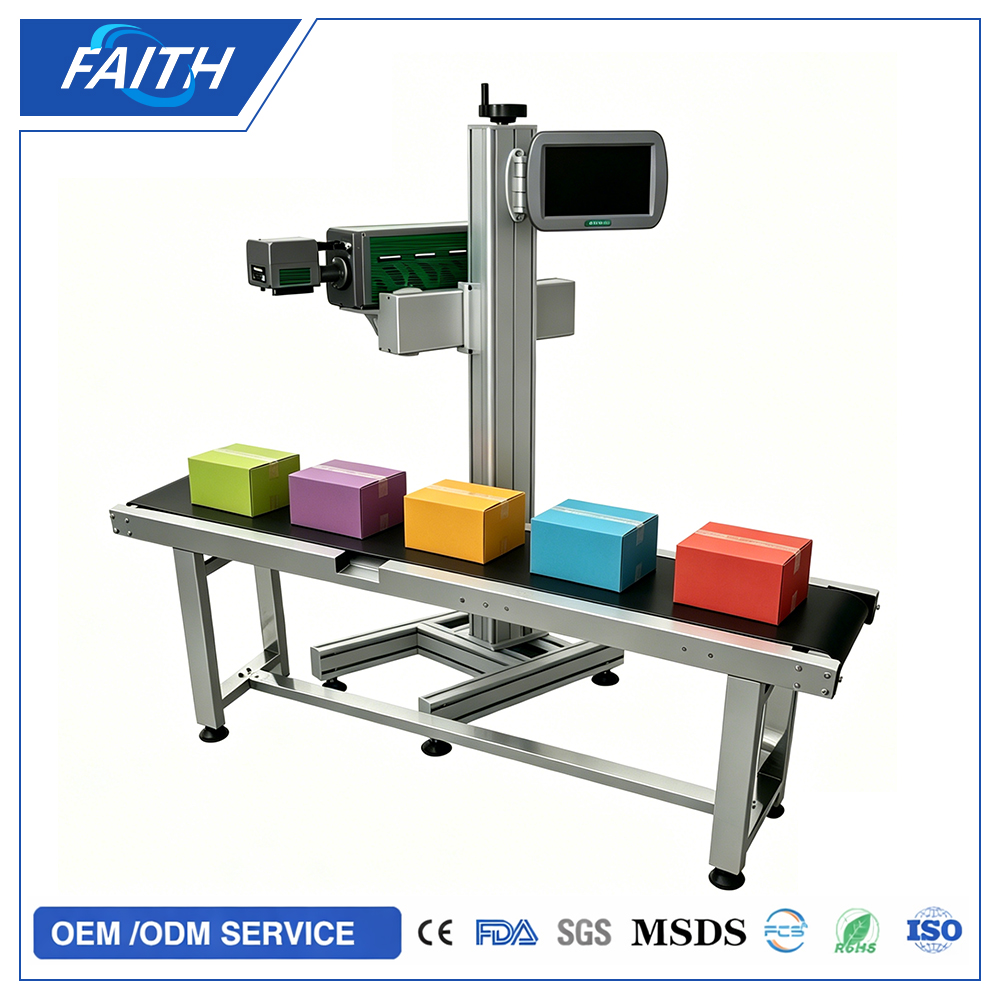
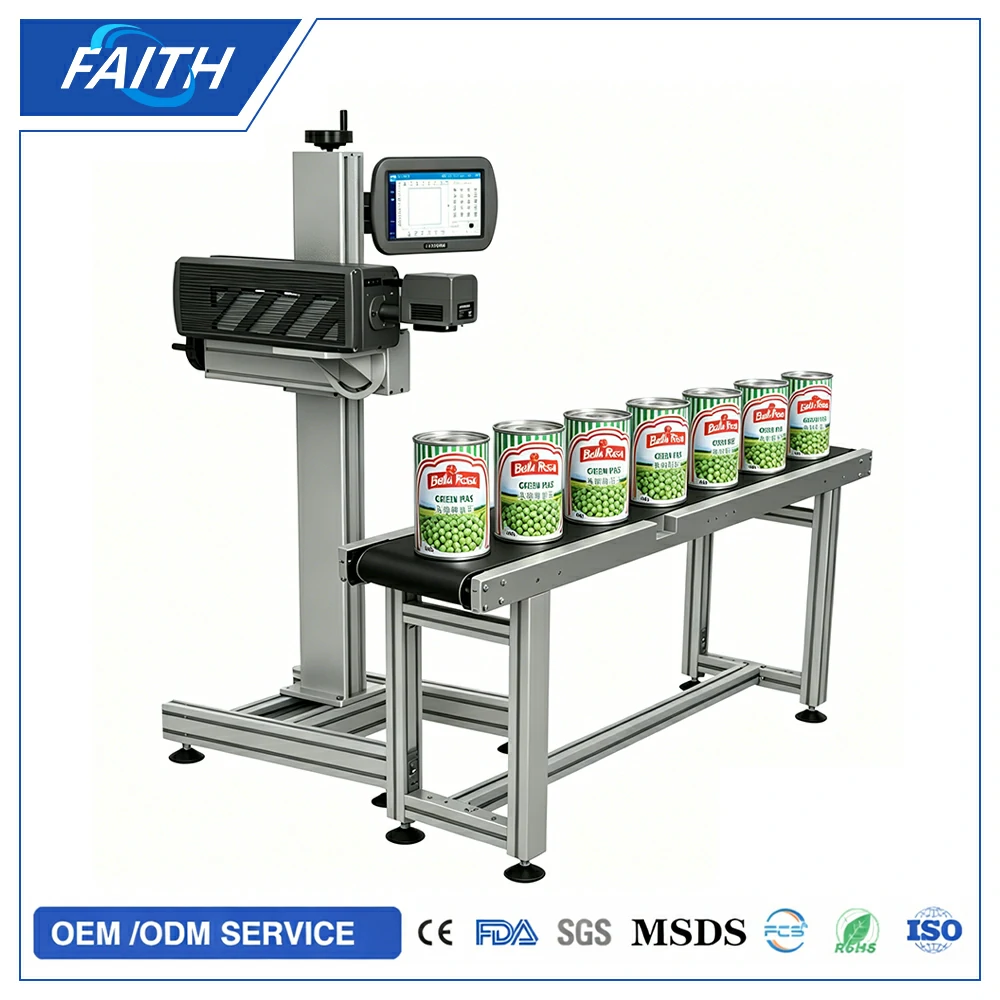
To meet strict global food safety standards, manufacturers are increasingly adopting laser marking technology integrated into automated packaging lines. These systems enable high-speed, permanent, and contact-free coding of production dates, batch numbers, barcodes, and QR codes directly on packaging materials.
Food packaging automation laser marking solutions are now replacing traditional inkjet systems in many factories due to their efficiency, reliability, and long-term cost advantages.
1. What Is a Food Packaging Laser Marking Automation System?
A food packaging laser marking automation system is an integrated solution that combines:
This setup allows products to be marked automatically without manual intervention as they move along the production line.
👉 The system ensures continuous, real-time marking in high-speed production environments.
2. Key Applications in Food Packaging Industry
Laser marking automation is widely used across different food sectors:
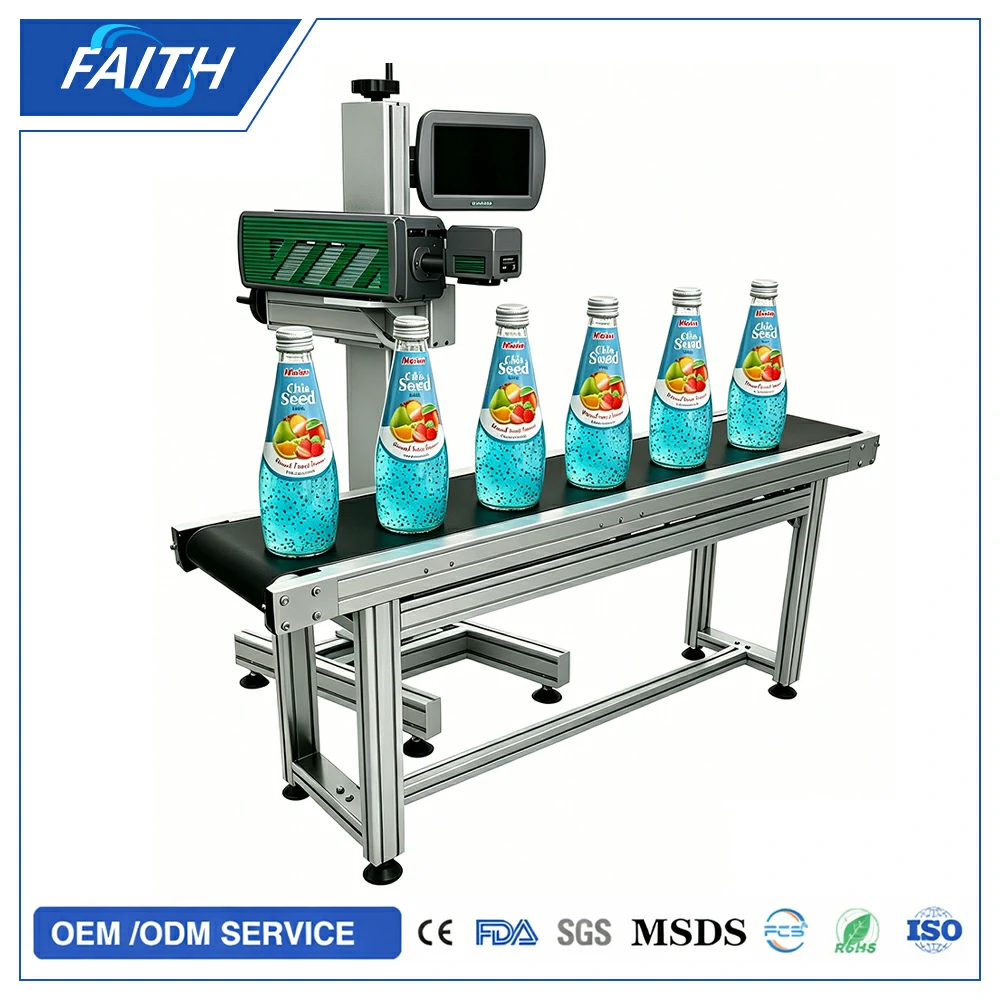
✔ Beverage Industry
👉 Marking: expiration date, batch code, production line ID
✔ Snack and Packaged Foods
👉 Marking: QR code, traceability code, manufacturing date
✔ Dairy and Fresh Products
👉 Requires fast, clean, and non-contaminating marking
✔ Dry Food Packaging
👉 Batch coding and supply chain tracking
3. Types of Laser Systems Used in Food Packaging Automation
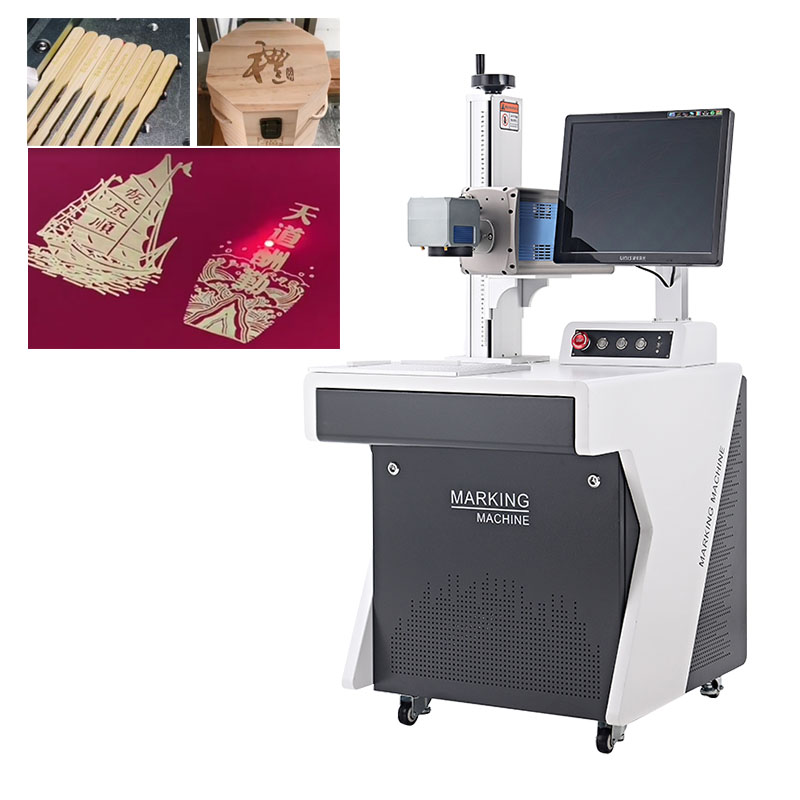
✔ CO2 Laser Marking Systems
Best for non-metal materials:
👉 Most widely used in food packaging lines
✔ Fiber Laser Systems
Best for metal packaging:
✔ UV Laser Systems
Best for sensitive materials:
4. How Automated Laser Marking Systems Work
A typical automation workflow includes:
👉 This process runs continuously without stopping the production line.
5. Advantages of Laser Marking in Food Packaging Automation
✔ 5.1 Fully Non-Contact Process
Laser marking does not touch the product surface, reducing contamination risks and mechanical wear.
✔ 5.2 No Consumables Required
Unlike inkjet systems, laser marking eliminates the need for:
👉 This significantly reduces operating costs.
✔ 5.3 High-Speed Integration
Laser systems can operate at full production line speeds:
✔ 5.4 Permanent and Tamper-Proof Marking
Laser marks cannot be removed or altered, ensuring:
✔ 5.5 Eco-Friendly Manufacturing
No chemicals, no waste, and no ink pollution—laser marking supports sustainable production goals.
6. Laser Marking vs Traditional Inkjet Systems
| Feature | Laser Marking System | Inkjet Coding System |
|---|---|---|
| Consumables | None | Ink & solvents required |
| Maintenance | Low | High |
| Marking durability | Permanent | Can fade or smudge |
| Production stability | High | Medium |
| Environmental impact | Clean | Chemical waste |
| Long-term cost | Lower | Higher |
👉 Laser marking is increasingly becoming the preferred solution for modern food factories.
7. System Integration in Smart Factories
Modern food packaging plants are moving toward Industry 4.0 automation, where laser marking systems are integrated with:
👉 This allows real-time product traceability across the entire supply chain.
8. Choosing the Right Laser Marking Solution
When selecting a food packaging laser marking system, consider:
✔ Production Speed
High-speed lines require flying laser marking systems.
✔ Packaging Material
✔ Automation Level
✔ Coding Requirements
Conclusion
Food packaging automation laser marking solutions are transforming modern manufacturing by delivering fast, clean, and permanent product coding. With increasing demand for traceability, efficiency, and sustainability, laser marking has become a core technology in food production lines worldwide.
By integrating laser systems into automated packaging environments, manufacturers can achieve higher productivity, lower operational costs, and full compliance with global food safety standards.
Please leave the message you want to inquiry. We will reply you as soon as possible within 24 hours.
Please leave the message you want to inquiry. We will reply you as soon as possible within 24 hours.