

Many buyers know they need a laser marking machine, but they are not always sure which type to choose. Fiber, UV, and CO2 Laser Marking machines all belong to laser marking equipment, but their suitable materials and application scenarios are very different. Choosing the wrong type may lead to poor marking quality, low efficiency, or even material damage.
The easiest way to choose is to start from the product material.
Fiber Laser Marking Machines are mainly used for metal materials and some hard plastics. They are commonly used on stainless steel, aluminum, iron, copper, brass, alloy parts, coated metal, tools, bearings, auto parts, machinery components, metal nameplates, and electronic metal housings. If the product is made of metal and requires a permanent logo, serial number, QR code, barcode, or batch number, fiber laser is usually the first choice.
A fiber laser marking machine has high marking speed, clear lines, and low operating cost. It does not need ink, labels, or other consumables. This makes it suitable for factories that need long-term industrial marking. Many metal processing plants, hardware factories, automotive suppliers, and machinery manufacturers use fiber laser machines because the marking result is durable and not easy to remove.
UV laser marking machines are different. UV laser is often used for materials that are sensitive to heat or require finer marking. It is suitable for plastics, glass, electronic components, PCB boards, charger shells, mobile phone parts, medical packaging, cosmetic bottles, cables, and some thin films. The biggest advantage of UV laser marking is cold processing. It creates less heat influence on the material surface, so it can reduce burning, deformation, and rough edges.
For example, if a factory needs to mark a fine QR code on a plastic electronic part, a fiber laser may make the surface burned or uneven, while a UV laser can produce a cleaner and finer result. If the product is glass, transparent plastic, white plastic, or a precision electronic part, UV laser is often a better choice.
CO2 laser marking machines are mainly used for non-metal materials. They are commonly used on paper boxes, cardboard, wood, leather, cloth, acrylic, rubber, glass, ceramic, plastic packaging films, food packaging, beverage packaging, and daily chemical packaging. CO2 laser machines are especially common in packaging production lines for printing production dates, batch codes, expiry dates, and simple traceability information.
For food, beverage, pharmaceutical, and cosmetic packaging, CO2 laser marking can replace ink printing in some applications. It does not require ink or solvent, so it can reduce consumable costs and avoid ink drying or nozzle clogging. For paper boxes, labels, kraft paper, wooden products, and leather goods, CO2 laser marking can create clear and clean marks.
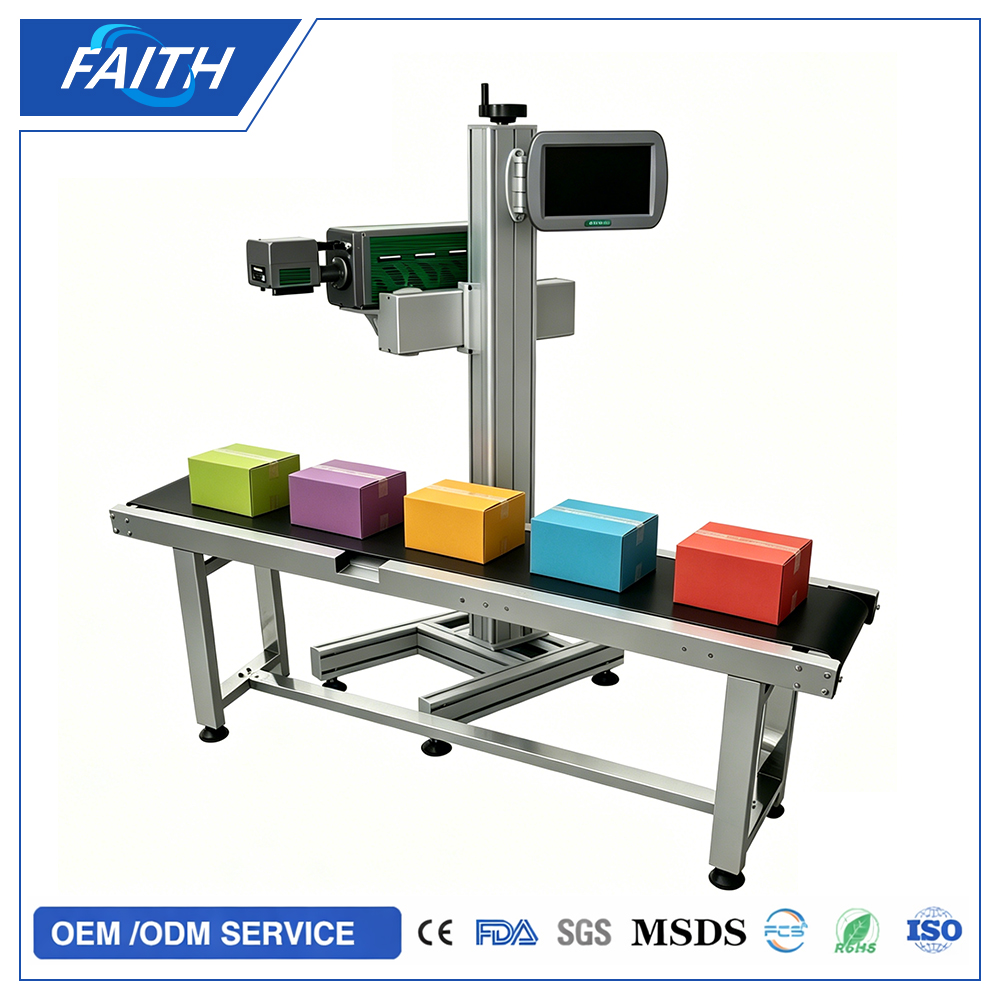
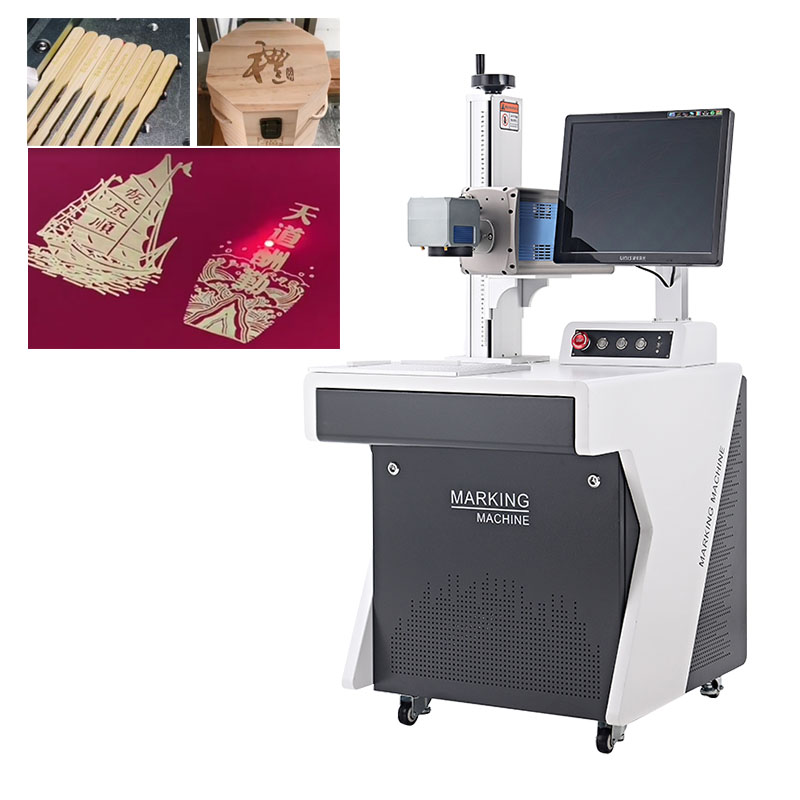
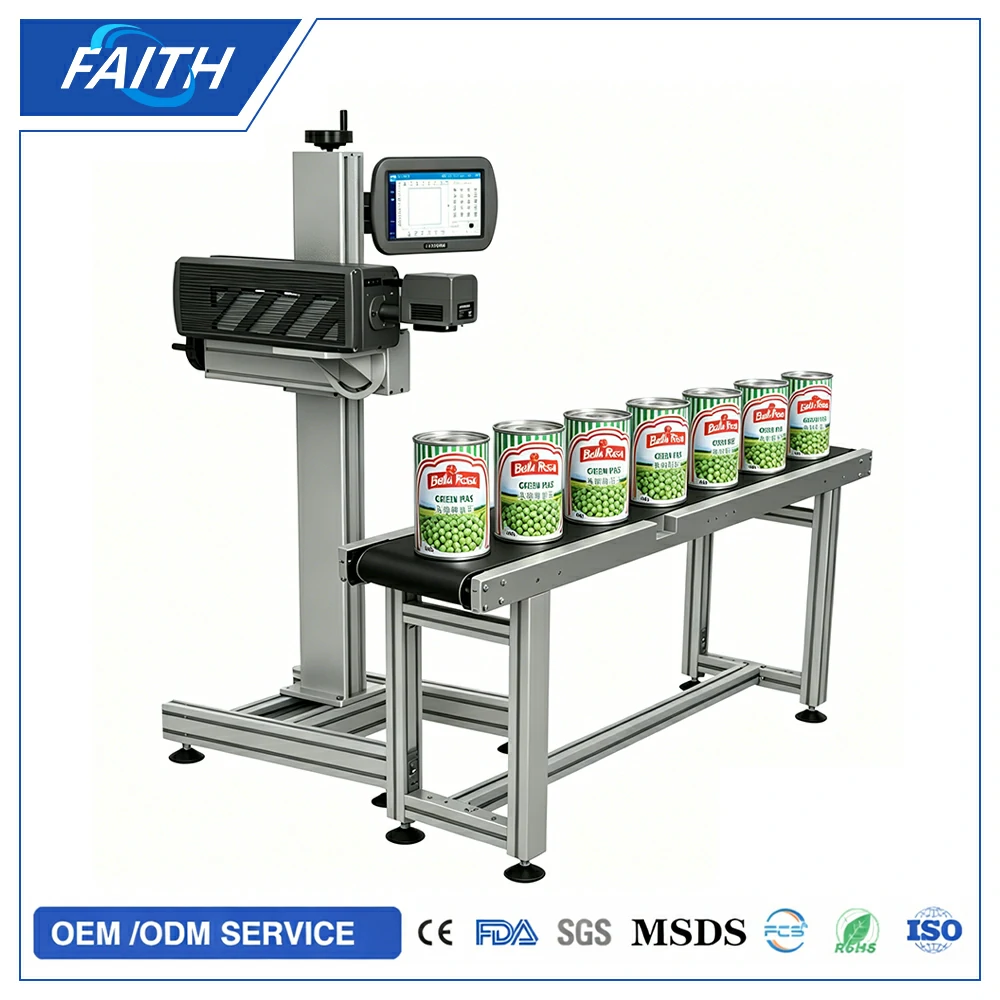
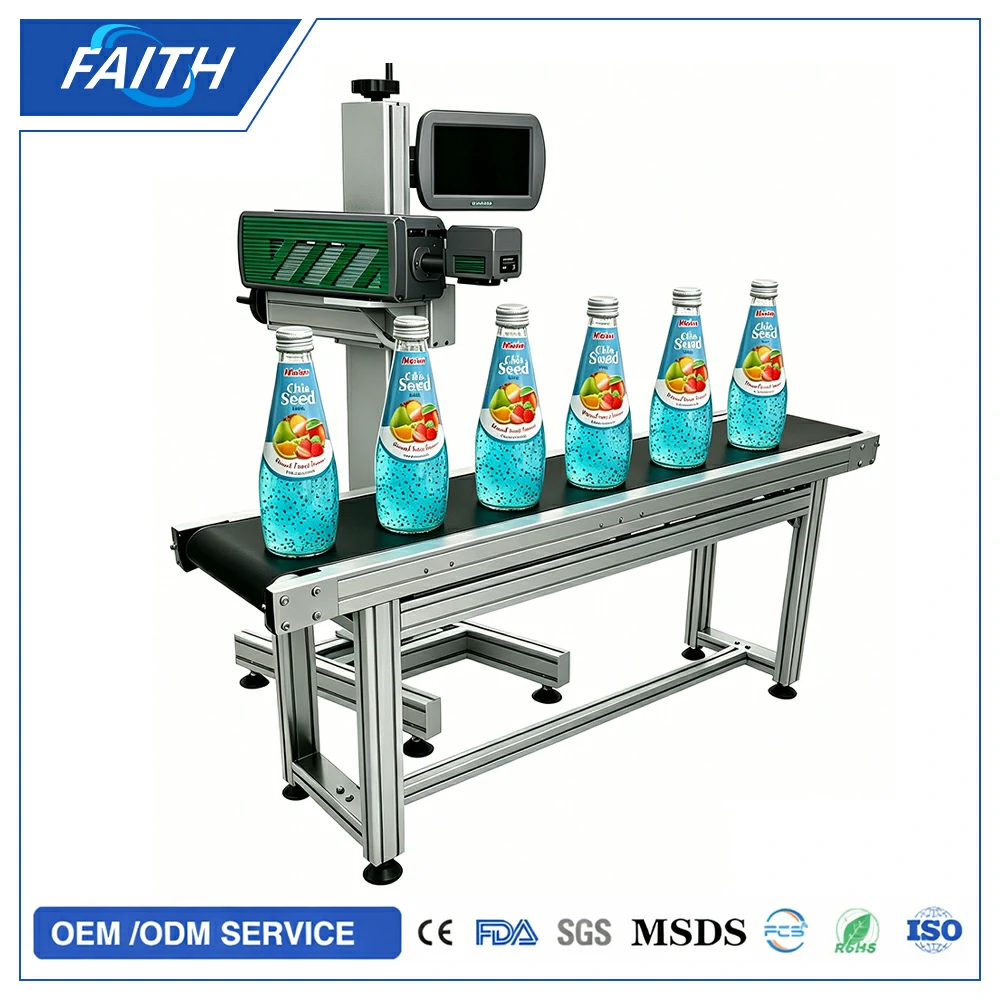
Another important difference is the working mode. Some laser marking machines are used in a fixed position, while others are installed on a production line. A desktop or cabinet laser marking machine is suitable for separate products, small batches, samples, or products that need precise positioning. A flying laser marking machine is installed beside a conveyor and marks products while they are moving. It is often used for packaging lines, bottle lines, carton lines, cable production, and automatic manufacturing.
If the customer needs to mark metal parts one by one, a Desktop fiber laser marking machine is enough in many cases. If the customer needs to mark production dates on moving cartons or bottles, a flying CO2 or flying fiber laser system may be more suitable, depending on the material. If the product is plastic packaging or glass bottles, UV or CO2 should be tested according to the real material.
Power selection also matters. For fiber laser machines, 20W, 30W, and 50W are common options. 20W can meet many basic marking needs, while 30W or 50W is better for faster speed, deeper marking, or harder metals. For UV laser machines, 3W, 5W, and 10W are common choices. For CO2 laser machines, different power levels are selected according to material thickness, marking speed, and production line needs.
However, higher power does not always mean better results. Some plastic and packaging materials need a clean surface effect rather than deeper engraving. In these cases, proper laser type, lens, speed, frequency, and parameter adjustment are more important than simply choosing a high-power machine.
Before buying, factories should prepare real product samples and marking content. The supplier can test the material and confirm whether the mark is clear, whether the QR code can be scanned, whether the surface is burned, and whether the speed can meet production requirements. This step is very important for B2B buyers, especially when the product material is plastic, coated, transparent, or mixed material.
A simple rule can help buyers make the first decision: choose fiber laser for metal, UV laser for precision plastic, glass, and electronics, and CO2 laser for paper, wood, leather, carton, and many non-metal packaging materials.
The right laser marking machine should match the product material, production speed, marking content, and factory operation method. When the machine is selected correctly, it can improve marking quality, reduce consumable cost, support traceability, and make the production process more stable.
Please leave the message you want to inquiry. We will reply you as soon as possible within 24 hours.
Please leave the message you want to inquiry. We will reply you as soon as possible within 24 hours.