

A buyer from a packaging factory once sent three samples for testing: a white plastic bottle, a printed carton and a small aluminum cap. He wanted one flying laser marking machine for all of them.
On paper, the request sounded simple. All three products needed the same content: production date, batch number and a small QR code. In the workshop, however, these three materials behaved very differently. The aluminum cap needed a sharp permanent mark. The carton needed a clean dark code without burning too much of the printed surface. The white plastic bottle could not be deformed or yellowed.
This is where many buyers misunderstand flying Laser marking machines. The machine is not only one product. It is an online marking system that can be equipped with different laser sources. Fiber, CO2 and UV lasers are used for different materials, different speeds and different marking results.
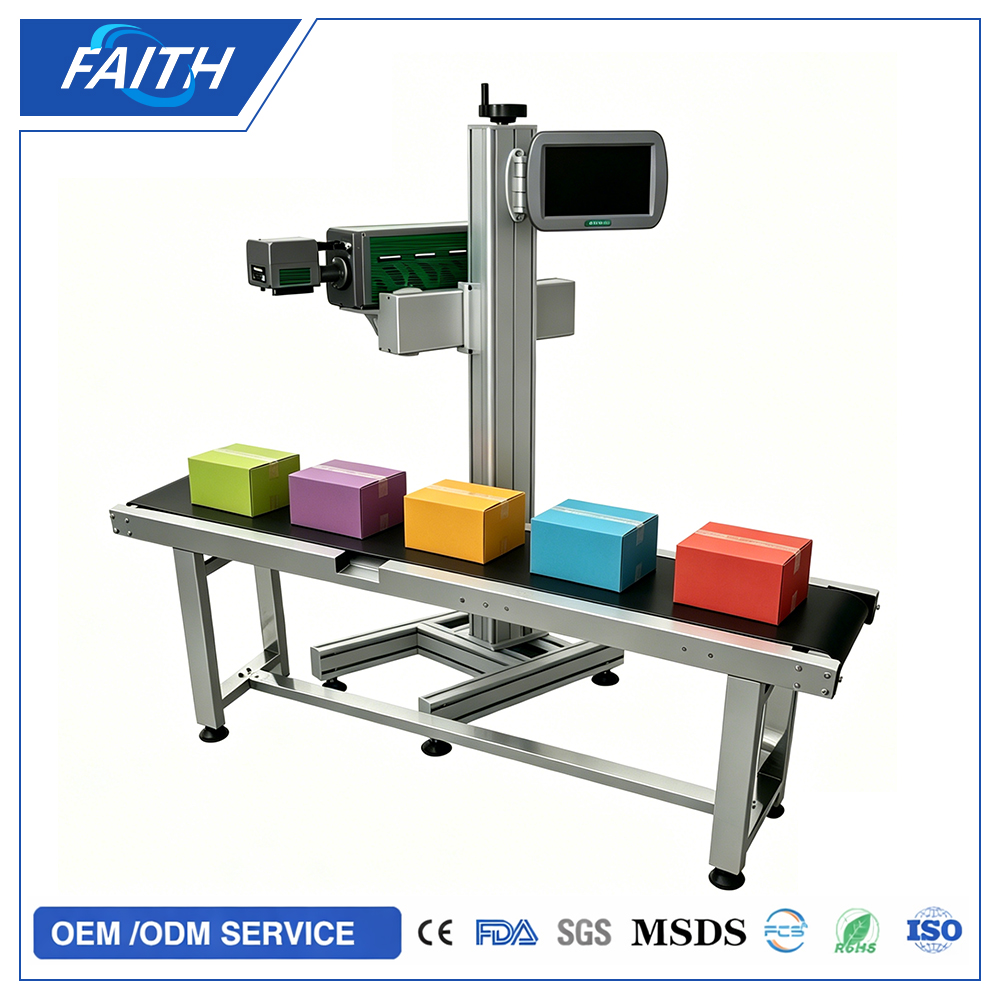
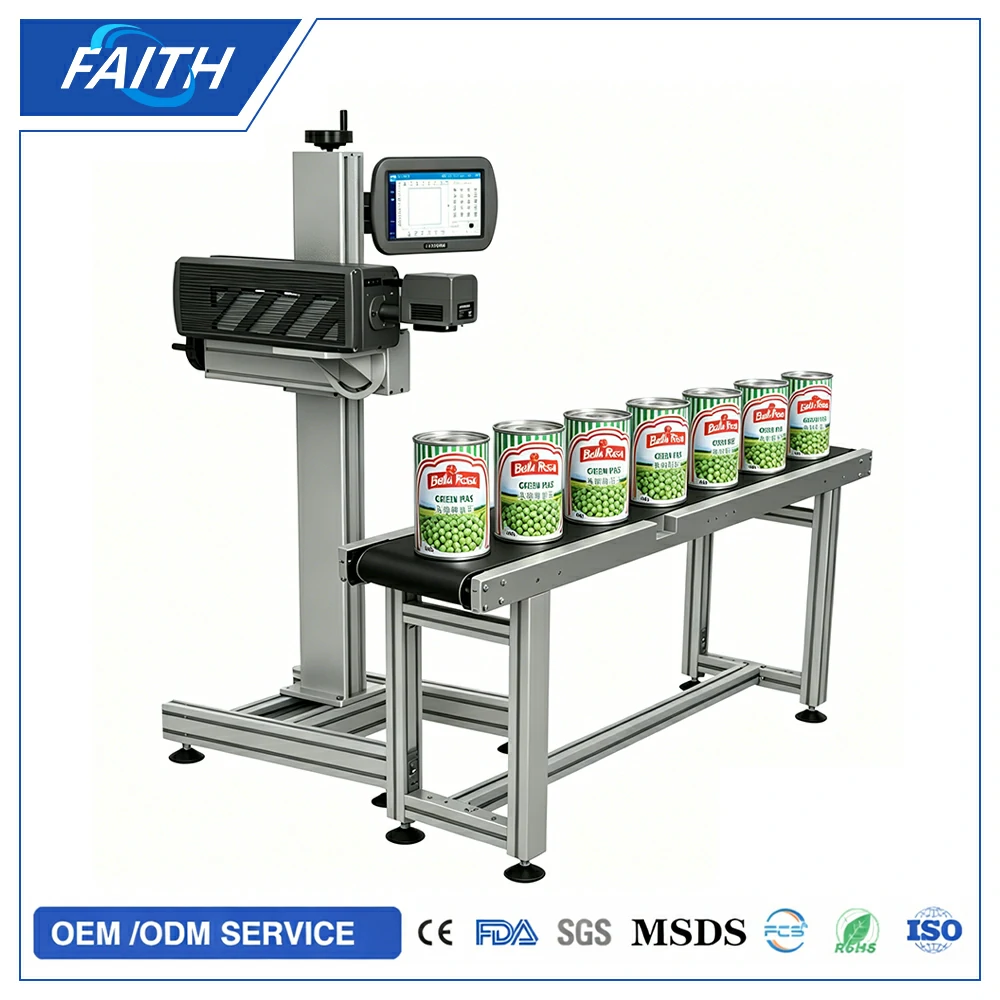
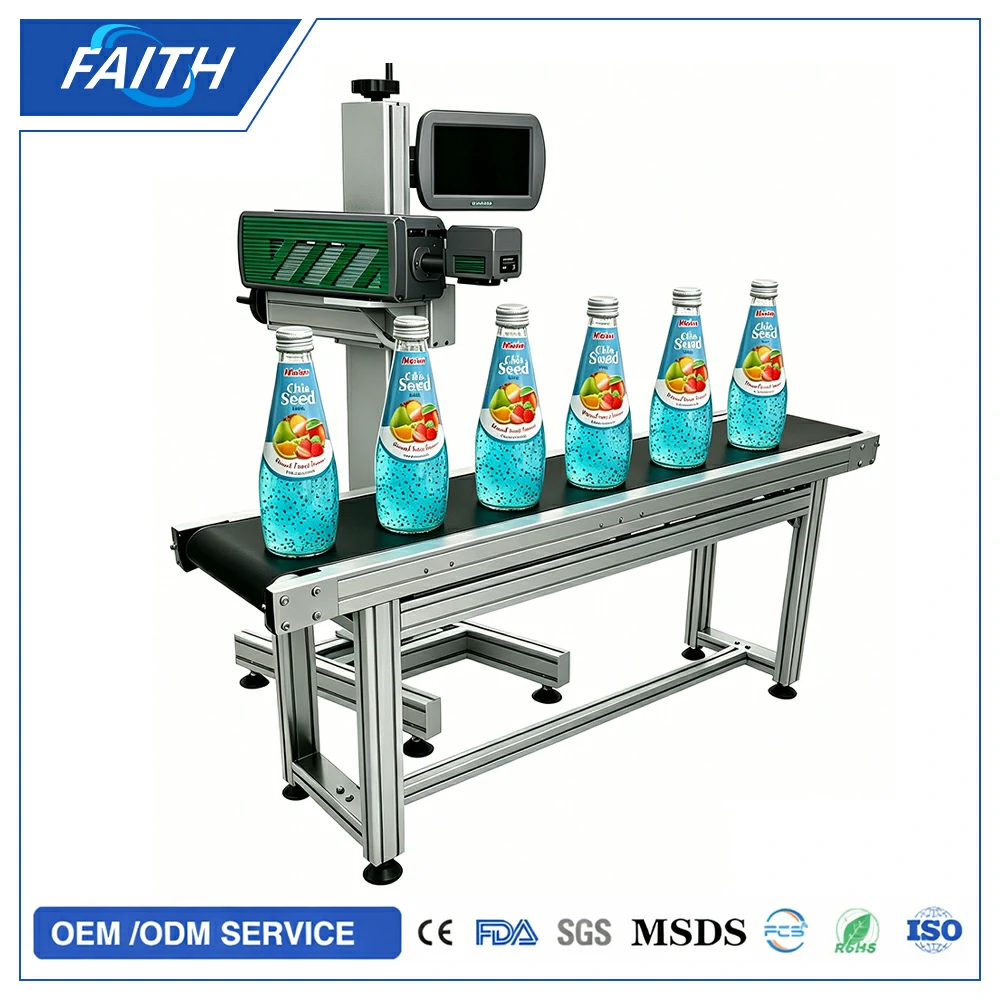
A flying laser marking machine works while the product is moving. It is usually installed beside a conveyor, filling line, packaging machine, labeling machine or pipe extrusion line. The product passes the sensor, the laser receives the signal, and the code is marked in the correct position. In a busy factory, this may happen thousands of times per hour.
The laser source decides what kind of material the machine can handle well.
Fiber flying laser marking machine is often selected for metal and some hard plastic materials. It is widely used for stainless steel, aluminum, copper, iron, alloy parts, tools, bearings, nameplates, metal caps, electronic components and automotive parts. In a metal parts factory, workers may need to mark part numbers, logos, QR codes or traceability codes on small components before packing. Ink printing is not strong enough for these parts because the surface may be oily, handled many times or exposed to friction.
Fiber Laser Marking creates a permanent mark on the surface. It is useful for products that need long-term identification. Auto parts suppliers, hardware factories and electronic component manufacturers often care about traceability. If one batch has a problem, the code helps track production time, operator shift or raw material batch.
A typical fiber flying laser system may be used with a 20W, 30W or higher power laser source, depending on the material and required speed. A small logo on a metal plate does not need the same configuration as high-speed coding on moving aluminum caps. Buyers should not only ask for the machine price. They should ask whether the supplier has tested similar materials and what marking speed can be reached with the required code size.
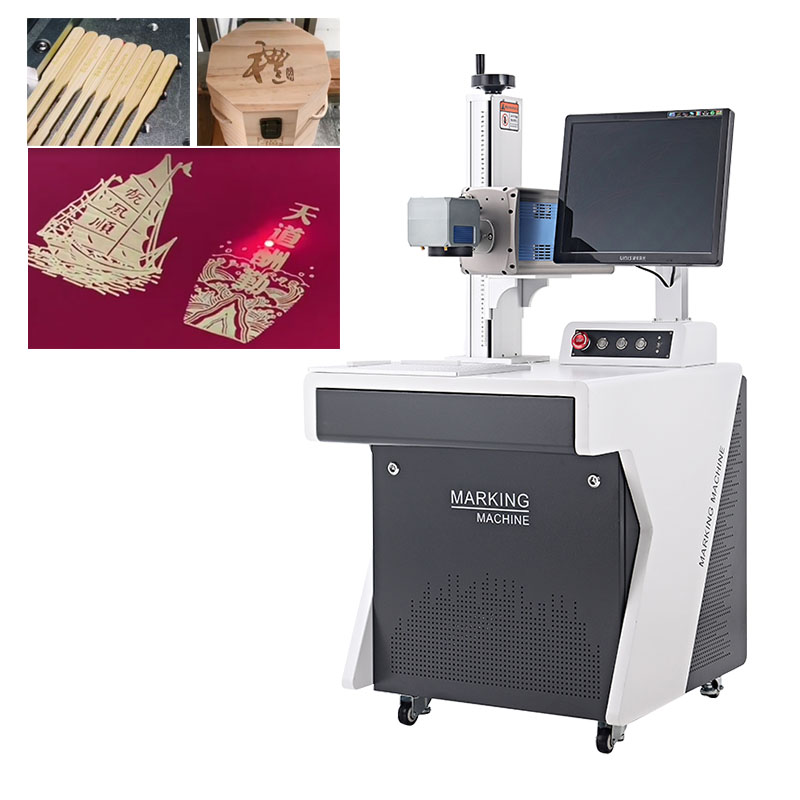
CO2 flying laser marking machine is usually used for non-metal packaging materials. It is common in food, beverage, daily chemical, carton, paper, wood, leather, acrylic and glass-related applications. If a factory produces snack bags, paper boxes, medicine cartons, beverage labels or cosmetic outer boxes, CO2 laser is often a practical option.
In packaging workshops, many customers replace inkjet printers with CO2 laser because they want fewer consumables and cleaner operation. An inkjet printer may work well when it is new, but after months of use, nozzle blockage, ink leakage and solvent smell become daily issues. Operators need to clean the nozzle, check ink level and adjust printing quality. If the workshop is dusty or hot, the problem becomes worse.
CO2 laser can mark date codes, expiry dates, batch numbers and simple logos on many packaging materials without ink. On paper boxes and cartons, it can create a clear mark by removing or changing the surface layer. On some plastic films, the result depends heavily on the film structure, color and coating. Sample testing is important because not all plastic films react the same way.
One food packaging factory used printed film bags for powder products. Their old coding method used inkjet printing after sealing. During high-speed packing, some codes became unclear because the bag surface was not flat at the printing position. The factory wanted a more stable solution before the product entered cartons. A CO2 flying laser marking machine was installed near the packaging machine, marking the date code on the film before the bag fully moved to the sealing and output section. The code became more consistent, and the line no longer stopped for ink cleaning as often.
UV flying laser marking machine is used when the material is more delicate or the marking quality needs to be finer. It is suitable for many plastics, glass, cosmetic packaging, medicine packaging, PCB boards, chips and electronic components. UV laser is often called a cold marking solution because the heat-affected area is smaller than many other laser types. In real factory language, it means less burning, less deformation and a cleaner appearance on sensitive products.
Cosmetic packaging is a typical case. A luxury skincare bottle may be small, glossy and expensive. The buyer may not accept yellow marks, rough edges or visible melting around the code. The marking content may only be a small batch number or traceability code, but the appearance must match the product grade. UV laser is often considered when the buyer needs fine characters on plastic or glass packaging.
Pharmaceutical and electronics buyers also ask for UV laser because they care about readability and material protection. PCB boards, chips and medical plastic packaging can be sensitive to heat. A rough mark may damage the product surface or affect customer acceptance. For these industries, marking quality is not only about visibility. It is also about process control.
The difficult part is that many buyers send mixed materials.
A factory may produce plastic bottles today, paper boxes tomorrow and aluminum caps next week. They hope one machine can solve everything. In some cases, one laser source can cover several materials, but it is not always the best choice. A CO2 laser may work well on cartons but fail to create a strong mark on metal. A fiber laser may mark aluminum caps clearly but not be suitable for paper packaging. A UV laser can handle many delicate materials, but the cost is usually higher.
A professional selection process should start with five details.
First, the material. The buyer should send real samples if possible, not only photos. Different coatings, colors and thicknesses change the marking result.
Second, the marking content. A simple date code is easier than a dense QR code. A 5 mm high character is different from a 20 mm logo. If the code must be scanned, the marking contrast and edge quality become more important.
Third, the production speed. A conveyor running at 20 meters per minute needs a different setup from a slow manual feeding line. The faster the line, the more carefully the laser power, lens, marking size and software settings must match.
Fourth, the installation space. Some factories have only 400 mm of free space beside the conveyor. Some lines need the laser to mark from the top. Some products are too tall, too soft or unstable when moving. Brackets, sensors and protective covers must be planned around the real line.
Fifth, the operator’s daily work. A machine may mark well during testing, but if operators cannot change content easily, adjust focus or clean the working area, the equipment will not be used well. Overseas buyers should ask for operation videos, English interface support and remote service.
Choosing between fiber, CO2 and UV flying laser marking machines is not about which one is “better.” It is about which one fits the product and factory condition.
For metal parts and durable industrial identification, fiber laser is usually the first choice. For cartons, paper packaging and many non-metal packaging materials, CO2 laser is often practical and cost-effective. For fine marking on sensitive plastic, glass, electronics and medical packaging, UV laser offers better control of heat and appearance.
A flying laser marking machine becomes valuable when it solves a real production problem: unclear codes, high ink cost, unstable printing, slow manual marking or poor traceability. The right laser source makes the difference between a machine that only looks good in a catalog and a machine that works every day beside the production line.
For B2B buyers, the safest way is to test real samples, confirm line speed and share a short video of the current production process before choosing the model. A few extra details before ordering can prevent many problems after installation.
Please leave the message you want to inquiry. We will reply you as soon as possible within 24 hours.
Please leave the message you want to inquiry. We will reply you as soon as possible within 24 hours.