

Many factories do not start looking for a CO2 laser marking machine because they simply want a new machine. More often, they are trying to stop the small problems caused by ink, labels or ribbons every day.
In a packaging workshop, these problems are common. Inkjet nozzles dry when the line stops for a few hours. Labels look clean at first, but the edges may lift after storage in a humid warehouse. Thermal transfer ribbons run out during production. Operators need to stop the line to clean print heads, change consumables or adjust the printing position. Each problem looks small, but after months of production, it becomes real cost.
A CO2 Laser Marking machine is mainly used for non-metal and organic materials. It can mark paper boxes, kraft cartons, wood, bamboo, leather, rubber, acrylic, coated plastic, PET film, glass, ceramic, painted surfaces and some flexible packaging materials. Instead of putting ink on the surface, the laser changes the surface layer by engraving, carbonizing, foaming or removing the coating. The mark becomes part of the material, so there is no ink cartridge, ribbon, label roll or drying time.
Carton and paper packaging are typical applications. A food factory may need to mark production dates, batch numbers, factory codes, barcodes or QR codes on outer cartons. A carton may be 300 mm × 200 mm × 180 mm, while export boxes can be much larger. In the past, many factories used inkjet printers or stickers. Inkjet printing was fast, but dusty workshops and long stops often caused nozzle cleaning problems. Stickers looked neat, but workers had to prepare labels, load rolls and check whether the label edge was lifting.
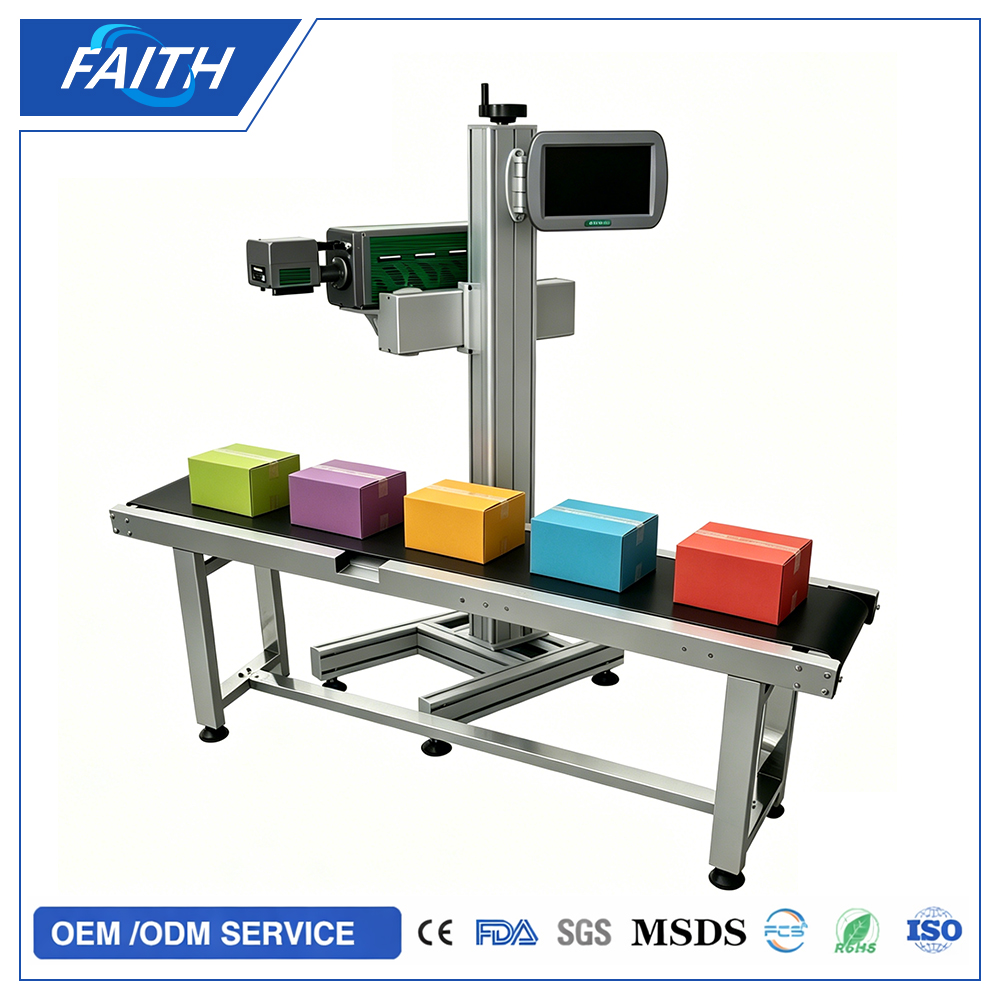
With CO2 laser marking, the carton can be marked directly while moving on a conveyor. On brown kraft paper, the mark usually becomes darker. On white coated paper, it may appear grey, yellowish brown or light brown depending on the coating. For export cartons, a permanent mark is useful because it is not easy to wipe off during packing, storage or transport.
Paper boxes for food, tea, medicine and cosmetics also use CO2 laser marking. Some brands do not like black ink on premium packaging because it looks too separate from the box design. Laser marking can remove the surface coating and create a cleaner, more integrated code. It is also useful when the customer wants date coding without ink smell or solvent.
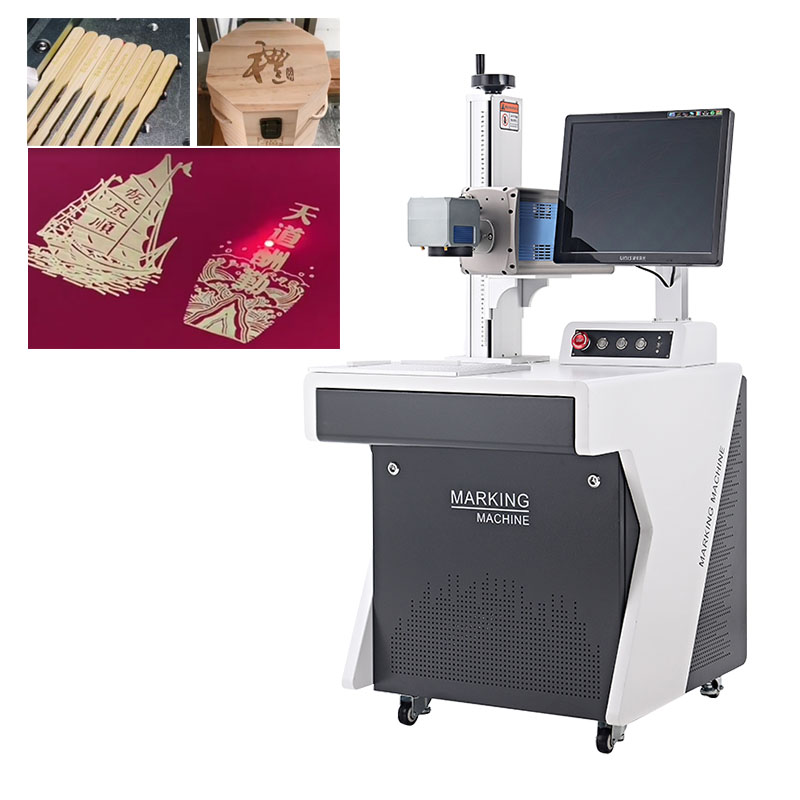
Wood factories usually have a different reason for choosing CO2 laser marking. They may need logos, model numbers, batch codes or decorative text on wooden boards, bamboo products, cutting boards, furniture parts, wooden handles or gift boxes. A wooden board may be 600 mm long and 20 mm thick, while a small wooden tag may only be 80 mm × 50 mm.
Before using laser, some factories use branding irons or screen printing. Branding irons depend on operator pressure and temperature. If the pressure is uneven, the logo may be too light on one side and too dark on the other. Screen printing needs ink, drying time and screen preparation. When the design changes often, the process becomes slow. CO2 laser engraving allows the operator to change the design from the computer, which is suitable for small-batch orders and customized products.
In furniture production, marking is not only for appearance. Many boards look similar after cutting, sanding and polishing. If the batch number or model code is engraved before assembly, workers can identify the production lot later. For export furniture, a permanent logo or part code also helps after-sales service.
Leather and synthetic leather factories use CO2 laser marking for logos, patterns, size marks and cutting guide lines. Wallets, belts, bags, shoe uppers and leather patches often come in different shapes and textures. A hot stamping machine needs molds, which is not practical when the order quantity is small or the logo changes frequently. Laser marking allows the factory to switch files quickly, so it is easier to handle mixed SKU production.
Acrylic and plastic sign workshops also benefit from CO2 laser marking. Advertising display factories and retail fixture suppliers often receive different logo files every day. One order may need 200 acrylic panels with one logo, and the next order may need 50 pieces with another layout. Laser marking or engraving reduces the need for plates, screens and extra tooling. The operator only needs to load the correct file and adjust the marking position.
Glass and ceramic products need more careful testing. CO2 laser can create a frosted effect on some bottles, cups and ceramic surfaces, but the result depends on thickness, coating, shape and parameter settings. A small perfume bottle may need fine marking without cracking the surface. A ceramic tile may need a clear logo or batch code. For these products, sample testing is more reliable than only reading machine specifications.
Daily chemical and cosmetics packaging is another common field. Shampoo bottles, lotion tubes, toothpaste boxes, cream cartons, coated labels and some caps may require production date, batch number or anti-counterfeit code. In this industry, appearance matters. A code that is too dark, too wide or not aligned can make the package look cheap. CO2 laser marking can create a clean effect on coated paper boxes and some plastic packaging, but different coatings should always be tested.
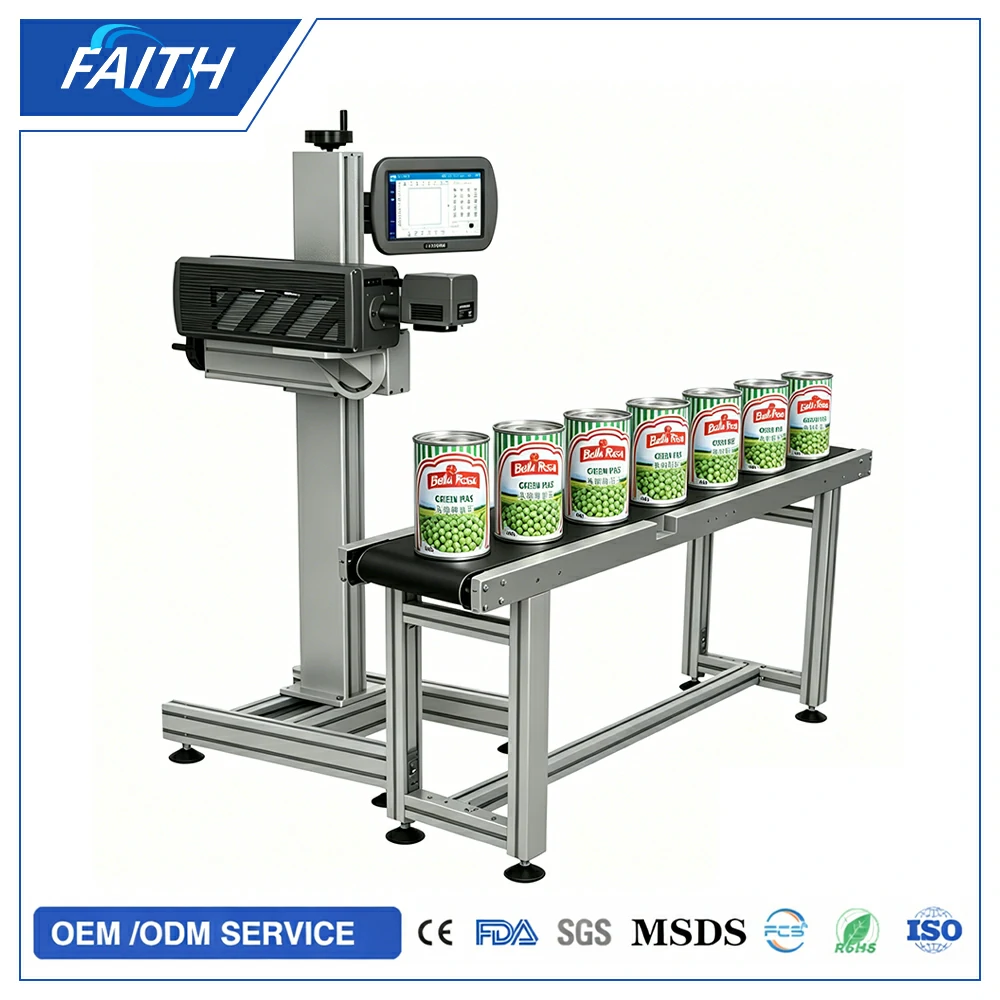
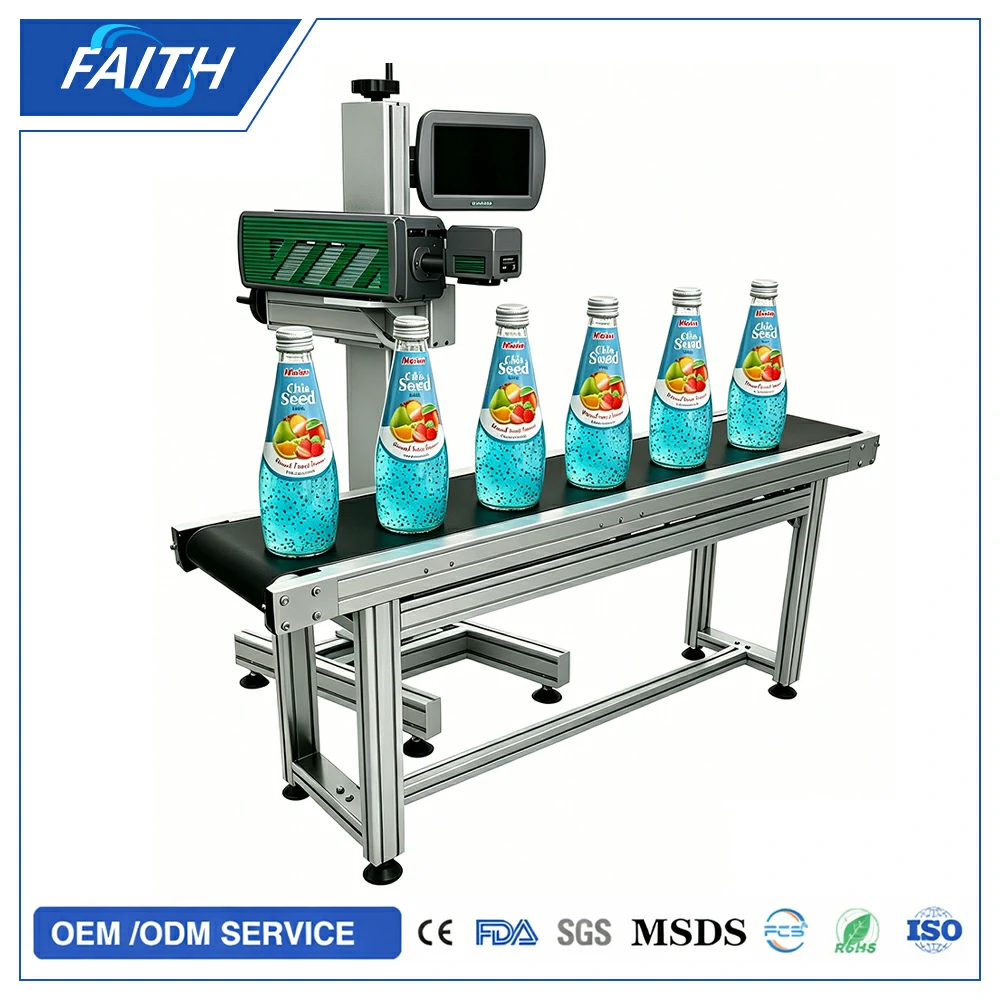
For overseas buyers, the first question is usually whether CO2 laser can mark the material. The more important question is whether it can mark clearly at the required production speed. A small workshop may use a desktop CO2 laser marking machine for flat products. A larger factory may need online CO2 laser marking with a conveyor. The speed may be 30–80 meters per minute, depending on product size, marking content and code complexity.
QR codes and barcodes need special attention. A simple date code is easy to mark at high speed. A large QR code with many characters needs more marking time. If the line speed is too fast, the code may become incomplete or difficult to scan. Buyers should ask the supplier to test the actual date code, logo, barcode and QR code under the target production speed.
The marking field also matters. A 110 mm × 110 mm lens is common for small products and gives good detail. A 175 mm × 175 mm or larger lens can cover bigger cartons, wood boards or leather pieces, but very fine details may not be as sharp. Before choosing the lens, the buyer should confirm product size, marking area, code size and product position.
CO2 laser marking is not suitable for every material. Bare metal usually needs a fiber laser marking machine. Transparent plastics may need testing. Very thin films can deform if the power is too high. Some coated materials may produce smoke, so ventilation or a smoke extractor should be prepared.
For many packaging, wood, paper and non-metal product factories, the main value is not only a permanent mark. It is less daily trouble: no ink drying, no label peeling, no ribbon changing, no solvent smell and less cleaning work. Before ordering, buyers should send real samples with different colors, sizes and surfaces. A short marking video using the buyer’s own carton, tube, wood board or leather sample often tells more than a long specification sheet.
Please leave the message you want to inquiry. We will reply you as soon as possible within 24 hours.
Please leave the message you want to inquiry. We will reply you as soon as possible within 24 hours.