

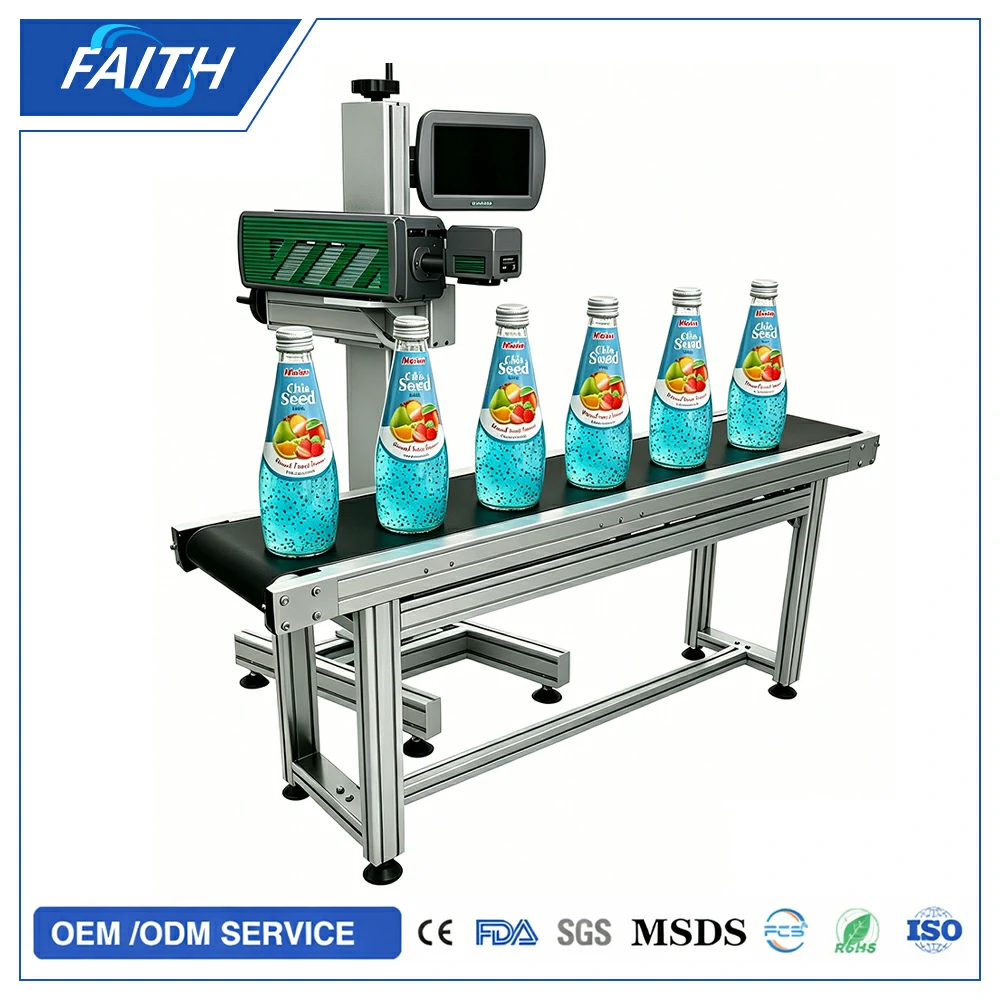
A 500 ml water bottle may have only a narrow area for the production date, expiry date and batch number. That code must remain readable through filling, conveying, shrink wrapping and transport.
If the mark fades, cartons may need to be opened, bottles recoded and packed again. On a fast beverage line, even a short interruption can affect hundreds of products.
Saudi factories often run long shifts in warm environments. Inkjet printers remain common, but some plants consider flying CO₂ laser systems after repeated nozzle cleaning and solvent handling.
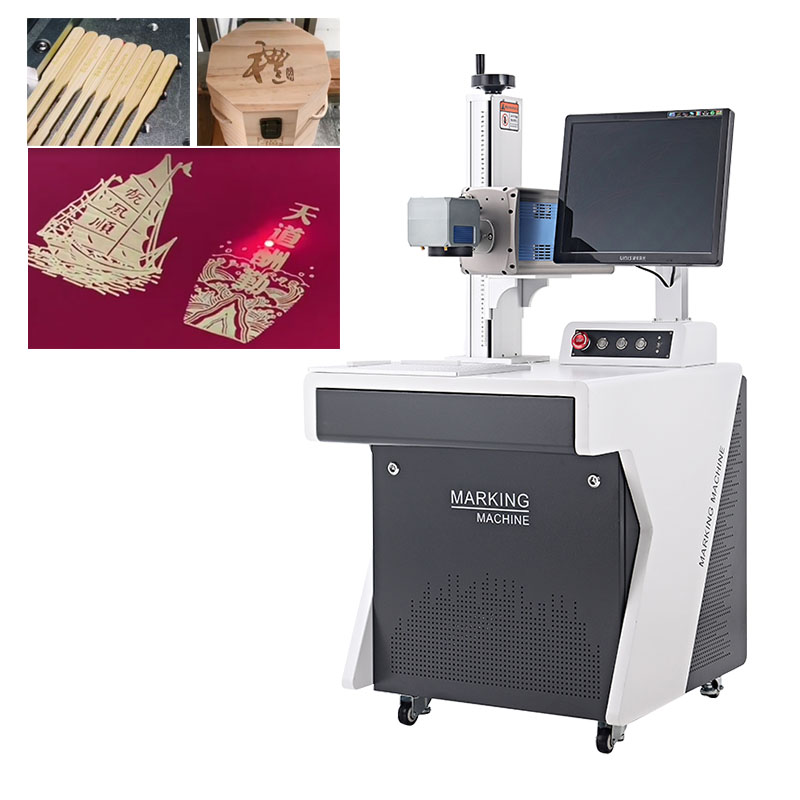
Laser marking removes ink and solvent, but it is not suitable for every package. Clear PET may show weak contrast depending on resin, wall thickness and additives. A printed label, coated cap, shrink sleeve or carton may give a clearer result.
Testing should use the bottle, exact message, conveyor speed and spacing. A short date is faster to mark than a dense QR code. The full message must be completed while the bottle remains inside the marking window.
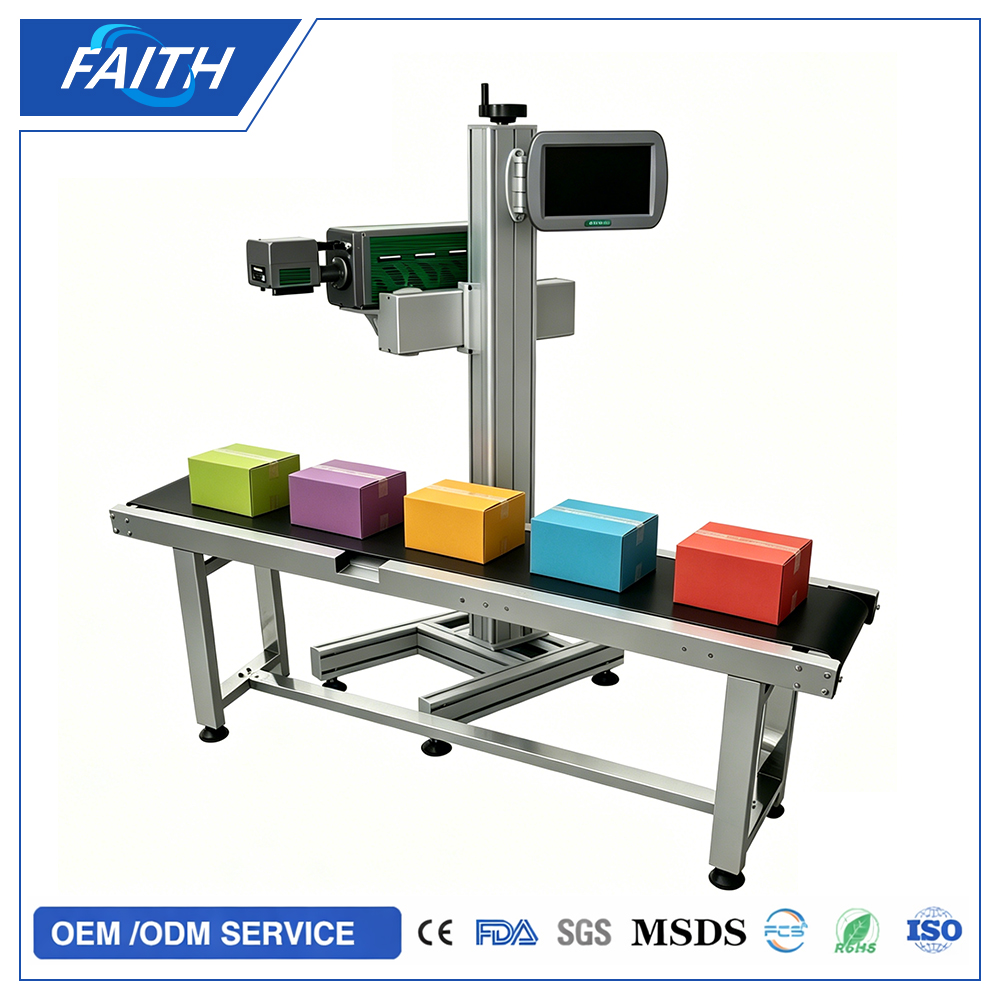
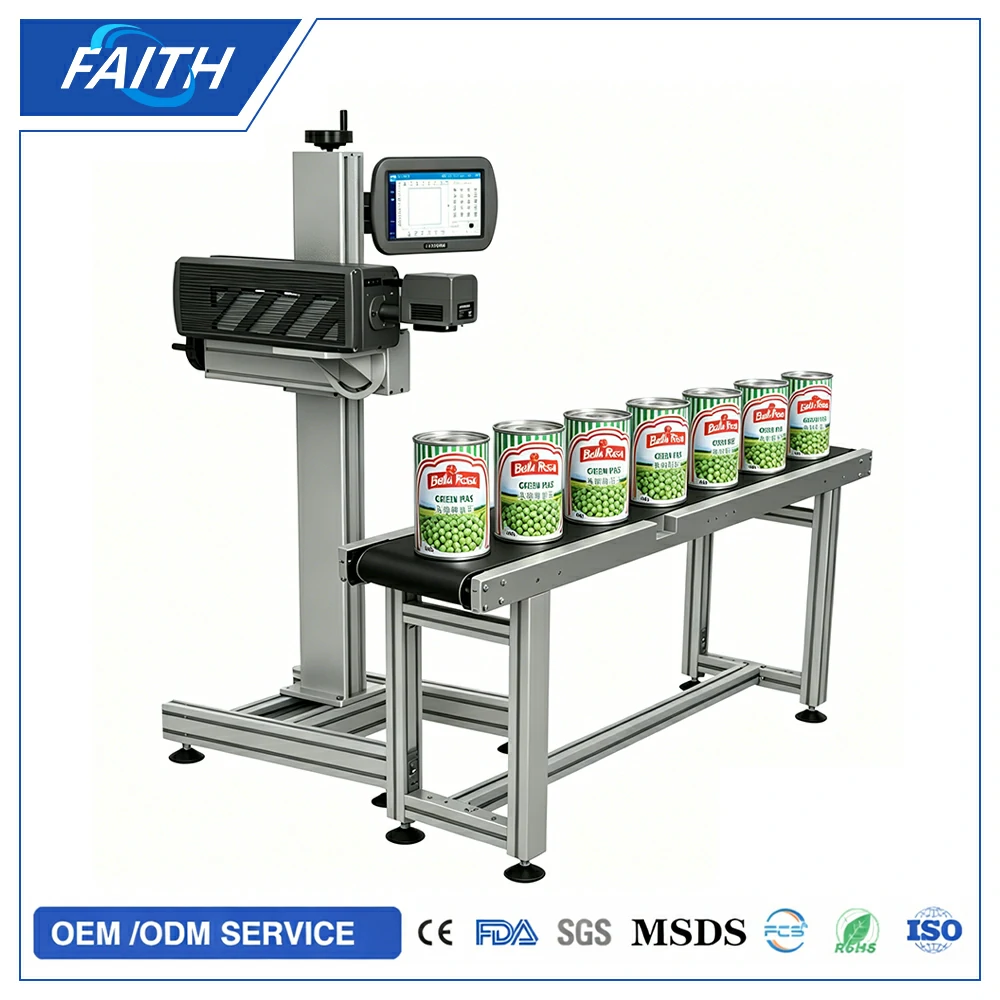
The laser head needs a rigid bracket, stable sensing, ventilation, wash-down protection and adjustment space. Areas beside shrink tunnels may be hotter than the workshop.
Arabic and English layouts should be approved on samples. Stored templates can reduce input errors.
Before choosing a system, confirm three points: Is the mark clear? Can the code be completed at production speed? Will it remain readable after packing and transport?
Please leave the message you want to inquiry. We will reply you as soon as possible within 24 hours.
Please leave the message you want to inquiry. We will reply you as soon as possible within 24 hours.