

In food and beverage production, date coding is a small process, but it affects the whole product. A missing production date can stop shipment. A blurred expiration date can cause complaints. A code that rubs off during transport can create trouble for distributors and retailers.
That is why many factories are changing from traditional ink coding to CO2 flying laser marking.
CO2 flying laser marking is mainly used on non-metal packaging materials. It can mark production dates, expiration dates, batch numbers, QR codes, barcodes, and simple logos on plastic film, paper packaging, labels, coated cartons, and some beverage bottles. The biggest difference is that the laser does not need ink or labels. The mark is created directly on the packaging surface.
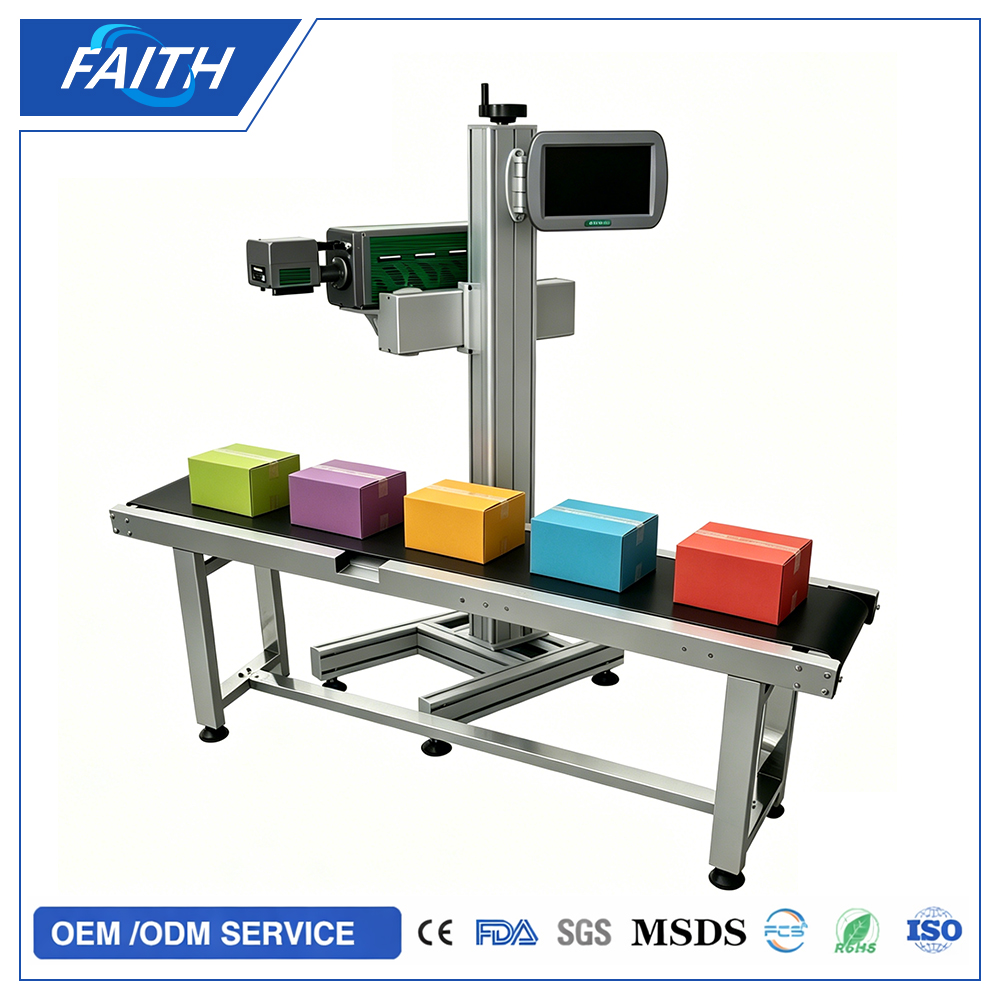
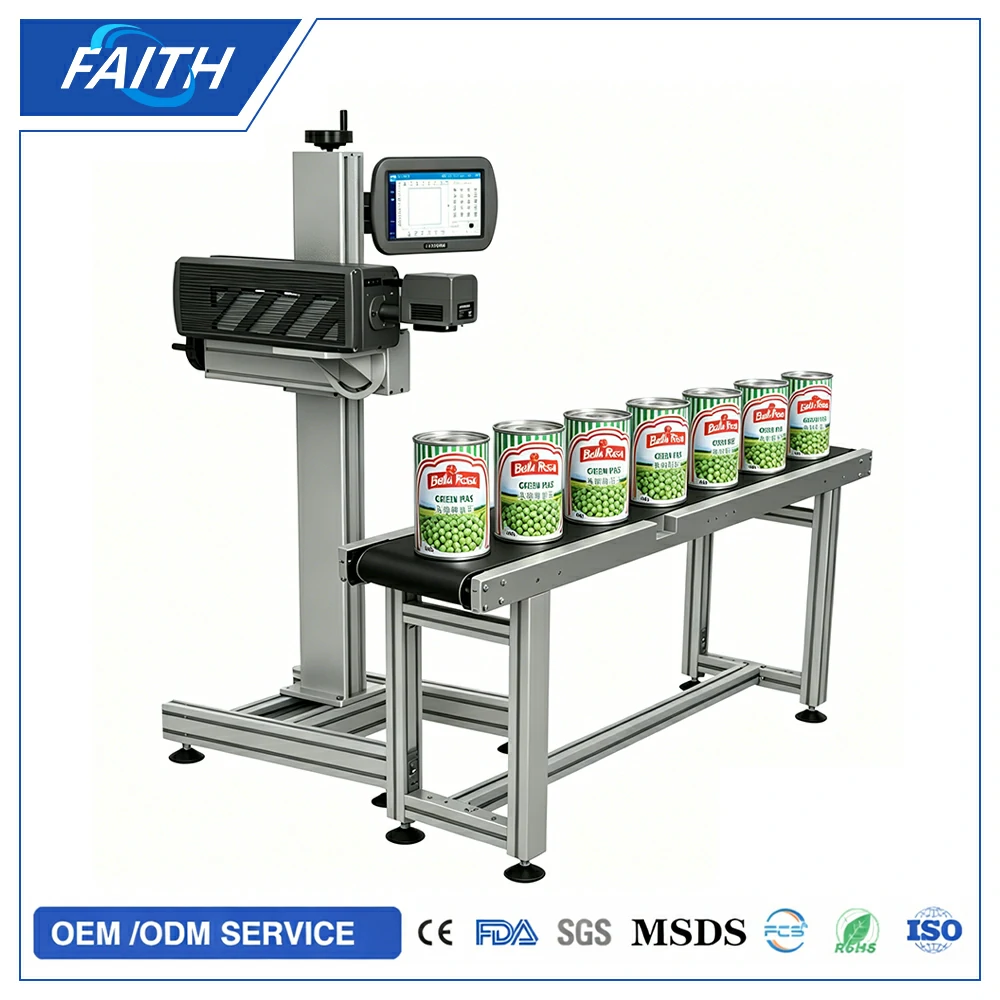
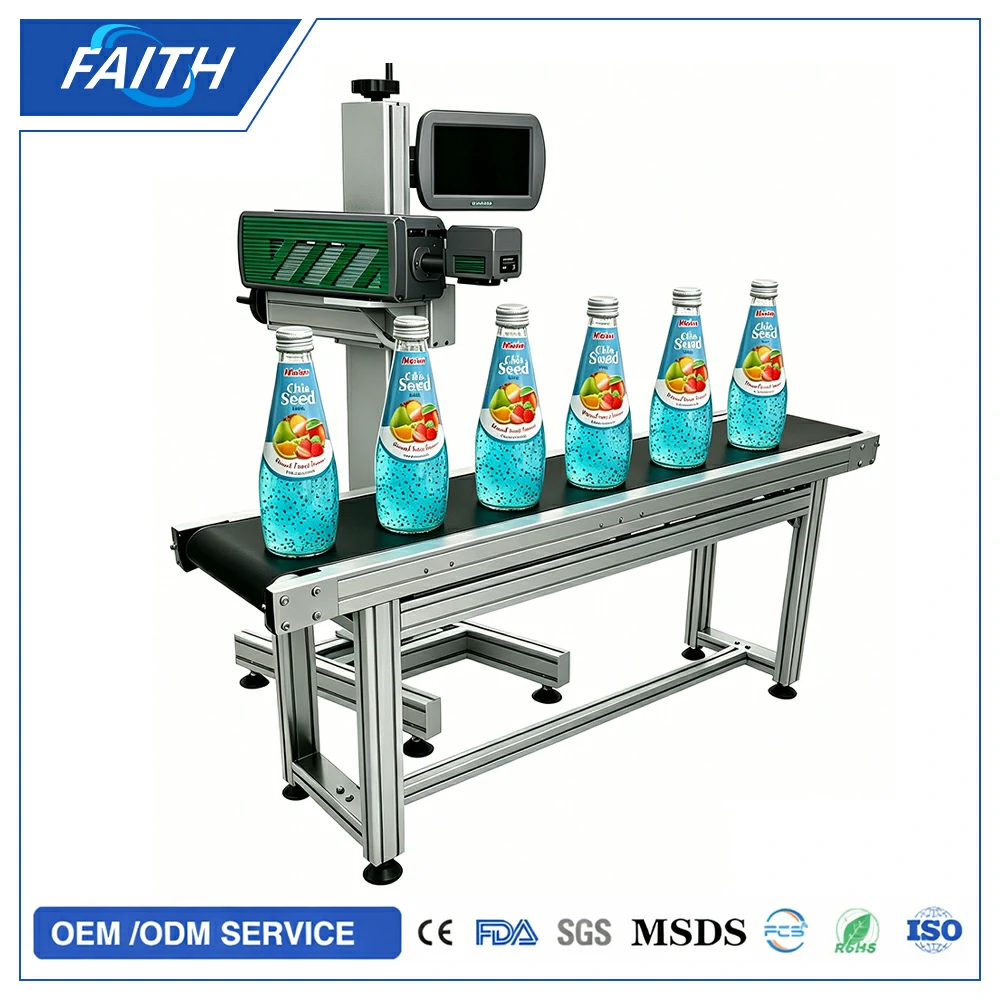
For high-speed production lines, the word “flying” is important. The product does not need to stop. The laser marking head works together with the conveyor, sensor, and encoder. When the bottle, carton, pouch or label passes through the marking area, the machine prints the required content in motion. This helps factories keep production speed stable.
In daily use, factory managers usually compare three things: code clarity, consumable cost, and maintenance. Inkjet coders are flexible, but they need ink, solvent, cartridge replacement, and printhead cleaning. If the production environment is dusty or the machine is not maintained well, the code may become light or broken. CO2 laser marking does not solve every packaging problem, but for suitable materials, it can reduce consumable management and make the coding process cleaner.
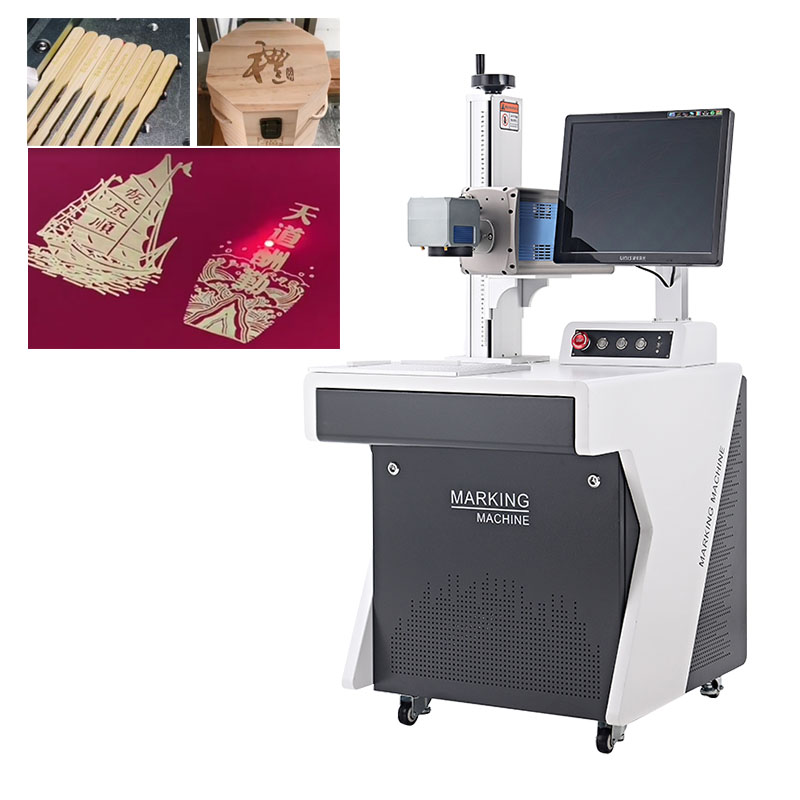
Faith CO2 Flying Laser marking machines are designed for online coding. The system can support text, numbers, dates, serial numbers, QR codes and barcodes. It can be used in food, beverage, medicine, paper label, carton, and packaging industries. For factories that run multiple shifts, the ability to edit different codes quickly is also important. Operators may need to change production date, shift code, line number, or batch information several times a day.
Before choosing a CO2 laser marking machine, the packaging material must be tested. A paper label and a PET bottle do not mark in the same way. A white carton and a coated film may require different laser settings. Even the color of the package can affect the final contrast. This is why sample testing is more reliable than only checking machine parameters.
Another point is line speed. If the production line is slow, many coding systems can work. But when the line becomes faster, the machine must mark clearly without missing products. A stable online CO2 laser marking system should work with photoelectric sensors and an encoder to match the actual conveyor speed. This reduces missed marking and repeated marking problems.
For buyers, the right question is not simply “How much is the machine?” A better question is: “Can this machine mark my packaging clearly at my real production speed?” If the supplier can test the sample and simulate the application, the buying risk will be much lower.
CO2 flying laser marking is especially suitable for factories that want clean, permanent, no-consumable coding on suitable non-metal packaging. For food and beverage manufacturers, it can make date coding more stable, reduce consumable work, and improve the professional look of the final package.
Please leave the message you want to inquiry. We will reply you as soon as possible within 24 hours.
Please leave the message you want to inquiry. We will reply you as soon as possible within 24 hours.