

In recent years, handheld laser marking machines have become increasingly popular, transforming traditional marking methods and expanding the scope of industrial applications. These portable devices combine the precision and clarity of conventional Fiber Laser Marking systems with the flexibility of a compact, energy-efficient design. As a result, handheld laser marking machines are becoming a preferred choice for various sectors, including electronics, automotive, aerospace, and medical equipment manufacturing.
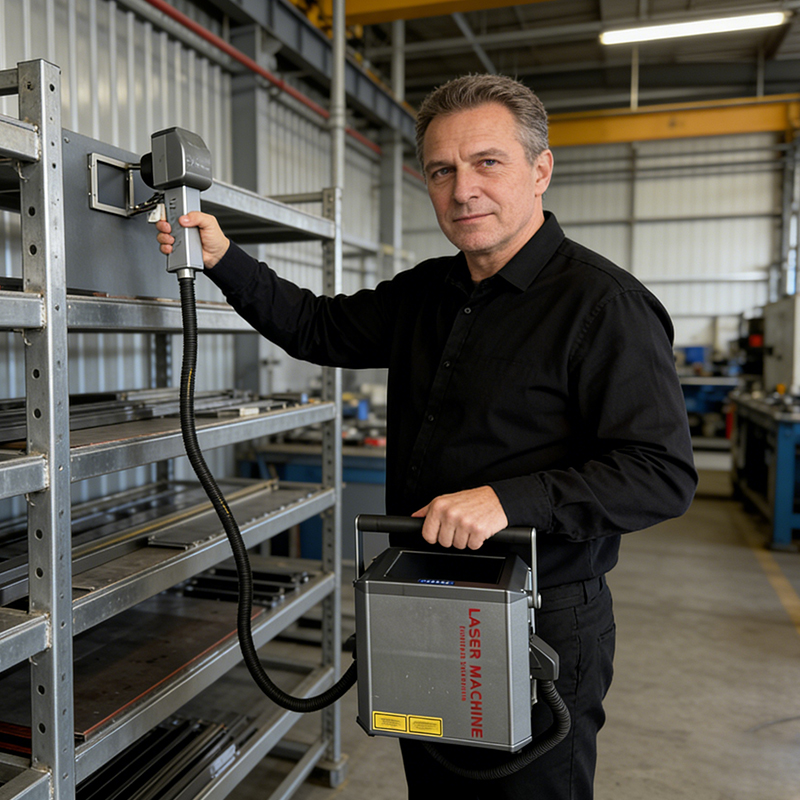
Handheld laser marking machines build upon the foundation of traditional desktop fiber laser systems. They retain the high resolution, sharp text, and detailed graphics associated with standard machines while introducing new advantages such as portability, ease of use, and lower energy consumption. These attributes make them suitable for high-quality industrial processing tasks and applications that require flexibility, mobility, and efficiency.
Compared to traditional fiber laser systems, handheld machines feature wider pulse ranges, higher peak power, and excellent beam quality. These characteristics make them ideal for processing metals, some plastics, and other materials where precise and permanent marking is required. Industries that benefit from these machines include electronics manufacturing, automotive production, medical device fabrication, aerospace, and heavy machinery.
1. Energy Efficiency and Eco-Friendliness
One of the most important benefits of handheld laser marking machines is their energy efficiency. They operate without consumables, reducing ongoing costs while maintaining a low environmental impact. Unlike traditional marking methods, laser marking does not produce gases or waste, making it an eco-friendly solution.
As demand for handheld marking machines grows, market competition has driven prices down, making these systems more accessible to small and medium-sized enterprises. Today, these machines are widely used in mechanical manufacturing, packaging, and even DIY consumer projects, offering both improved productivity and consistent product quality.
2. Portability and Convenience
Handheld laser marking machines are designed to be compact and lightweight, making them suitable for on-site and mobile marking tasks. With a total weight typically around 6 kilograms and a marking head of just over 1 kilogram, they can handle large or irregularly shaped objects that traditional machines cannot accommodate.
This portability allows operators to mark oversized industrial components, such as machinery parts, turbines, engines, molds, and even shipbuilding components, without disassembling or transporting them. In addition, the compact design is ideal for IoT traceability marking and outdoor industrial applications.
3. High Precision and Flexibility
Modern handheld laser marking machines are capable of high-precision marking on a wide range of surfaces. Advanced laser technology allows for accurate engraving, high-speed operation, and stable performance. Many systems provide customizable software, enabling operators to adjust power, pulse frequency, and marking patterns according to specific application requirements.
The flexibility of these machines also extends to surface compatibility. They can process metals, plastics, ceramics, wood, and other materials, allowing for diverse industrial and artistic applications.
4. Enhanced Safety and Operational Efficiency
Handheld laser marking machines are designed with integrated safety features, including precise temperature control and automatic start-stop functions to minimize energy consumption. Built-in high-capacity batteries support 6–8 hours of operation, and some models allow continuous work while charging. These features ensure that marking operations remain uninterrupted and efficient, whether in a factory or an outdoor setting.
Handheld laser marking machines are increasingly used in a variety of sectors, reflecting their versatility and effectiveness:
Industrial Manufacturing: Marking components for automotive, aerospace, and machinery production with durable, high-resolution codes and logos.
Electronics and Medical Devices: Engraving serial numbers, QR codes, and logos on sensitive and small-scale products.
Art and Design: Creating detailed and customized engravings on decorative items, artworks, or furniture.
Consumer Products: Providing personalized marking on household appliances, tools, and accessories.
Education and Research: Supporting projects in labs, universities, and training centers where precise and permanent marking is required.
The adaptability of handheld laser marking technology ensures it can meet the specific needs of both industrial and commercial applications.
As technology progre
sses, handheld laser marking machines continue to evolve. Key areas of development include:
Power and Speed Optimization: Increasing peak power and pulse frequency to achieve faster marking without sacrificing precision.
Multifunctionality and Intelligence: Adding features like automatic focusing, material recognition, and software-assisted pattern customization for more consistent results.
Portable Charging and Continuous Operation: Enabling machines to be used while charging to maximize efficiency for long or outdoor operations.
Expanded Material Compatibility: Enhancing the ability to mark on a broader range of materials, from metals to composites, plastics, and specialty surfaces.
Sustainability and Efficiency: Improving energy efficiency, reducing waste, and implementing environmentally conscious designs.
These trends aim to make handheld laser marking machines not only more powerful and versatile but also more user-friendly and suitable for emerging markets and applications.
The inherent strengths of laser marking—precision, speed, durability, and flexibility—make handheld systems well-aligned with modern manufacturing trends. Industries increasingly prioritize intelligent, automated production, and laser technology fits seamlessly into this paradigm.
Handheld machines also enable companies to replace traditional marking techniques with cleaner, more efficient processes. This transformation supports smarter manufacturing workflows and contributes to higher product quality while minimizing material waste.
Lightweight marking head for ergonomic operation
High-efficiency laser diodes with precise electron-optical conversion
Integrated high-capacity battery for long working hours
Real-time monitoring and seamless switching between internal and external control
Support for multiple communication interfaces, including USB and network ports
Customizable marking software for diverse materials and languages
Intelligent cooling and automatic power management
Safety designs for high-reflectivity materials and industrial environments
Handheld laser marking machines represent a significant advancement in the field of precision marking. Combining portability, energy efficiency, and high precision, they offer a flexible and reliable solution for industrial, commercial, and creative applications.
With continuous innovations in power, speed, multifunctionality, and material compatibility, these machines are poised to expand further across diverse sectors. By embracing this technology, manufacturers and designers can enhance productivity, maintain high-quality standards, and explore new possibilities in product customization and branding.
As the global demand for intelligent and efficient manufacturing grows, handheld laser marking machines will remain at the forefront, providing a versatile, sustainable, and powerful solution for the future of marking and engraving.
Please leave the message you want to inquiry. We will reply you as soon as possible within 24 hours.
Please leave the message you want to inquiry. We will reply you as soon as possible within 24 hours.